Growing Prosperity Through Climate-Smart Agriculture

Advancing Menstrual Health and Dignity for Girls and Women

Advancing Health Equity for Displaced Communities
Building Pathways from Potential to Opportunity

Telling African Stories to the World

Powering Food Systems Through Innovation

Growing Food, Strengthening Communities
Growing Wellness, Creating Opportunity

Building Hope Through Education and Livelihoods

Creating Opportunity One Stitch at a Time

Unlocking Global Markets for Local Entrepreneurs

Building Pathways to Global Opportunity
Changing Mindsets, Building Financial Futures

Engineering Safer Mobility Solutions

Advancing Genomics and Diagnostic Innovation in Africa
Connecting Cultures, Creating Opportunities

Empowering Confidence Through Beauty and Care

Bringing Cultures Together One Meal at a Time

Empowering Youth Through Digital Inclusion

Building Pathways to Self-Reliance for Refugee Communities

Growing Farms, Creating Futures

Preserving Culture, Expanding Opportunity

Expanding Access to Education and Opportunity

Growing Opportunity Through Agriculture

Fashioning Futures Through Entrepreneurship

Growing Resilient Communities Through Agriculture

Expanding Financial Access for Women Entrepreneurs

Reimagining Education for Displaced Communities
Feeding Farms, Creating Futures

Empowering Women Through Beauty and Enterprise

Nourishing Communities Through Better Food Systems

Transforming Waste into Beauty and Opportunity

Growing Opportunity, Harvesting Impact

Redefining Kitchenware Through Sustainability and Health
Building Sustainable Solutions for Women and Families

Building the Future of Work and Education Through AI

Expanding Financial Access Through Fintech Innovation
Creating Pathways to Education and Economic Independence

Advancing Dignity, Health, and Equality for Women and Girls.

Empowering Youth Through Innovation

East Africa Office
Delta Chambers
Waiyaki Way,
Nairobi, Kenya
AMAHORO COALITION © All rights reserved
East Africa Office
Delta Chambers
Waiyaki Way,
Nairobi, Kenya
AMAHORO COALITION © All rights reserved
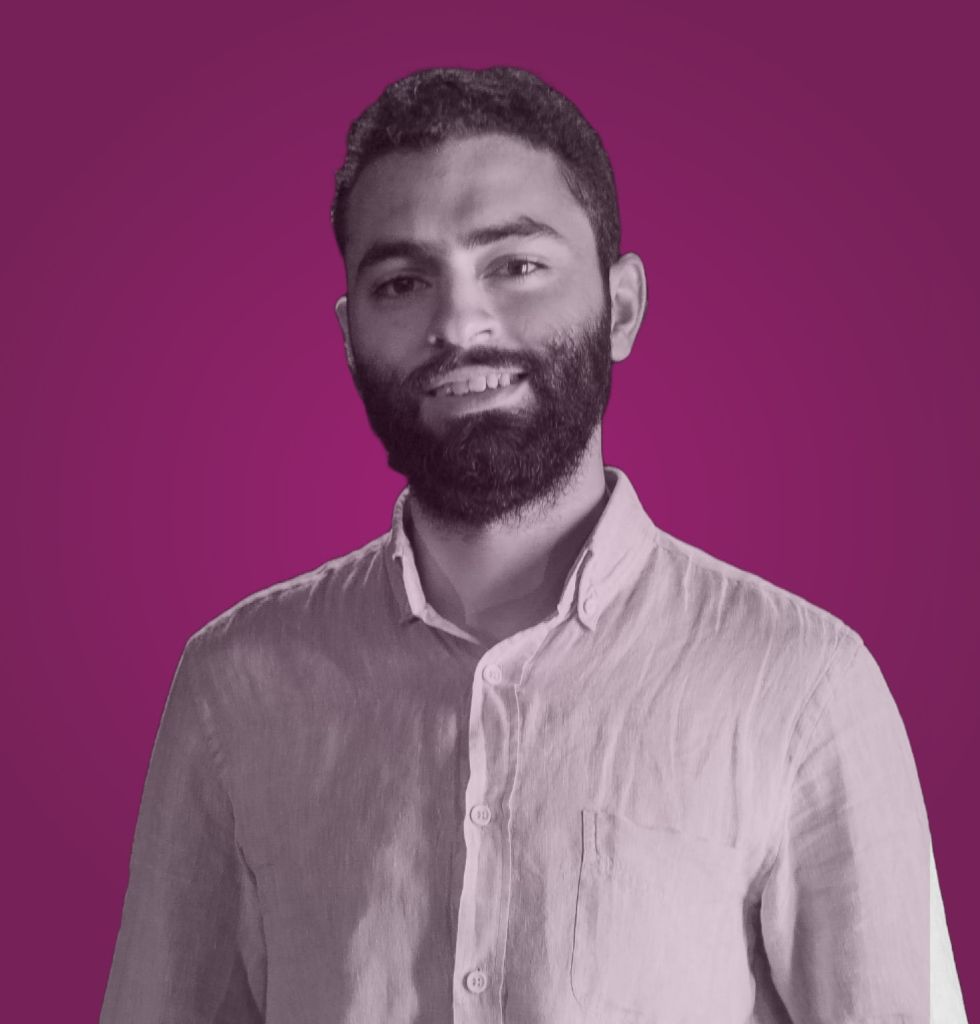
Abo Obaida Alazem is the co-founder of Duma Toys, an Egyptian brand specializing in handmade children’s toys and products, and a proud member of the World Fair Trade Organization (WFTO). Based in Cairo, he is passionate about blending creativity with sustainability to craft unique, high-quality items that spark joy and imagination in kids. His toys are designed to promote play-based learning while supporting local artisans, employing over 350 women spanning around 5 governorates in production units and empowering refugees alongside Egyptian women.
Professionally, Abo Obaida represents Duma in exciting ventures, including partnerships for international market access and events like the Spring Fair in UK and Who’s Next Paris where the brand showcases ethical, artisan-driven designs. On a personal level, he believes in fostering inclusive growth—whether through business or collaboration—to build a brighter future for Egyptian crafts and families. Meeting new people, he enjoys learning about their stories and sharing his own journey.

Almarat Ngutulu is a Business Administration and Software Engineering professional and the founder of Nas Financials, the first financial services company in South Kordofan (Nuba Mountains), Sudan. Growing up in a region deeply affected by economic exclusion and systemic marginalization, Aimarat was driven to bridge the financial gap facing unbanked and rural communities.
Through Nas Financials, he delivers essential services such as domestic and international remittances, savings plans, small-scale loans, and entrepreneurship and financial literacy training. These services empower individuals to manage money, launch small businesses, and connect with global networks—including in Kenya, South Sudan, Egypt, Canada, the UK, and beyond.
Almarat’s work goes beyond financial access—it promotes economic self-reliance, job creation, and a culture of savings and resilience in one of Sudan’s most underserved areas. By leveraging technology and community-based solutions, he is laying the groundwork for inclusive growth and a more just, sustainable future for the Nuba Mountains.
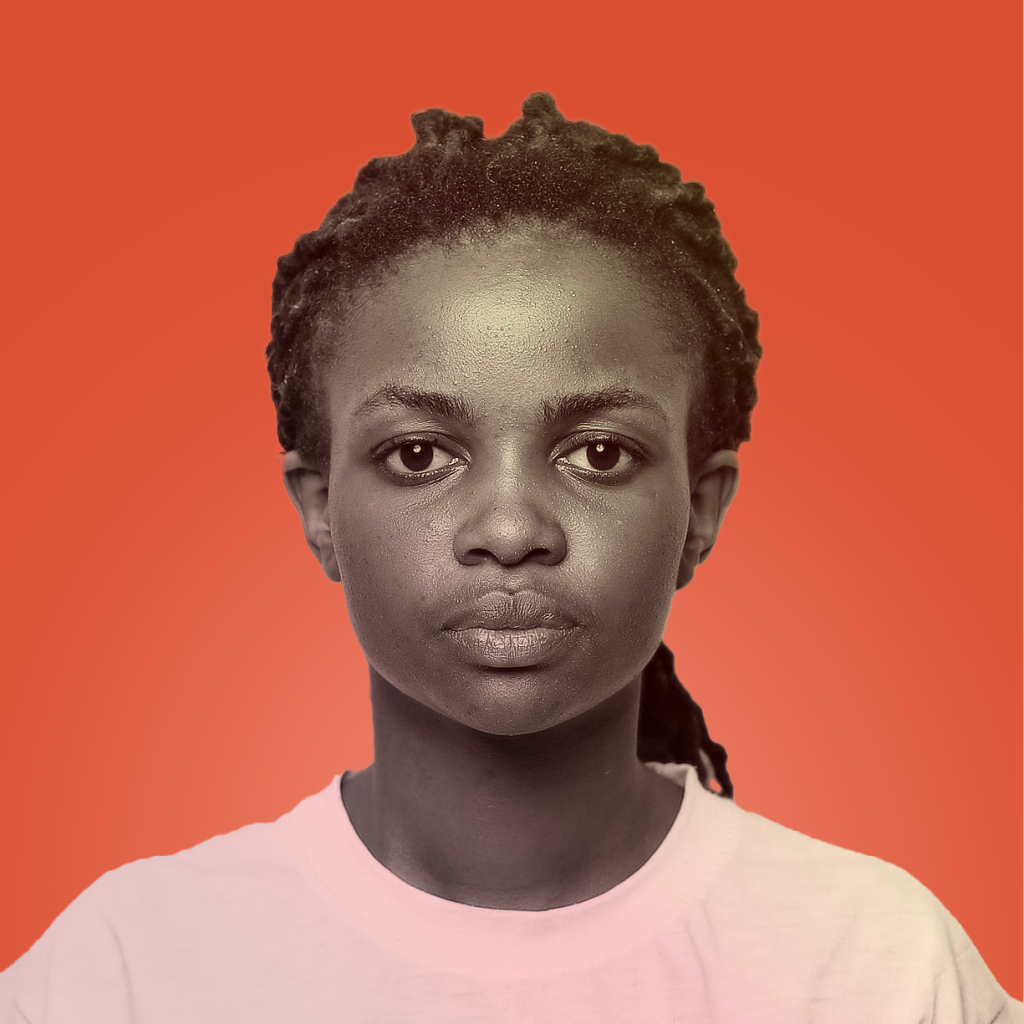
Ansiime Casanga is a community educator, ecological advocate, and refugee leader whose work is rooted in lived experience, resilience, and a deep love for learning, people, and the natural world. After facing significant barriers to education and inclusion, Ansiime began as a volunteer with the ALIGHT and New Lab project—conducting livelihood surveys that illuminated the daily struggles within refugee communities. This experience sparked a lifelong commitment to grassroots change.
Ansiime later founded FOLONA (For the Love of Nature), a community-based initiative promoting ecological learning, permaculture, and sustainable livelihoods. Trained through a one-year program and hands-on apprenticeship, Ansiime now leads programs for youth, women, and children—teaching food cultivation, income generation, and environmental stewardship.
Ansiime also contributes to Full Circle Learning and writes for Re-Alliance and the Ethos Foundation, telling stories that connect people and planet. Their vision is inclusive education rooted in dignity, identity, and collective growth—ensuring no one is left unseen.

Arnold H. Joseph is a Congolese social entrepreneur and education advocate from Goma. Orphaned at a young age and shaped by conflict and hardship, he transformed adversity into purpose by founding Bridge for Future Academy, a social enterprise empowering low-income and displaced students through education and global opportunity.
Since 2016, his organization has supported over 130 youth across DRC and Rwanda with English training, university counseling, and access to resources for international scholarship applications. In 2022, Bridge for Future formally registered as a social enterprise offering gap year programs, upper secondary courses, and career guidance—bridging inequality in education access.
Arnold is a Mastercard Foundation Scholar pursuing International Business Administration at USIU-Africa and has participated in international forums including YALI, the International ACAC Institute, and NYU Abu Dhabi’s Summer Institute. Passionate about SDGs 1–4, he is committed to building a future where education transforms lives and places DRC on the global map.

Baobab Mukanirwa is a social entrepreneur and creative leader passionate about amplifying refugee voices through media. What began as a community-based, refugee-led initiative in Kakuma has grown into a thriving social enterprise focused on storytelling around migration and displacement.
Rooted in the media industry, the venture provides professional services in filmmaking, photography, audio production, and qualitative research, while simultaneously creating meaningful livelihood opportunities for young people in refugee camps. By combining creative expression with economic empowerment, the enterprise supports youth in building transferable skills, earning income, and shaping their own narratives.
Through this work, Baobab is challenging stereotypes, advancing representation, and fostering a culture of dignity and self-reliance within displaced communities. The enterprise also serves as a platform for collaboration with researchers, NGOs, and development partners seeking authentic, community-driven media and insights.
With every story told, it builds bridges, empowers youth, and contributes to more inclusive conversations on displacement.

Bashiri Juma Omari, a Congolese refugee originally from Kivu, was deeply impacted by political instability and tribal conflict. As the only son in his family, he faced persecution due to his grandmother’s Munyamulenge heritage, which led to a violent attack on his home. After losing his father and narrowly escaping a fire set by rebels, Bashiri became displaced. This traumatic experience fueled his commitment to resilience, peacebuilding, and youth empowerment.
He later founded Panadol Garage, a social enterprise that provides high-quality automotive repair services while addressing youth unemployment through free skills training. More than a repair shop, Panadol Garage offers practical learning, mentorship, and entrepreneurship opportunities that equip young people to earn a living and become self-reliant. By fostering resilience and innovation, the initiative helps youth unlock their potential and overcome adversity. Bashiri’s vision blends business with social impact, creating a measurable model for economic development and community transformation.

Binja is a Congolese refugee, entrepreneur, and education advocate living in Kalobeyei Integrated Settlement, Kenya, since 2017. He is the founder of REEMAR, an e-commerce platform, and Kalobeyei Initiative for Better Life, a refugee-led organization empowering youth from refugee and host communities through education. He serves on WUSC’s Youth Advisory Committee (DREEM Project) and has worked as a research assistant with the Refugee-Led Research Hub, Open Society Foundation, and Oxford University. Passionate about locally led solutions, youth engagement, and access to higher education, he actively researches displacement and durable solutions. Binja received the Metis Community-Led Impact Award (2022), was named Kidogo Edupreneur of the Year (2023), and is a fellow of the Africa Education Leaders Fellowship. He is currently pursuing a Master’s in Applied Community Development at Future Generation University. Binja also co-leads Light Academy, a refugee-led school offering tech-driven, inclusive education from kindergarten to secondary level.

Chance Iradukunda is the Founder & CEO of Sweet Bite Ever, a premium catering and bakery brand based in Accra, Ghana. Since 2020, she has led the company’s growth by combining creative culinary design with strong business strategy and customer-focused service. With a background in Accounting & Finance and professional training in Pastry Arts, Chance blends precision and innovation to deliver high-quality, customized food experiences.
Sweet Bite Ever specializes in handcrafted pastries, custom cakes, and full-service catering for events and celebrations. The brand stands out for its artistic presentation, consistent quality, and bilingual customer engagement in English and French. Operating on a direct-to-customer model, the business thrives on repeat clients, referrals, and a strong digital presence.
Currently profitable and bootstrapped, Chance is focused on scaling operations through kitchen expansion, technology, and partnerships. She is driven by a belief that great food creates connection—and every dish should leave a lasting impression.

David Lyangenda, a Zambian-born social and economic justice advocate of Angolan descent, is the founder of Avigo Finance—a social enterprise addressing energy poverty among underserved and migrant communities. Having experienced displacement due to Angola’s civil conflict, David is committed to supporting people on the move by enabling access to affordable, renewable energy. Through Avigo Finance, he empowers migrant-owned businesses and rural communities in Zambia’s North Western Province with solar energy solutions. His enterprise tackles barriers such as limited credit histories, mobility constraints, and lack of infrastructure by offering a Pay-As-You-Grow model—allowing clients to pay flexibly as their incomes grow. Avigo’s innovative, inclusive financing supports not only clean energy adoption but also broader goals of financial inclusion, economic resilience, and sustainable development. David’s work exemplifies how lived experience, blended with innovation, can address systemic inequities while creating dignified opportunities for vulnerable populations across Africa.

Deborah Lazarus is a tech advocate and social impact leader from Adamawa State, Northeast Nigeria—a region shaped by resilience, conflict, and deep-rooted inequality. Raised in a community where many girls and forcibly displaced women lacked access to education and economic opportunity, she became determined to challenge systemic barriers through technology and inclusion.
Drawing on her academic background and lived experience, she founded Northeast Women in Tech (NEWIT), an initiative committed to closing the digital gender divide. NEWIT empowers young women with the digital skills, confidence, and mentorship needed to pursue careers in technology and drive community-led change.
Her work is grounded in the belief that technology, social justice, and leadership must intersect—and that real transformation begins when those closest to the challenges are equipped to lead. Through NEWIT, she is creating pathways for women to shape their futures and build more inclusive, equitable societies.

Divine Mugisha, a Rwandan by nationality, was raised in Dzaleka Refugee Camp in Malawi after their family fled conflict when Divine was just a year old. Life in the camp shaped Divine’s deep empathy, resilience, and belief in community—anchored in the philosophy of Ubuntu: “I am because we are.” Growing up with limited resources, Divine’s father often said, “Education is the only inheritance I can give you,” a message that instilled a lifelong commitment to learning. Despite challenges, Divine pursued education with determination, eventually becoming a Mastercard Foundation Scholar—marking their first journey beyond the camp and redefining their identity beyond “refugee.” To give others a similar opportunity, Divine founded Supportive Pillar Organisation, which supports refugee and vulnerable youth through education. For over four years, the organization has brought hope, opportunity, and self-worth to those who need it most.
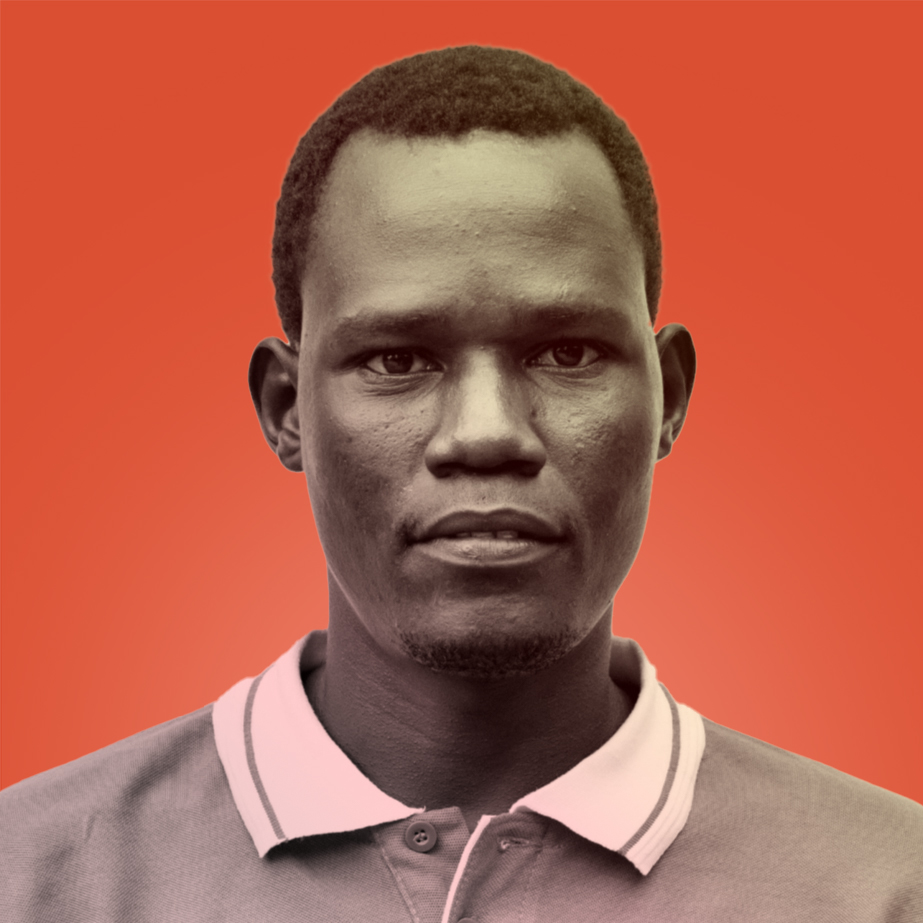
Dominic Amanya Suleiman, a South Sudanese refugee born and raised in Kakuma Refugee Camp, is an emerging leader in entrepreneurship and environmental advocacy. He pursued his education within the camp and extended his learning through scholarships, including one from the Danish Refugee Council, which enabled him to study procurement at Turkana University. With over five years of experience teaching and facilitating workshops, Dominic has combined his professional skills and farming background to lead an organic farming initiative in Kakuma. His work empowers fellow refugees with sustainable agricultural practices, promoting food security, economic self-reliance, and environmental stewardship. Through this initiative, Dominic supports community resilience while addressing the twin challenges of unemployment and environmental degradation. His leadership reflects a commitment to turning displacement into opportunity by equipping others with practical skills and entrepreneurial knowledge. Dominic continues to inspire change, proving that innovation and impact can thrive even in refugee settings.

Dr. Nahla Omer Zayed is a pharmacist, entrepreneur, and impact-driven leader with over nine years of experience in pharmaceuticals, cosmetics innovation, and social entrepreneurship. She is the Founder and CEO of SUKAR Cosmetics, a growing beauty brand rooted in African heritage and committed to producing high-quality, affordable, and culturally relevant products.
Dr. Omer combines deep technical expertise in pharmaceutical technology with a passion for empowering women and advancing ethical trade. She has led international collaborations, secured impact funding—including a USAID-backed project—and expanded SUKAR’s operations into Egypt with an 11-product launch.
A Global MBA graduate in Impact Entrepreneurship from Università Cattolica del Sacro Cuore (Italy), she has represented African entrepreneurs in forums organized by the African Union and has been recognized in multiple global competitions, including the Startup Virtual Pitching Competition (Dubai) and the Global Entrepreneurship Summit (The Hague).

Elizabeth Biunjwe Ebila is a youth leader and social entrepreneur dedicated to empowering teenage mothers and unemployed youth through skills training and mentorship. After completing vocational and business literacy programs with Farm Africa Kenya, Inkomoko, FCA, and ChezaCheza, she became a facilitator and changemaker in her community. In 2021, she founded Elizabeth Beauty and Art Hub, a social enterprise designed to address youth unemployment and economic exclusion. The Hub offers practical, hands-on training in beauty therapy—such as hairdressing, skincare, and makeup artistry—as well as creative arts including beadwork and fashion design. It also integrates entrepreneurship and business development training to help participants transform their skills into sustainable income. Beyond technical skills, the Hub provides mentorship and a supportive community space, prioritizing vulnerable groups often excluded from traditional education and job opportunities. Under Elizabeth’s leadership, the Hub continues to serve as a platform for hope, self-reliance, and inclusive economic empowerment.
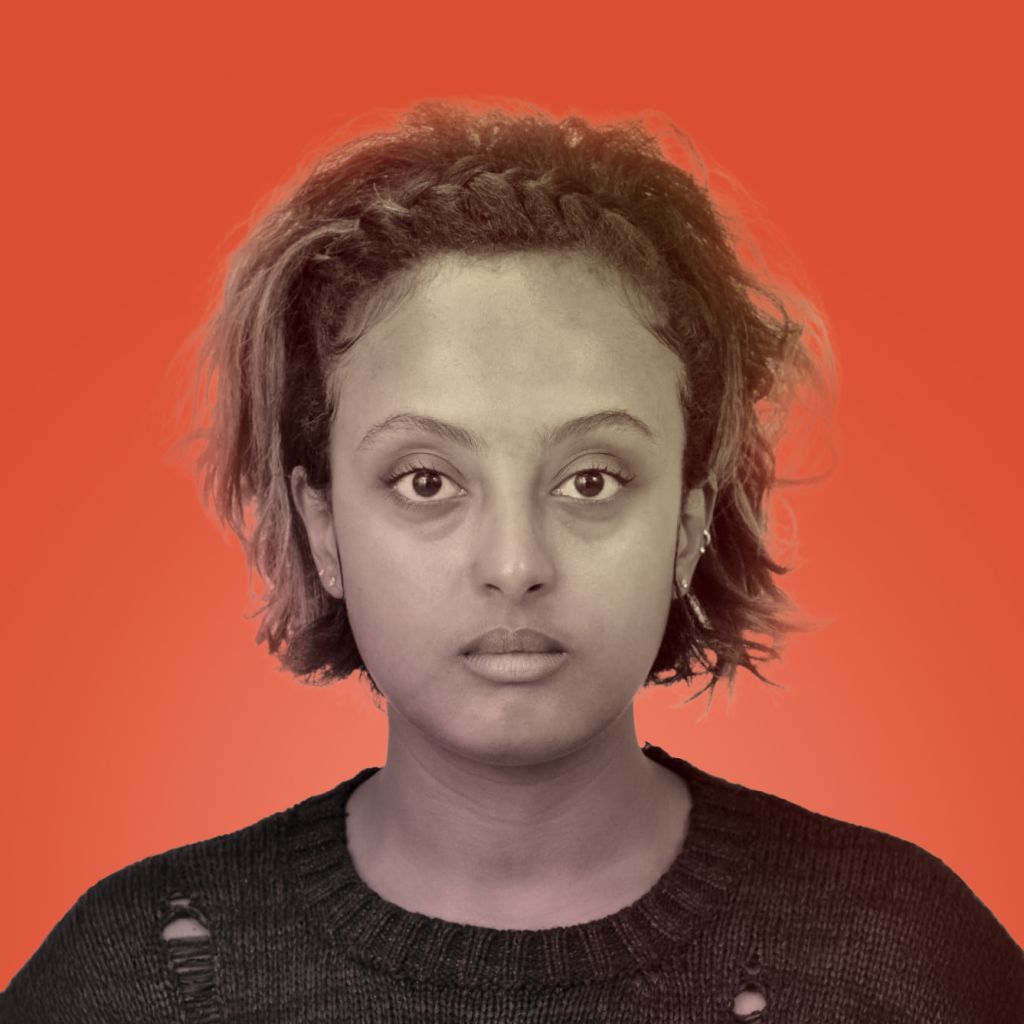
Heaven Abraham is the founder of Heaven’s Glimpse, a thriving home-based bakery in Nairobi. Originally from Eritrea, she and her family fled political unrest, first to Ethiopia and later to Kenya, where they faced the challenges of displacement. In 2021, after baking a simple cake for a friend, Heaven began receiving more orders and saw an opportunity to build something meaningful.
With no formal training, she taught herself the skills needed to launch Heaven’s Glimpse. Today, the bakery offers a range of products including cakes, pastries, desserts, fresh fruit juices, and catering services. It now serves over 100 returning customers and supplies baked goods to four local cafés.
Heaven’s Glimpse stands out for its commitment to quality, customization, and community. The business not only supports Heaven’s family but also provides small income opportunities for refugees and host community members. Her vision is to open a physical bakery and café that fosters inclusion, growth, and connection through food.

Jacob Yen Alier is a South Sudanese refugee and education advocate currently residing in Nairobi, Kenya. Displaced by conflict, he previously lived in the Nyumanzi Refugee Camp in Uganda, where he witnessed the severe educational barriers faced by refugee children. In response, he founded the Konybaai Education Initiative to provide access to quality education for vulnerable children within the camp.
Jacob is currently pursuing a Bachelor of Pharmacy at United States International University – Africa (USIU-Africa) as a Mastercard Foundation Scholar. He also serves as the Scholar Council President for the 2024/2025 academic year, where he champions student leadership and representation.
Motivated by his personal journey and belief in the power of education, Jacob is committed to creating opportunities for displaced children and advocating for inclusive, community-driven education solutions that ensure no child is left behind. His work continues to inspire and uplift others across refugee and host communities.

Jennifer Obiorah is a Nigerian social entrepreneur transforming waste into opportunity for displaced communities. After surviving religious violence in Adamawa State, she overcame extreme poverty to graduate top of her class with a CGPA of 4.48. Driven by lived experience, she founded TeamUpcyclers, which trains displaced persons, women, and youth to turn textile, plastic, and e-waste into reusable products and income-generating crafts. She has empowered over 3,000 IDPs, 50 persons with disabilities, and 5,000 students, while her digital platforms support 3,000+ youth with resources on scholarships, grants, and social impact. Her trainees have secured over $1 million in scholarships and $500,000 in grants, including two Amahoro Fellows in 2024. Jennifer’s impact has earned her several awards, including the JCI Creative Young Entrepreneur Award (2024), WEGA Diversity Award (2024), and Mastercard SME Humanitarian Award (2023). She aspires to establish Nigeria’s first Green TVET Institute for displaced persons.

Kabir Olaosebikan is a Nigerian social entrepreneur and environmental advocate committed to transforming plastic waste into opportunity and empowerment. As Founder and CEO of Craft Planet, he leads a circular economy enterprise that converts plastic waste into modular, eco-friendly building materials such as interlocking bricks and tiles, enabling homes to be assembled within 24 hours. Kabir also co-founded Crea8ive Planet Academy, where over 700 women, youth, and displaced persons have been trained in recycling, climate action, and sustainable innovation. A survivor of displacement himself, Kabir’s lived experience fuels his mission to tackle both plastic pollution and the housing deficit in vulnerable communities. Craft Planet not only provides cost-effective green solutions but also creates inclusive jobs, advancing SDGs 11, 12, and 13. An alumnus of the NRW Startup Germany Tour, Kabir aims to scale his impact across Africa.
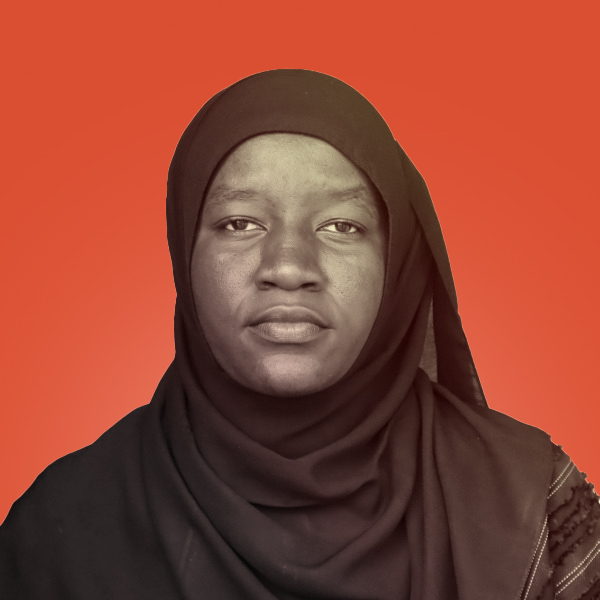
Khaltom Abdallah, born in 1995 in Fanganta, West Darfur, Sudan, is a dedicated leader and community advocate. Separated from family during the 2004 conflict, Abdallah and three siblings made a difficult journey to the Nuba Mountains, eventually arriving at Kakuma Refugee Camp in 2005. Despite growing up without contact with their parents, Abdallah remained committed to education, earning strong academic results and later pursuing a diploma in Social Work from Regis University, followed by a degree in Healthcare Management from Southern New Hampshire University in 2023.
Abdallah has worked with several organizations including Lutheran World Federation, Kenya Red Cross Society, Inkomoko, and Ipsos, supporting new refugee arrivals, family tracing, and socioeconomic research. In 2023, Abdallah co-founded Blossoms of Hope Initiative—an organization focused on empowering women, girls, and youth in displacement. Currently pursuing an MBA in Project Management through the IIE Odyssey Scholarship, Abdallah continues to drive impact through education, research, and community-led initiatives.

Komlan Abalo Braly is an award-winning educator and education innovator dedicated to inclusive learning in West Africa. A survivor of ethnic conflict in Togo, Komlan’s personal experience of forced displacement as a child fuels his passion for creating safe, supportive learning environments for all children. For over a decade, he has worked with rural communities to bridge learning gaps through evidence-based programs in foundational literacy, numeracy, and Social Emotional Learning (SEL). His initiatives, such as Speech Spark and Right Level Teaching & Learning have impacted over 3,000 students and 200 teachers, earning recognition through the 2024 UNESCO-Hamdan Prize. Komlan leads with empathy, resilience, and a deep commitment to community collaboration. He believes education should not only teach, but also heal. As an Amahoro Fellow, he aims to scale these solutions across Africa and empower others with lived experience to become changemakers in their own communities.
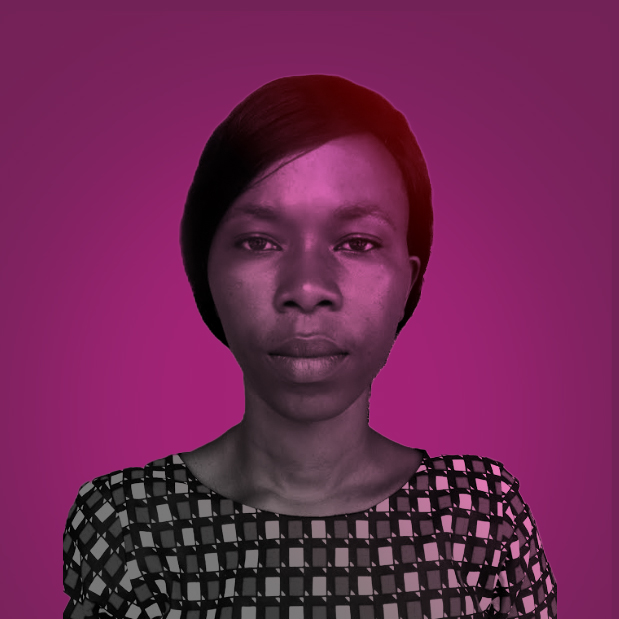
Liliane Uwase is the founder of BRIGHT, an organization supporting refugee and internally displaced communities in Cameroon through education, healthcare, and livelihood programs. Faced with limited resources during a surge in displaced youth arrivals, Liliane made the bold decision to expand BRIGHT’s services—an experience that challenged sustainability but sparked critical organizational growth. Through community feedback and financial analysis, she introduced key reforms: setting service capacity limits, developing a tiered support model, and building partnerships for specialized referrals. These changes improved program quality while maintaining impact. Liliane also advocates for skills-based volunteering, encouraging professionals from sectors like healthcare, energy, and technology to strengthen BRIGHT’s operations with their expertise.

Manahil Yagoub Musa is a dedicated Sudanese refugee leader, co-founder, and Executive Director of Blossoms of Hope Initiative—a women-led organization focused on empowering women and youth in displacement settings. With a background in business management, Manahil brings strong leadership and strategic insight to her work in advancing gender equity, education, and youth development.
As a Global Shaper and Curator of the Kakuma Hub, she amplifies youth voices on global platforms. In her role as an educator at Amala Education, she harnesses the transformative power of learning to uplift refugee youth, enabling them to shape their futures and positively impact their communities.
Manahil’s leadership at Blossoms of Hope reflects her deep commitment to creating pathways for marginalized populations, particularly young women, to access skills, opportunity, and dignity. Through her work, she continues to challenge systemic barriers and promote sustainable development within refugee settlements and beyond.

Mary Katambi, a survivor of the 2014 Chibok abduction in Borno State, has transformed her experience into a mission of empowerment and innovation. After escaping captivity, she received a life-changing scholarship to study at the American University of Nigeria, later graduating in 2021. She completed her NYSC with Women in Successful Careers (WISCAR) and earned a 100% scholarship to the Nigerian University of Technology and Management (NUTM), where she gained critical skills in design thinking, product management, and leadership. At NUTM, she built the foundation for her startup—a social e-commerce platform promoting eco-friendly shopping and a circular economy. Mary is also deeply committed to community impact: she has trained over 100 northern youth in digital skills, raised funds to pay school fees for 150 students, and aspires to establish Africa’s largest tech and entrepreneurship hub for the underserved. Her journey exemplifies resilience, purpose-driven leadership, and the transformative power of education and opportunity.

Maulline Habte Gragau is an Ethiopian advocate for social justice, shaped by her experiences of forced displacement, conflict, and resilience. Raised in Northern Ethiopia, a region historically excluded from national development efforts, she was forced to flee her home due to violence—first as an internally displaced person, then as a refugee navigating statelessness and systemic exclusion.
Despite these challenges, Maulline pursued her education under extremely difficult conditions, fueling a lifelong commitment to equity and dignity. Her personal journey informs her professional work with grassroots movements, youth networks, and international development partners, where she champions the inclusion of displaced women and youth in decision-making spaces.
Maulline brings both technical expertise and lived experience, ensuring that marginalized voices are represented in the conversations that shape their futures. Her work is rooted in the belief that those closest to the pain are also closest to the solutions, and she continues to lead initiatives grounded in community, inclusion, and hope.
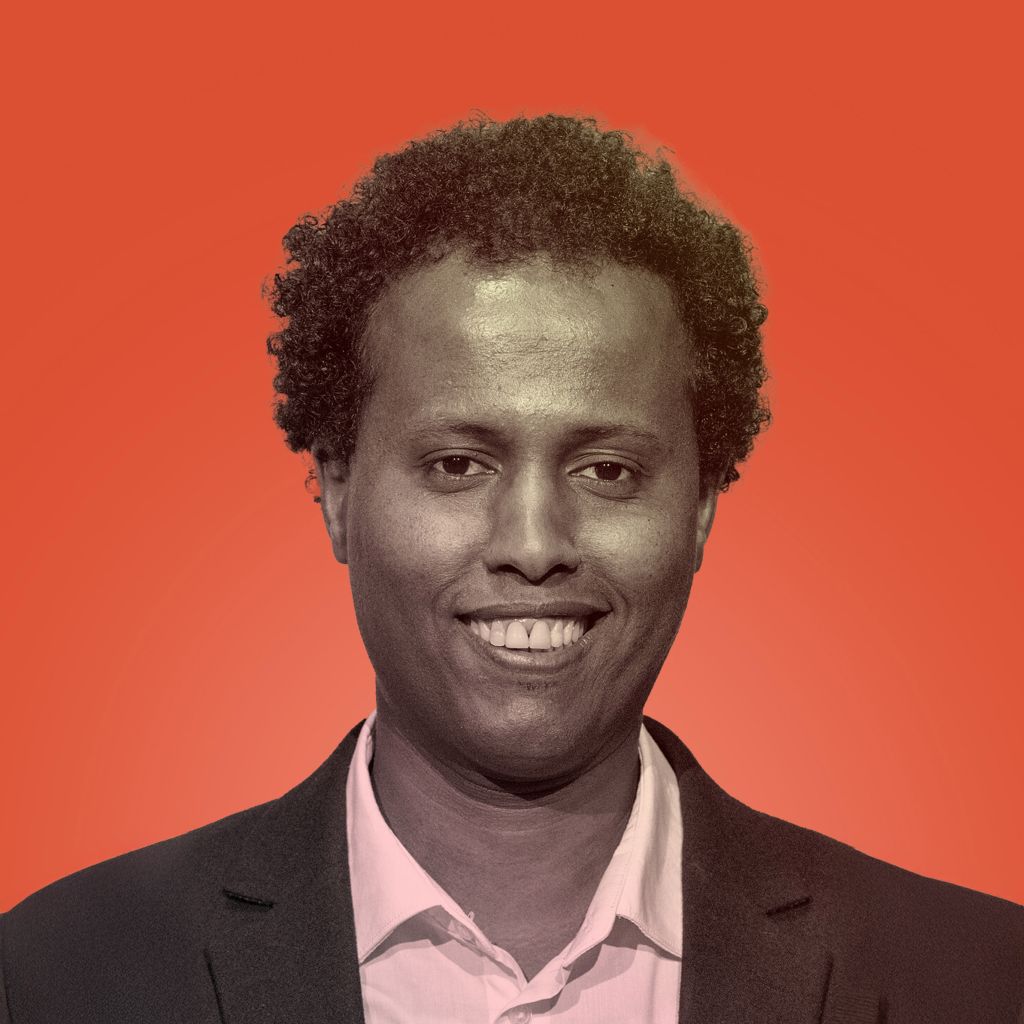
Mo Harawe is a Somali director, screenwriter, and producer. He studied Visual Communication and Film at the Kunsthochschule Kassel and has made several short films that have been screened and awarded at international festivals. His debut feature film THE VILLAGE NEXT TO PARADISE premiered in the prestigious Un Certain Regard Section at the 2024 Cannes Film Festival and was subsequently invited to several major festivals, including Sarajevo IFF, Melbourne, Toronto IFF. The film is also selected for the European Film Awards. Before his debut, he gained recognition for his short films. LIFE ON THE HORN (2022) received a Special Mention at Locarno International Film Festival, while WILL MY PARENTS COME TO SEE ME (2022) was nominated for the European Film Award, won the Grand Prix at Clermont-Ferrand as well as German LOLA and Austrian Film Award for Best Short Film in 2023.
As a producer, Harawe was responsible for the short films Life on the Horn (2020) and Will My Parents Come to See Me(2022), among others. The latter premiered at the 2022 Berlinale and won the Austrian Film Award for Best Short Film the following year. He also co-produced his feature film debut The Village Next to Paradise (2024), which was shot in Somalia.
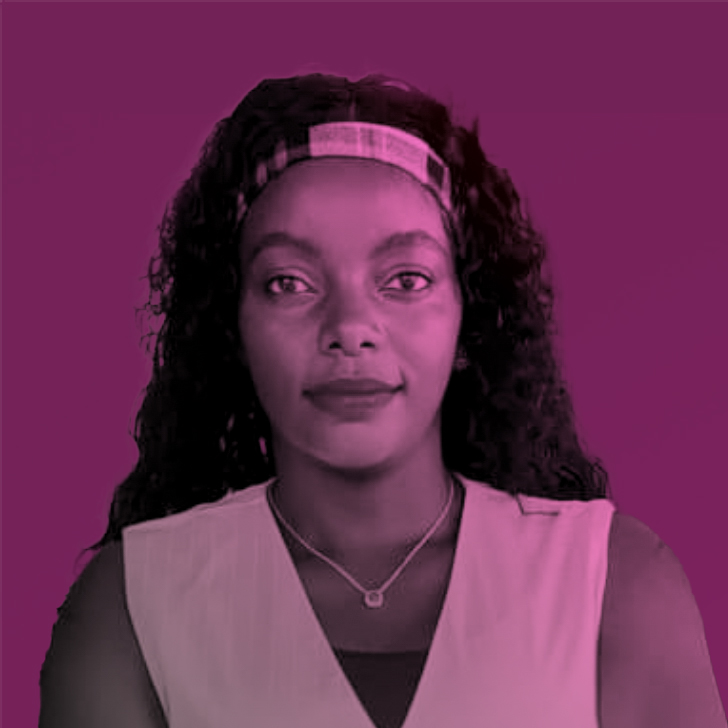
Nadine Mushimiyimana is the Founder and Manager of EcoKins Farms, an agribusiness based in Accra, Ghana, focused on ethical fish and poultry farming. Originally from the Democratic Republic of Congo, Nadine was displaced as a child and shaped by early experiences of food insecurity. These challenges inspired her to use agriculture as a tool for community empowerment and food security.
She holds a degree in Agribusiness from the University for Development Studies and has received specialized training in sustainable and smart farming practices, including fish farming through the GUBA program. Her farm now supplies high-quality chicken and fish to local markets while promoting sustainable practices.
Nadine also contributes to the SiKapa Cooperative, training local farmers in organic vegetable farming. Fluent in English and French, and conversational in Russian and German, she uses her multilingual skills to build inclusive networks. Her work blends business with social impact to transform food systems and improve livelihoods.
Joseph Nduwimana is a community leader and social entrepreneur committed to empowering vulnerable groups in refugee settings. As the Founder and Managing Director of The Discovery Organization, based in Kakuma, Kenya, he leads initiatives that equip widows and orphans with practical skills to foster self-reliance and economic independence. His work focuses on addressing the challenges of displacement by providing training and opportunities that promote sustainable livelihoods. Through Discovery, Joseph implements programs that nurture resilience and long-term impact within the refugee community. His approach combines grassroots development and humanitarian support, emphasizing inclusive growth and dignity for marginalized populations.

Nelly Kininga is a nonprofit leader, mental health counselor, and storyteller committed to supporting vulnerable communities. As the Founder and CEO of a nonprofit organization, she has spent over six years advocating for orphaned children—defining the organization’s mission, building governance structures, and adapting strategies to meet evolving needs.
With a strong background in mental health, she creates safe, supportive spaces for clients by providing active listening, crisis intervention, and evidence-based techniques such as mindfulness and stress management.
In addition to her counseling work, she is a dedicated story writer, crafting impactful narratives that inspire, inform, and engage. Her writing reflects deep empathy and a commitment to amplifying meaningful voices.
She holds an Associate’s degree in Business Administration and Management from Southern New Hampshire University, a Diploma in Social Work from Regis University, and certifications in Computer and Data Science (MIT) and Psychology (Andrews University). Her work bridges compassion, creativity, and leadership for social change.
Noel Balogun Samuel is an inclusive development practitioner with over a decade of experience advancing the rights and wellbeing of forcibly displaced women and girls, including those with disabilities, in rural Nigeria. Displaced by Boko Haram in 2018, Noel now lives in a host community and leads initiatives focused on socioeconomic empowerment, trauma support, and rights education for displaced populations. He is the Co-Founder of The Interfaith Women’s Network (TIWN), a grassroots organization established in 2023 to equip forcibly displaced women and girls with disabilities (WGWDs) with entrepreneurial skills while fostering interfaith peacebuilding in Southern Kaduna. Noel also serves as Head of Programs at the Grassroots Initiative for Gender and Development, under which TIWN operates. Through both platforms, he has impacted over 300 WGWDs. Committed to long-term inclusion, Noel advocates for the proper documentation of forcibly displaced persons to ensure their access to government relief programs and a more disability-inclusive response system.
Nosizi Reuben Dube is a passionate advocate for the rights and inclusion of stateless persons in Africa. Born and raised without legal nationality, Nosizi experienced firsthand the deep exclusion from education, healthcare, and legal identity. This lived reality fueled a commitment to dismantle the systemic barriers faced by stateless and forcibly displaced people across the continent.
As the first Shona woman in Kenya to graduate from university after being formerly stateless, Nosizi uses her story to raise awareness and influence policy. She has spoken at high-level forums, including the African Union, the UNHCR Executive Committee, and the African Commission on Human and Peoples’ Rights, focusing on gender-discriminatory nationality laws and the plight of stateless youth.
In 2025, Nosizi founded the Shamiri Sisterhood Initiative to support formerly stateless women and youth through education, employment, and documentation programs.

Nzem Luka is a survivor of forced displacement and a social entrepreneur committed to transforming adversity into opportunity. Originally from Barkin Ladi, Plateau State, Nzem’s life was upended by violent attacks from Fulani herdsmen and Boko Haram militants. After fleeing his burning village with nothing but hope, he resettled in Nyango Gyel, Jos South, where he experienced the harsh realities of displacement. Despite profound loss, Nzem found resilience in community solidarity and began to rebuild with a renewed sense of purpose.
In 2023, he founded Zang Mineral Resources Limited (ZMR)—a startup focused on mineral processing and refining. Leveraging Nigeria’s natural resources, ZMR refines Tin, Zircon, Columbite, and precious stones locally to support regional industrialization and reduce raw exports. Nzem’s vision centers on creating fair employment for displaced women and youth in Northern Nigeria’s mining communities, ensuring they receive equitable value for their work. His leadership promotes economic justice, sustainability, and dignity for marginalized artisans.

Pascal Milambo Muzungu is a Congolese social impact leader based in Meheba Refugee Settlement in Zambia. As the founder of Hope for Refugees Foundation (HRF), Pascal works to empower marginalized single refugee mothers and support refugee students to realize their full potential through education, training, and community-based programs. A lifelong refugee, Pascal draws on personal experience to design solutions that respond to the realities of displacement.
Pascal is currently pursuing a BSc in Business Administration with a focus on Logistics and Supply Chain Management at Kwame Nkrumah University of Science and Technology (KNUST) in Ghana. Elected President of the International Students Association, Pascal advocates for the welfare of over 500 international students and also serves in the university’s Students Representative Council Parliament.

Patricie Twayigize is a passionate hair stylist and social entrepreneur with over eight years of experience in natural hair care. She is the Founder of Patzad Beauty Services, a registered business in Oyibi, Ghana, committed to promoting healthy, well-maintained African hair while challenging the perception that natural hair is difficult to manage.
Since launching Patzad in 2021, she has trained six young women—four of them refugees—helping them achieve financial independence and contribute to their communities. Her client-centered approach emphasizes protective styling, nourishing treatments, and home services tailored to individual needs.
Beyond hairstyling, she is an innovative businesswoman focused on product development, partnerships, and inclusive skill-building. She envisions expanding into a fully equipped unisex salon and launching a training center that empowers refugees and local youth—regardless of gender—with hands-on skills in natural hair and grooming.
Her mission is to reduce unemployment, bridge skill gaps, and celebrate the beauty and versatility of African hair.

Precious Azuonwu is a Nigerian social entrepreneur and founder of Bankable Wisdom, a social enterprise equipping displaced and underserved youth with digital skills and remote job opportunities. Precious’s journey was shaped by violent conflict in Port Harcourt, where displacement and the tragic loss of a parent instilled a deep commitment to empower others facing similar hardships.
Bankable Wisdom tackles Africa’s youth unemployment crisis by offering affordable, mobile-based training in digital marketing, data entry, and remote work readiness. The program targets youth aged 16–35, particularly those excluded from traditional education systems. With mentorship, community support, and job placement pipelines, the enterprise has trained over 75,000 learners and facilitated more than 1,500 job placements since 2020.
Using a graduate contribution model, employed alumni help sustain future training cohorts, creating a self-reinforcing cycle of impact. Precious envisions reaching 1 million youth by 2030—especially in refugee-hosting and conflict-affected areas—restoring dignity and fostering economic resilience.

Ruth Chisom Onyeugo is an agribusiness entrepreneur and food systems innovator passionate about food security, women’s empowerment, and inclusive economic growth. She is the Founder & CEO of Asili Foods, an agro-processing company that has produced and distributed over 4,700kg of natural spices and food products across Nigeria, the US, and the UK. Asili’s inclusive supply chain integrates 127 displaced women farmers, providing training, steady income, and reducing post-harvest losses.
Ruth also leads SHE Harvest, supporting rural women with agricultural training and access to locally fabricated processing equipment. In her role as Head of the Agriculture Business Cluster at WETI, she has helped 47 women farmers achieve their first international exports.
Her work blends innovation, local sourcing, and youth empowerment—including a program engaging National Youth Service Corps (NYSC) members in affiliate marketing for Asili products. Ruth is driven by the belief that sustainable food systems must be equitable, locally rooted, and community-powered.

Sani Muhammad is a Nigerian advocate, educator, and social entrepreneur whose life was shaped by conflict and forced displacement. Raised in a rural community near Dansadau in Zamfara State, Sani grew up in a modest home rooted in learning, faith, and service. In 2010, armed bandits attacked the village, forcing the family to flee with nothing. That night marked a turning point—one that transformed deep loss into lasting purpose.
Resettling in Zaria, Sani pursued higher education, earning a degree in Economics and an MBA from Ahmadu Bello University. During this time, Sani taught displaced children in informal centers and volunteered in IDP camps, supporting others facing similar challenges. This passion grew into the Macrissar Foundation for Women and Girls, which now delivers education, digital training, healthcare, and climate-focused programs to vulnerable communities.

Simi Pam is a solar technician and the Founder/CEO of Kyarat Green Energy Venture, a social enterprise advancing clean energy access and gender equity in underserved communities. An Internally Displaced Person (IDP) from Plateau State, Nigeria, Simi’s journey began in an IDP camp, where frequent power outages inspired her to pursue solar energy training through a UNDP program—where she was the only female participant. In 2024, she founded Kyarat Green Energy Venture, which was formally registered in 2025. The enterprise provides solar installation and maintenance services to off-grid and low-income communities, addressing the twin challenges of energy poverty and underrepresentation of women in the renewable energy sector. Through hands-on projects and capacity building, Simi has empowered displaced women with technical skills, promoting clean energy adoption and economic inclusion. Her work contributes to SDGs 5, 7, and 13, positioning Kyarat Green Energy Venture as a force for sustainability, equity, and resilience across Africa.
25-year-old DRC national living in Rwanda. She is a passionate youth refugee advocate working with WUSC, a Canadian non-profit focused on education, employment, and empowerment for displaced and marginalised communities. She is the co-founder of Refugee Youth Change Makers, an initiative she has run with two others since 2022. Supported by the DREEM project (a Mastercard Foundation WUSC collaboration), the initiative aims to create inclusive opportunities for refugee youth. She is driven to create jobs for refugees through sustainable agriculture and to show displaced youth that there is hope beyond being a refugee. She is connecting refugee youth with scholarship opportunities and guiding them through the application process. She works with refugee youth globally to share experiences so others can be inspired that they can make it and become self-reliant

Tresor Ndala Buzangu based in Nakivale Settlement, Uganda, is the founder of Tshijuka RDP, a tech-driven platform helping displaced youth recover lost academic documents. A YALI alumnus and Mastercard Foundation Baobab Ambassador, Tresor launched Tshijuka after losing his own credentials due to displacement. With support from a $5,000 FAST Grant, he built an AI-powered system that enables refugees to retrieve, verify, and store their transcripts and certificates through facial recognition and secure cloud-based tools. Tshijuka offers three service models: direct-to-user paid access, NGO-sponsored accounts (via partners like CIYOTA and the Duolingo Refugee Program), and institutional subscriptions for schools in refugee-hosting areas. This innovation has restored educational access and dignity to hundreds of displaced learners across Africa. By addressing a critical barrier to opportunity, Tresor’s work aligns with the Amahoro Coalition’s vision to empower forcibly displaced persons through scalable, tech-enabled solutions rooted in lived experience and driven by equity.

Vanessa Ishimwe, a Rwandan refugee who resettled in Uganda in 2008, is a social entrepreneur committed to advancing economic empowerment for refugee women and youth. She completed her education in Uganda and has since co-founded two organizations, including Authentic African Works, which she continues to lead. Through this initiative, Vanessa supports women-led refugee-led organizations (RLOs) and fosters local livelihoods by producing and marketing high-quality leather goods. Her business arm, Ddala African Works, is a registered company that creates sandals, bags, wallets, and other leather products for both local and international markets. The enterprise prioritizes job creation for refugee women and youth with limited formal education. A share of its profits is reinvested into Authentic African Works to sustain operations and sponsor refugee girls’ secondary education. Vanessa’s model blends business and nonprofit work to bridge the gap between education and economic opportunity, promoting dignity, sustainability, and resilience in displacement contexts.

Yousif Arbab-Ismail is a Sudanese human rights lawyer and activist whose life has been shaped by displacement, leadership, and an unwavering commitment to justice. Raised in refugee camps in East Chad, Youseif began taking on community responsibilities at a young age, laying the foundation for a lifelong dedication to advocacy. He co-founded the Darndoka Center to preserve the Massalit language and later returned to Sudan to study law at Al Neelain University, where he helped establish the Darfur Union.
After graduating, Youseif co-founded the Roots Organization for Human Rights, working to monitor and challenge human rights violations in West Darfur and Eastern Chad. He currently volunteers as a human rights advocate and is pursuing a Master’s in International Relations and World Order at the University of Leicester. His work centers on empowering displaced and marginalized communities through legal advocacy, education, and community-driven solutions.
Abdul-Karim Ngoliba is a Ghanaian social entrepreneur and Founder of Ngoliba AgriVentures, an enterprise committed to creating sustainable livelihoods through climate-smart agriculture, sustainable farm input credit, and inclusive agribusiness solutions for women and internally displaced farmers in Ghana. A business graduate of Ashesi University, he combines entrepreneurial leadership, systems thinking, and community-driven innovation to address barriers that limit economic opportunity for vulnerable populations.
Through Ngoliba AgriVentures, Abdul-Karim is building pathways that enable smallholder farmers to access productive resources, strengthen resilience, and participate more fully in agricultural value chains. To date, the enterprise has supported 148 smallholder farms and processed 1,278 bags of paddy rice through its shared mechanization services, unlocking over GHS 639,000 in value for farming communities in Northern Ghana.
His work is driven by a belief that locally led enterprises can unlock prosperity while advancing food security, climate adaptation, and social inclusion. As a member of the Amahoro Fellowship Cohort 4 (2026), Abdul-Karim is expanding Ngoliba AgriVentures from post-harvest mechanization into a full end-to-end agricultural support platform providing land preparation, mechanized harvesting, input credit and market access for smallholder farmers. The enterprise aims to serve over 1,000 farms annually across Northern Ghana, and he is seeking strategic partnerships and investment to accelerate expansion, equipment acquisition and build a more resilient, inclusive food system across West Africa.
Abeny Tabisa Ayuen Madit is a South Sudanese social entrepreneur, public health practitioner, and refugee leader. Born in an internally displaced persons camp, she has lived, studied, and worked in displacement settings throughout her life. She holds a Bachelor’s degree in Environmental Health Science from Makerere University School of Public Health and a Master of Science in International Health and Tropical Medicine from the University of Oxford.
Abeny is the Founder and CEO of Refugee Women Rise Initiative, a women-led enterprise and community empowerment platform operating in South Sudan and refugee settlements in Uganda. The initiative supports South Sudanese and Sudanese refugee women, girls, and youth through livelihoods, skills development, menstrual health solutions, girls’ education advocacy, and protection from gender-based violence. Having witnessed girls miss school because of menstruation and lack of access to sanitary products, and later observing the same challenge while working in displacement settings, she was inspired to create sustainable solutions that keep girls in school and empower women economically.
To date, the initiative has trained over 50 women and girls in the manufacturing of reusable sanitary pads and reached more than 200 girls through stay-in-school advocacy, menstrual health and hygiene awareness, and skills development programmes. Abeny is building a scalable model that combines local production, education, and economic empowerment to reduce aid dependency and create sustainable livelihoods for displaced communities. As an Amahoro Fellow, Cohort 4 (2026), she aims to expand partnerships, strengthen market access, and scale refugee-led economic opportunities across East Africa.
Adelaide Bih is a Cameroonian clinical biologist, social entrepreneur, and forcibly displaced leader passionate about health equity and community-based healthcare solutions. She is the founder of Zinvara Medicentre Foundation and the African Initiative for Health and Research Promotion (AIHRP), organizations working to improve access to affordable healthcare, psychosocial support, and preventive health services for internally displaced persons (IDPs), refugees, and vulnerable communities in Cameroon.
Through community outreach, mobile clinics, health education, and affordable walk-in clinic services, her initiatives have directly and indirectly impacted over 10,000 people. Zinvara also operates a community health partner registration model that improves access to free consultations and subsidized healthcare services for displaced people and low-income families.
Adelaide is a One Young World Global Health Equity Champion, Women in Africa Young Leader Award recipient, and kanthari fellow. As part of the Amahoro Coalition Fellowship Cohort 4, 2026, she aims to expand Zinvara Health Hubs across underserved communities in Cameroon, reaching at least 50,000 displaced people with free and affordable healthcare services while training and employing 20–50 displaced persons as community health workers and psychosocial support focal points.
Ahmed Kamaleldeen is a visionary Sudanese changemaker, engineer, humanitarian professional, and polyglot whose leadership was forged by the hardships of displacement. As the Co-founder and CEO of SLS SUDAN, he directs a pioneering youth-led movement dedicated to empowering the next generation through comprehensive capacity building, specialized language instruction, and mentorship initiatives.
Under his strategic leadership, SLS SUDAN has secured vital partnerships with two global platforms, enabling the organization to equip over 80 mentees annually with the critical soft skills required for the modern job market. Furthermore, the initiative has successfully cultivated a robust network of Sudanese referral pathways and collaborative youth-led community entities.
Recognizing a persistent gap between African youth potential and professional market demands, Kamaleldeen actively seeks partnerships with private sector actors committed to investing in youth. His mission is to build a thriving, futuristic Africa by delivering practical solutions that traditional educational systems have failed to provide.
Akuol de Mabior is a South Sudanese filmmaker based in Pretoria, South Africa, with a BA Honours in Film Theory and Practice from the University of Cape Town. Through her production company, APO, she has directed one feature-length film and five shorts. Her feature-directorial debut, ‘No Simple Way Home,’ had its world premiere at the Berlin International Film Festival in 2022, becoming the first South Sudanese film to screen there. The film has since screened internationally, from Dakar to Durban, Sydney to Paris, Copenhagen to San Francisco, winning awards at Dok.fest in Munich, Encounters South Africa, and receiving two nominations at the IDA Awards.
Her short films have screened around the world, including at the Zeitz Museum of Contemporary Art Africa in Cape Town, and the US-based Pan African Film Festival. Her short ‘On the White Nile’ won gold at the New York Festivals TV and Film Awards and has been viewed over 750,000 times on YouTube. Akuol is part of Amahoro Fellowship’s Fourth Cohort (2026) where she hopes to continue building her production company’s capacity to diversify and bring African aspirations home.
Alaa Salih Hamadto is a Sudanese entrepreneur, food systems innovator, and former dentist with a Master’s degree in Impact Entrepreneurship. She is the Founder and CEO of Solar Foods, a pioneering agro-processing company that uses solar drying technology to reduce post-harvest losses, create market opportunities for smallholder farmers, and strengthen food security in Sudan.
Founded in 2017, Solar Foods produces dried vegetables, fruits, meat products, and ready-to-use food solutions while serving farmers, cooperatives, humanitarian organizations, and consumer markets across Africa and the Middle East. Despite the disruption of war in Sudan, the company rebuilt operations in Kassala and continues to expand its impact-driven business model.
To date, Solar Foods has reached and trained more than 7,000 farmers. The company has received international recognition through awards including the MIT Pan Arab Competition, Energy Globe Award, Bayer Foundation Women Entrepreneurs Award, and Forty Under 40 Africa.
As an Amahoro Coalition Fellow (Cohort 4, 2026), Alaa is focused on scaling climate-smart food processing, expanding regional and export markets, and building resilient value chains that create jobs for women and displaced communities. She is actively seeking strategic partners, investors, and market access opportunities to accelerate inclusive economic recovery and sustainable agribusiness growth across Sudan and the region
Albert Faustino is an Angolan refugee based in Meheba refugee settlement in Zambia and a final-year Development studies student at Cavendish University Zambia. He is the founder of Faustino’s farm, a community-centered maize agribusiness established in 2020 in Meheba. The farm has grown from 1 to 3 hectares, employs 2 people permanently and engages approximately 30 community members seasonally across the full crop cycle. During the 2022-2023 drought season, the farm supplied 200 bags of maize to the local community, directly reducing food insecurity in Meheba. Faustino joined the Amahoro Coalition Fellowship as a Cohort 4 Fellow in 2026. Over the next three to five years, he aims to expand to between 7 and 10 hectares through profit reinvestment and grow permanent employment to 5 full-time positions and strengthen maize supply chains serving displacement-affected communities across Mayukwayukwa, and Mantapala refugee camps in Zambia.
Melianne Muhesi is a Congolese entrepreneur, business development trainer, and community leader based in Uganda (Nakivale). She is the founder of Melia Spices, a social enterprise that produces and markets natural healing spices while creating economic opportunities for refugees and host communities.
Through Melia Spices, Melianne has created employment for six young refugees and promotes healthier lifestyles through locally sourced products, including the rose of jericho, cinnamon, cloves, black seed, and Anis star. Beyond her business, she has worked with organizations supporting entrepreneurship and youth empowerment, training more than 1,124 young people in business development, livelihood creation, and innovation.
Melianne is passionate about building inclusive businesses that unlock the potential of displaced communities. Through the Amahoro Fellowship, she hopes to expand Melia Spices into new markets, strengthen its distribution network, and create more jobs for refugee and host community youth, particularly women.
Ayuen Machar Nhial is a South Sudanese social entrepreneur, community development practitioner, and Mastercard Foundation Scholar at USIU-Africa pursuing a degree in Finance. She is the founder of Empower Hope Initiative, a youth-led organization dedicated to expanding educational opportunities, economic independence, empowering women and girls and supporting sustainable livelihoods in underserved communities (IDPs camp) across South Sudan. Through her leadership, the initiative has directly impacted 236 individuals through community workshops, trained women in income-generating skills such as soap production and tailoring, donated school’s materials to pupils in Jalle two primary and mentored young girls in Totel camp. Her organization is currently expanding its focus to include agriculture and climate resilience initiatives to strengthen community self-reliance and economic inclusion. Ayuen has experience in project coordination, reporting, and grassroots program delivery, which has strengthened her ability to design and implement community-based solutions. She is joining this fellowship to build strategic partnerships, strengthen leadership and organizational capacity, and scale Empower Hope Initiative into a sustainable social enterprise. Her long-term vision is to reach thousands of women and youth across South Sudan in camps with practical skills, economic opportunities, and education-driven empowerment.
Blandine Tshilanda is a Congolese social entrepreneur originally from the Democratic Republic of Congo and has been based in South Africa, since 2010. She holds a degree in Business Management from Southern New Hampshire University and is the founder of Minga Tailor, a clothing training, and tailoring business established in 2016.
Blandine is passionate about empowering women through skills development, mentorship, and entrepreneurship in clothing and garment technology. Driven by her commitment to community development, she uses her business to equip young people, widows, and disadvantaged women from both displaced and host communities with practical sewing and entrepreneurship skills.
Through Minga Tailor, Blandine has trained six women in pattern making, sewing, and tailoring, and successfully supported one of them in establishing her own home-based sewing business. In addition, she facilitated job placements for three women in a local CMT factory.
As a recipient of the Amahoro Fellowship, Blandine seeks to further strengthen her leadership and entrepreneurial skills to expand her transformative impact. Her vision is to empower a greater number of unskilled and displaced women through sewing and entrepreneurship training, helping them build sustainable livelihoods while growing and promoting the Minga Tailor brand across Cape Town and beyond.
Chantel Okam Ntea is a Cameroonian refugee entrepreneur based in Adagom 1 Refugee Settlement, Ogoja, Nigeria. She recently completed her studies at the National Open University of Nigeria. She is the founder of Chantel Chris Imports Ventures, a mini-importation business that sources household items, clothing, shoes, hair products, and other consumer goods from countries including China, Turkey, Bangladesh, and Vietnam. Through her business, she trains refugees and host community members in mini-importation, digital marketing, Facebook advertising, and the use of AI tools for business growth. Her work helps people access international products and learn how to source goods directly fromabroad without the need to travel. So far, she has trained 83 refugees and host community youths, and 59 have successfully started their own mini-importation businesses. Her business currently works with a team of 5 people. To further support people with limited capital, she created a WhatsApp-based group-buy initiative that allows participants to combine orders and reduce importation costs. As an Amahoro Coalition Fellow Cohort 4, Chantel aims to strengthen her business systems, build strategic partnerships, and expand opportunities for more refugees and host community members to achieve economic independence.
Kejinghe Charles Abang is a Cameroonian refugee youth leader, migration policy advocate, technologist, and social impact entrepreneur advancing inclusive pathways to economic mobility for displaced and underserved populations. A graduate student in immigration and citizenship law at Queen’s University and founder of Express Entry Travels and DSTECH HUB, he works at the intersection of migration governance, workforce development, and digital innovation. Through policy- and technology-driven solutions, Charles has supported hundreds of young people across multiple communities in accessing scholarships, international education opportunities, entrepreneurship training, and complementary labour mobility pathways. His work focuses on dismantling the drivers of irregular migration through scalable interventions that promote economic inclusion, digital skills acquisition, and future-of-work readiness. Leveraging cross-sector partnerships and AI-enabled workforce solutions, he is building systems that connect marginalised youth to opportunity while strengthening resilience, productivity, and sustainable development outcomes.
Consolée N. S. KAM is a lady from Rwanda who has made Burkina Faso her home. She holds a degree in Development studies from Valley View University. She founded TEFINA (Tes Finances Autrement) a financial education company to address the lack of financial literacy in Francophone markets. Through budget planners, advisory services, and content creation in Burkina Faso. The measurable results are the following : voluntarily trained groups of youth and women in financial literacy over 4 years, organised a chit fund of $ 39,032. TEFINA was founded after this experience. Through TEFINA there is a change in the way modern Burkinabé think about money, manage and build their wealth. The budgets binders are being sold In Burkina and have reached to Ivory Coast, Kenya and France as well. Through content creation, Tefina has reached to many more than 850 women and young people. Consolée joined the Amahoro Coalition fellowship in Cohort 4, 2026. Currently, she is expanding TEFINA’s impact by collaboration with associations. Through the fellowship, she hopes to position TEFINA as a trusted digital media in Sub-Saharan Africa, and experiment audience growth and surges in sales.
Dan Mugisho is a Congolese social entrepreneur and senior software engineer, with over six years of experience building digital platforms across Web3, blockchain, decentralized applications, mobile, full-stack systems, and transport technology. He is the founder and CEO of Twende Drive, a ride-hailing platform connecting riders in Goma, DRC, with verified, background-checked drivers through a mobile app that offers fixed GPS-based pricing, real-time trip tracking, and a one-tap emergency alert. Twende addresses a critical safety crisis: in a city of over 2 million people, kidnappings and assaults linked to unidentified motorbike taxi drivers are a daily reality. The platform has a working MVP, a team of 12 including fellow displaced persons, and a waitlist of 250+ users. Dan joined the Amahoro Coalition fellowship in Cohort 4, 2026. He is expanding Twende from Goma into Bukavu and broader East Africa, and is seeking partners to accelerate driver onboarding, market entry, and investment readiness.
Fabian Achangwi is a Cameroonian Microbiology, genomics researcher, and social entrepreneur. He holds a master’s degree in clinical biology from the University of Dschang. He is the founder of NEOTRAQ AFRICA, an emerging research and innovation institute advancing molecular diagnostics, genomics, bioinformatics, healthcare-associated infection surveillance, and sustainable healthcare waste management in Cameroon.
NEOTRAQ AFRICA has trained more than 80 researchers and students from Cameroon, Namibia, Ghana, Burkina Faso, and South Africa with hands on molecular genomics, bioinformatics, diagnostic innovation, and healthcare waste recycling. The organization has also created employment opportunities for over 10 internally displaced women through its research and waste valorization activities. Many of its trainees now contribute to leading research institutions, laboratories, and public health programs across Africa.
Fabian joined the Amahoro Coalition Fellowship in Cohort 4, 2026. Through the fellowship, he aims to build strategic partnerships and investment opportunities to expand NEOTRAQ AFRICA into a world-class research institute that hosts and accommodates students, scientists, and innovators from across Africa and beyond. His vision is to create a hub where research, innovation, workforce development, and sustainable technologies drive transformative solutions for health challenges across the continent.
Faduma Abukar Awes is a Somali social entrepreneur, artist, and youth leader based in Addis Ababa, Ethiopia. She currently serves as Program Manager at Shama Institute for Cultural Exchange, the 1st refugee-owned social enterprise in Ethiopia, providing online language learning and cultural exchange services while creating income opportunities for refugee and host-community educators, artists, and creators. Through its international platform, Shama connects learners with native-language tutors and promotes cultural understanding through events, exhibitions, and artistic showcases.
Since launching less than a year ago, Shama has built a team of 10 staff members, including 8 refugees and 2 Ethiopians, and engaged 15 refugee and Ethiopian freelance tutors delivering instruction in eight languages. The enterprise has organized 10 cultural exchange and community events, reaching more than 750 participants from refugee and host communities. Shama collaborates with partners including Social Enterprise Ethiopia, Entrepreneurship Development Institute, Rotary Club, Refugee Exchange Nexus, and UNHCR.
Faduma’s vision is to grow Shama into a global platform where culture, language, and creativity create pathways to dignity, resilience, and economic opportunity. She aims to help build a thriving refugee entrepreneurship ecosystem in Ethiopia and create more than 500 jobs across displacement-affected communities. Faduma joined the Amahoro Fellowship in Cohort 4, 2026.
Francine Dieu-Merci is the founder and Managing Director of Golden Shine beauty. The business specializes in providing high-quality hair care, skin care, and makeup designed to enhance natural beauty. Golden Shine beauty produces nourishing shampoos, natural hair oils, hydrating face serum, body butters and inclusive makeup services designed for African skin tones.
Deeply committed to social impact, Francine focuses heavily on empowering women and youth. Through Golden Shine beauty, she provides critical skill-building training and income opportunities to over 1000 young women, equipping the next generation with the tools needed to achieve economic independence and confidence.
Her impactful work and leadership earned her a selection into Cohort 4 of the prestigious Amahoro Fellowship. Leveraging this platform’s global network, mentorship, and resources, Francine aims to scale her enterprise internationally. Her ultimate vision is to expand Golden Shine beauty across the globe, bringing premium African-produced beauty solutions and her mission of community empowerment to the world stage.
Guehi Adriel Genevoix Djessan is an Ivorian entrepreneur and law graduate. Passionate about food, culture, and community, she founded Djess Food Delight to transform her love for cuisine into a business that connects people through authentic West African flavors. The enterprise serves diverse communities in Côte d’Ivoire, creating a sense of belonging for anglophone residents while introducing local customers to cuisines and traditions from across the region. By making cultural discovery accessible through food, the business promotes social connection and cross-cultural exchange. Currently working with a team of five people, Djess Food Delight is steadily growing while expanding its reach and impact.
Beyond its culinary offerings, the business creates economic opportunities for hardworking women, including displaced and vulnerable individuals, while contributing to local economic and social development. Adriel’s vision extends far beyond food preparation and delivery. She aims to transform what began as a small business into a structured and scalable company operating across Côte d’Ivoire, West Africa, and beyond.
Hassan Aden Issack, is a Somali refugee leader, digital inclusion advocate, and Software Engineering student at USIU-Africa in Nairobi, Kenya. He is dedicated to establishing pathways for refugees and marginalized youth to access meaningful economic and leadership opportunities, drawing on his lived experience of displacement and skills in technology and community leadership.
Hassan is the founder and executive director of Dadaab Vision for Global Network, a refugee-led organization that promotes digital skill development, youth leadership, peacebuilding, and economic empowerment. The organization works with both refugees and host communities, providing young people with practical digital skills, mentorship, and access to opportunities in the emerging digital economy.
Through his leadership, more than 250 young people have participated in mentorship, leadership, and digital empowerment programs designed to strengthen employability, civic engagement, and social cohesion. He has also built partnerships with local and international organizations to expand opportunities for displaced communities and amplify youth voices in development spaces.
As an Amahoro Coalition Fellow, Cohort 4 (2026), Hassan is focused on scaling sustainable digital employment and leadership pathways for refugees and host community youth across East Africa. He is seeking strategic partners, employers, and investors who share a vision for unlocking the talent, innovation, and economic potential of displaced communities.
James Gihoma Ntakiruti is a Congolese refugee entrepreneur and social impact leader based in Uganda, holding a Bachelor of Business Management (Honours) from Glasgow Caledonian University. He is the Founder and Executive Director of YIDA Youth Initiative, a refugee-led organization that expands access to quality education, entrepreneurship, and financial inclusion for refugees and host communities in the Kyaka II Refugee Settlement. Since founding YIDA, James has helped establish and grow education programs that serve more than 900 children annually while supporting over 550 refugee and host-community entrepreneurs through business training, mentorship, and startup capital. He also serves as Director of YFS Finance LTD, a social enterprise providing money remittance and financial services that improve economic opportunities for underserved refugee communities. Through these initiatives, James is building a sustainable model that combines education, entrepreneurship, and financial inclusion to strengthen self-reliance among displaced populations. As demand for refugee-led solutions continues to grow, he is seeking strategic partnerships and investment to expand educational access, scale financial services, and create more opportunities for refugee youth and entrepreneurs across Uganda and the region. Amahoro Fellowship Cohort 4
Jean Bukuru is a Burundian refugee and social entrepreneur currently based in Mahama Refugee Camp, Rwanda, and a Business Administration student at United States International University-Africa in Kenya. He is the founder of Prime Porks Farms Limited, a registered pig farming enterprise focused on livestock production, employment creation, and food security for refugee and host communities. Since its establishment in December 2024, the venture has grown from 8 to 20 pigs, created 13 jobs for refugee youth, and sold approximately 50 piglets to local and cross-border markets in North Kivu. The enterprise also converts pig waste into organic fertilizer as a second revenue stream and trains local farmers on organic manure production to improve agricultural productivity. Income is reinvested into youth livelihood training initiatives. Through the Amahoro Fellowship Cohort 2026, Jean aims to scale his agribusiness into a regional enterprise that strengthens youth employment and sustainable agricultural value chains across East Africa.
Kisanet Tedros is an Eritrean social entrepreneur and Founder & CEO of Beles Bubu Africa, a women-led and refugee-led media and education enterprise based in Uganda. Beles Bubu Africa creates multilingual educational content, cultural media, and workforce development programs that help underserved communities access learning, preserve identity, and build economic opportunities. Under her leadership, the organization has produced more than 1,500 original videos, reached over 115 million views globally, and built a growing audience across Africa and the diaspora.
Recognized as a BBC 100 Influential Women honoree, Kisanet is leveraging technology, storytelling, and digital education to address the growing demand for culturally relevant content and skills training in emerging markets. Through Beles Bubu Africa, she is building a scalable platform that combines media production, digital learning, and cultural preservation to reach millions of learners. As an Amahoro Fellow, she seeks strategic partnerships and investment to accelerate expansion, create jobs, and increase access to education across Africa and displaced communities worldwide.
Grace Konan is a refugee and youth inclusion advocate and a former refugee from Côte d’Ivoire currently based in Ghana. She holds a Bachelor of Arts in Social Work from Kwame Nkrumah University of Science and Technology (KNUST). Her leadership journey began as a volunteer interpreter with UNHCR and its partners in Ampain refugee camp, where, recognizing the need for stronger educational support and youth leadership, she co-founded MEERIG, a student-led association that provided a platform for peer support, academic advocacy, and resource provision. Through annual mentorship and academic support initiatives, she supports refugee, returnee, and vulnerable students in navigating scholarship opportunities and accessing tertiary education, with dozens having successfully transitioned to higher education. She has contributed to refugee inclusion efforts and conversations nationally and internationally through WUSC’s DREEM Project Youth Advisory Committee. Building on these experiences, she is developing the SEEDS Initiative, a social enterprise that seeks to create sustainable livelihood opportunities for refugees and host communities through agriculture while reinvesting a share of its profits in mentorship, leadership development, and education access. Grace is an Amahoro Fellow, Cohort 4 (2026).
Kuol Deng is a South Sudanese entrepreneur based in Kenya who is building agricultural businesses that create economic opportunity in refugee-hosting communities. Having lived in a refugee camp for more than 25 years, he understands the challenges of displacement firsthand and is committed to creating sustainable pathways to self-reliance through entrepreneurship.
He is the founder of an onion farming and distribution venture that cultivates onions and supplies markets in Kakuma and surrounding regions. The business is focused on strengthening local food systems, improving market access, and creating income opportunities through agricultural production, transportation, and distribution. Kuol is currently expanding his farming operations with the goal of increasing production capacity and building a scalable agricultural supply network.
Beyond agriculture, Kuol is a leadership mentor, communication trainer, and founder of initiatives that have supported hundreds of young people through mentorship and confidence-building programs. As an Amahoro Coalition Fellow in Cohort 4 (2026), he is seeking partnerships and investment to scale his agricultural enterprise, create jobs, improve food security, and demonstrate the potential of refugee-led businesses across East Africa.
Marie Muhawe Musabyimana is a Rwandan entrepreneur, CEO, and Co-founder of Nice Look Clothing, a fashion brand specializing in high-quality men’s wear, including suits, kaftans, and smart casual clothing. She is passionate about using fashion to create opportunities and drive social impact.
Through Nice Look Clothing, Marie provides vocational training, mentorship, certification, and employment opportunities for refugees, helping them develop valuable skills and sustainable livelihoods. Her vision is to build a leading men’s fashion brand while empowering displaced persons and underserved communities through entrepreneurship and job creation.
Mulonda Benjamin is a Congolese refugee Agrepreneur and young community leader living in Kalobeyei Settlement, Kenya. He holds a Global High School Diploma and is currently pursuing a degree in Business and Administration. Benjamin is the founder of Green Land Farm, a climate-smart agriculture enterprise that serves more than 200 refugees and host community members each year.
Through Green Land Farm, he grows and markets tomatoes, okra, watermelon, cassava, onions, eggplants, pumpkins, Jute mallow, and other crops, using agriculture to address food insecurity and create jobs in Kalobeyei Settlement and Kakuma Refugee Camp. Driven by a passion for serving his community through entrepreneurship, he believes displacement communities can become engines of economic growth and opportunity.
As a participant in Amahoro Cohort 4, Benjamin hopes to strengthen his entrepreneurial skills, expand Green Land Farm, and build partnerships that will create greater economic opportunities for refugees and host communities.
Mary Musengimana is a Rwandan refugee who has lived and worked in Kyaka II Refugee Settlement for more than 20 years. She holds a Diploma in Business Administration and brings deep, firsthand knowledge of the economic realities and opportunities within refugee communities. She is the co-founder of Kuza Refugee Business Platform (KUZA), a refugee-led microfinance enterprise that expands access to financial services for refugees and host community businesses in Uganda. KUZA focuses particularly on finance female-led enterprises and clean energy transition through affordable, flexible, and sustainable loans delivered through its locally tailored refugee business model (REBU Model).
To date, KUZA has financed more than 100 female-led refugee businesses in Kyaka II Refugee Settlement, helping create jobs and strengthen local livelihoods. Looking ahead, the company aims to finance 5,000 refugee businesses over the next five years and expand its services to Kampala, Nakivale, and Kiryandongo Refugee Settlements through strategic partnerships and investment. Mary is part of the Amahoro Fellowship Cohort 4, 2026, where she hopes to connect with those interested in financing refugee businesses, and learn from other change makers contributing towards private sector development across displacement settings in Africa.
Ndayisaba Isaac is a Congolese social entrepreneur and multipotentialite living in Kyangwali Refugee Settlement, Uganda. He is an Aspire Leaders Program alumnus, Cohort 1, 2026, and an Amahoro Coalition Fellow, Cohort 4, 2026. His entrepreneurial journey began with small ventures such as vegetable farming, running a roadside mini‑restaurant, mobile money services, and supplying and selling construction materials. Each of these enterprises generated income for him while creating value for his community, laying the foundation for his current work.
Isaac is the founder and managing director of CIDO Innovators Nursery and Primary School, a solar‑powered, STEM‑based social enterprise. The school operates as both an educational institution and a community business, employing 12 staff members and serving over 250 learners from refugee and host communities. Its model blends academics with digital literacy, problem‑solving, and vocational training, ensuring children gain confidence and market‑ready skills. By integrating sustainability, such as solar energy and community contributions, CIDO Innovators demonstrates how education can be both impactful and financially viable.
Looking ahead, Isaac’s goal is to build a complete primary school with 10 classrooms within the next three years, expand enrollment, and employ additional staff. He invites all educational investors to support the right kind of education, one that meets today’s global demands and reforms outdated curricula, positioning CIDO Innovators as a model for innovation, technology, creativity, and systemic change in displacement economies.
Noella Umurerwa is Co-Founder and Operations Lead of Nella Farms, a Ugandan agribusiness driving sustainable livestock production.The venture creates sustainable economic opportunities by training and employing youth and host community Youth regardless of their background.
What it does is produce high-quality, nutrient-dense livestock feeds for poultry and pigs. Our feeds improve animal growth, meat yield hence increasing our income /jobs.
Born from over three years of experience at a Rabbitry venture. Nella Farms solves the biggest constraint she saw. Poor-quality feed blocking profitability. We deliver consistent, science-backed feeds and create opportunities that make farming more profitable, sustainable, and youth-inclusive.
Noella serves the youth and local farmers in Mukono. Specifically empowering unemployed youth and women by giving them skills in feed processing, farm management. All the people we work with are youths we’ve transitioned from unemployment into dignified agribusiness jobs.
Nyalam Wal Pal is an Ethiopian social entrepreneur and community leader based in Kakuma, Kenya. She holds an Associate Degree in Social Sciences from Southern New Hampshire University and a Diploma in Business Management from Africa International University. As the Founder of KUEL Social Enterprise, she is committed to creating sustainable economic opportunities for women and youth through beauty services, skills training, and entrepreneurship. Through her work, she has helped train over 50 women and girls in beauty and hairdressing skills, created employment opportunities for young people, and served more than 3,000 customers across refugee and host communities. Nyalam is a member of the Amahoro Fellowship Cohort 4, 2026 and is passionate about building inclusive, community-driven enterprises that promote dignity, self-reliance, and economic empowerment.
Pacific Iradukunda Francis is a Rwandese entrepreneur based in Dzaleka Refugee Camp, Malawi, and holds a Bachelor of Education (Language) from the University of Malawi. She is the founder of Lana Naturals, a refugee-led wellness food enterprise that produces and supplies whole-grain, minimally processed flours, as healthier alternatives to refined staple foods. Through Lana Naturals, Pacific is addressing nutrition challenges while promoting local economic inclusion by collaborating with more than 20 smallholder refugee farmers and local suppliers.
Lana Naturals currently serves customers within Dzaleka Refugee Camp and works with distribution partners across Malawi to expand access to nutritious, locally sourced food products. Pacific joined the Amahoro Coalition Fellowship in Cohort 4, 2026, to strengthen her leadership, access mentorship and industry networks, and gain the technical expertise needed to scale Lana Naturals into formal retail markets.
Over the next few years, Pacific aims to establish Lana Naturals as a trusted wellness food brand across and beyond Malawi, supplying supermarkets and institutional buyers while creating sustainable market opportunities for refugee farmers. Her long-term vision is to demonstrate the potential of refugee-led enterprises to improve food systems, create dignified livelihoods, and contribute meaningfully to local and national economies.
Patricia Bulambo is a social entrepreneur based in Uganda and the co-founder of Smile Natural Hair Extensions, a sustainable beauty enterprise that transforms banana fiber waste into eco-friendly hair extensions while creating income opportunities for refugee women in Kampala. Her work focuses on addressing environmental pollution caused by synthetic hair waste and limited livelihood opportunities for women in vulnerable communities.
Through Smile, Patricia is building a circular economy model that upcycles agricultural waste into natural beauty products, currently working with women in training and early-stage production, with products sold locally through salons and beauty shops in Kampala.
Patricia joined the Amahoro Coalition Fellowship Cohort 2026. Through the fellowship, she hopes to strengthen her leadership, gain mentorship, and build strategic partnerships to scale her enterprise. She is currently focused on improving production systems and expanding her market reach across Uganda and the East African region. Her goal is to grow Smile into a leading eco-beauty brand that employs over 100 women and reaches multiple regional and international markets within the next three years.
Pélagie Koï Kpossoua is a Central African entrepreneur based in the Central African Republic, holding both a Bachelor’s and a Master’s degree in Business Administration. She is the founder of Agri Empower, a community-based agricultural enterprise established in 2021 to strengthen food security and create economic opportunities through sustainable agriculture. Agri Empower cultivates cassava, maize, beans, groundnuts, potatoes, and plantains while providing training and livelihood opportunities for women and youth. To date, the enterprise has trained and engaged more than 30 women and youth in climate-smart farming, post-harvest management, and value-addition activities. Agri Empower supplies agricultural products to local markets across the Central African Republic and exports selected products to neighboring countries, including Cameroon and the Democratic Republic of the Congo. Pelagie joined the Amahoro Fellowship in Cohort 4, 2026. Through the fellowship, she aims to strengthen her leadership capacity, expand strategic partnerships, and scale Agri Empower’s impact to create more jobs and improve food security across Central Africa and beyond.
Ritha Daniella Sahinkuye is a Rwandan entrepreneur, born as a refugee in the Democratic Republic of Congo, and holds a Bachelor of Arts in Business Operations and Logistics from Southern New Hampshire University. She is the founder of Mondo Wooden Utensils (MWU), a venture based in Kigali, Rwanda, that manufactures and sells wooden kitchenware to address cancer-related health risks due to using plastic kitchenware products.
MWU produces a wide range of products, including wooden plates, bowls, cups, spoons, spatulas, serving boards, cutting boards, pizza boards, trays, forks, and more. The venture serves households, hotels, restaurants, coffee shops, caterers, schools, businesses, decorative businesses, and real estate companies.
In three years of working, Mondo Wooden Utensils has manufactured and distributed more than 20,000 kitchenware products, reaching over 5,000 households. By replacing plastic kitchenware with sustainable wooden alternatives, the company is helping families reduce exposure to health risks associated with plastics while promoting responsible consumption and production (SDG 12).
As an Amahoro Fellowship Cohort 4 member, Ritha is focused on expanding across Rwanda, the EAC, and international markets while building one of Africa’s leading sustainable kitchenware brands.
Safiya Elfadni is a Sudanese entrepreneur and social impact leader, Founder and CEO of Alsalam Factory; a manufacturing company specialized in reusable menstrual hygiene products, baby diapers, and textile-based essentials. Operating from Egypt with strong market reach in Sudan and regional markets, Safiya has built a purpose-driven manufacturing business that integrates industrial production, sustainability, and women’s economic empowerment. Safiya holds a Bachelor’s degree in Medicine and a Master’s degree in Social Enterprises, and is recognized as one of the most outstanding graduates of Ahfad University for Women. Her professional journey began in community volunteering and humanitarian health initiatives, which exposed critical gaps in access to essential hygiene products. This experience led her to transition from volunteer work into building a scalable social enterprise that addresses public health needs through local manufacturing. She has successfully navigated business growth across fragile and post-conflict contexts, working with NGOs, INGOs, and private-sector partners, while maintaining strong commercial discipline and measurable social impact. Born in 1994, Safiya is also a mother and wife, roles she deeply values and considers central to her leadership, resilience, and long-term vision.
Sami Al-Ahmad is a technology executive and AI specialist who drives digital transformation and innovation. He is the Co-Founder and CEO of Emonovo, a prominent platform connecting Arab youth with global educational opportunities, while concurrently serving as the CEO of Doroob and the CTO of Staff Arabia. Dedicated to expanding access to education and employment, Sami founded the Khotwa initiative to support Syrians through higher education and previously served on the board of the Swiss foundation Remote Coders. By leveraging data, AI agents, and workflow automation, he has successfully scaled tech products and driven significant increases in digital platform traffic. He actively contributes to international networks as a member of Global Shapers, ChangemakerXChange, and the Stanford AMENDS fellowship. Sami joined the Amahoro Coalition fellowship in Cohort 4, 2026. Looking ahead, he is developing strategic proposals for national digital infrastructure hubs and seeking strategic partnerships to expand his educational and operational technologies, ultimately shaping the future of work and education across emerging markets.
Samson Younis Osman is a Sudanese fintech entrepreneur and software engineer based in Kakuma Refugee Camp, Kenya. He holds a Bachelor’s degree in Information Technology from Kenyatta University, specializing in software development and fintech solutions. Samson is the Founder and Managing Director of KIMU, a digital financial services company dedicated to advancing financial inclusion among displaced populations, small businesses, low-income individuals, and underserved communities across Africa. Through KIMU, he provides digital microloans, group savings solutions, member-based financial services, money remittance, and financial literacy programs that help individuals and businesses access essential financial services. Over the past year, KIMU has served more than 317 customers across Kenya, South Sudan, and Sudan, generating USD 3,804 in revenue and USD 3,744 in net profit. The company is focused on expanding its operations across East Africa within the next two years and reaching broader African markets within five years. Samson joined the Amahoro Coalition Fellowship Cohort 4, 2026 where he aims to build strategic partnerships with logistics providers, financial institutions, investors, and ecosystem stakeholders to scale KIMU’s fintech solutions and increase access to affordable financial services across the continent.
My name is Sarah Hesam Adam, a refugee leader, community development practitioner, and advocate for education and economic empowerment. I am the Founder and Director of Alliance Center of Technology, an initiative dedicated to equipping refugees, women, and youth with digital, vocational, and entrepreneurship skills. Through my leadership, hundreds of learners have accessed opportunities to improve their livelihoods and build resilience. I have extensive experience in community outreach, project coordination, disability inclusion, and skills development programs. My work focuses on creating sustainable pathways to education, employment, and social inclusion for marginalized communities. As an Amahoro Fellow, I seek to strengthen my leadership capacity, expand partnerships, and scale innovative solutions that empower displaced and underserved populations across Africa.
Stephanie is a Cameroonian social entrepreneur, gender equality specialist,human rights and social inclusion advocate with a law degree from the University of Buea,Cameroon.She is the founder of E-PEARLS OF AFRICA,a social enterprise dismantling barriers to education, sports, technology and healthcare for displaced women and girls across Nigeria and now Kenya.Stephanie has distributed over 6,000 dignity kits and reached more than 10,000 young girls and women in Nigeria and Kenya(kakuma )with vital SRHR and Menstrual Hygiene Management (MHM) education.She is currently working on a new scalable solution;manufacturing localized,eco-friendly sanitary pads. She joined the Amahoro Coalition fellowship in Cohort 4,2026.Through the fellowship, she intends to connect with partners, supply chain investors and regional collaborators.Her goal is to expand into multiple African markets,creating 100 jobs and reaching 30,000 displaced girls and women across the continent within the next 3 years.
Yvonne Musukuma, a Zambian national and final-year Public Health student, is the founder of Youth Na Power Initiative, a social enterprise establishing collaborative innovation hubs that provide entrepreneurial leadership training to underserved youths. Operating within Cohort 4 2026, the venture bridges the gap between local Zambian youths and Forcibly Displaced Persons (FDPs) by utilizing economic inclusion as a preventative healthcare strategy. Since 2024, Youth Na Power Initiative has directly empowered over 2,000 young people, including 80 refugees, and reached an additional 4,500+ individuals through advocacy campaigns. Currently expanding operations into major refugee settlements like Meheba and Mayukwayukwa, the enterprise dismantles systemic dependency traps created by short-term aid. To scale this public health-driven economic model, Yvonne seeks partners, investors, and mentors to help formalize refined innovation toolkits and establish permanent, self-sustaining hubs within these settlements. Partnering with Youth Na Power offers a high-impact opportunity to fund scalable human capital development that transforms displaced youths into active market contributors.
Julien Zigabe is a Congolese social entrepreneur and International Relations student based in Nairobi, Kenya. He is the founder of Anzisha Impact Hub, a refugee-led entrepreneurship platform that equips displaced and underserved youth with practical business skills, financial literacy, mentorship, and enterprise development support. Through his work in Uganda’s refugee settlements, Julien has trained and mentored more than 255 young entrepreneurs, helping them strengthen businesses, generate income, and build pathways toward economic independence. His work focuses on addressing economic exclusion in displacement contexts by transforming entrepreneurial potential into sustainable livelihoods. Julien is now building toward a broader vision of connecting refugee-led enterprises with markets, investment, and growth opportunities across East Africa. Through the Amahoro Fellowship, he seeks to expand partnerships, strengthen the institutional capacity of Anzisha Impact Hub, and contribute to a more inclusive entrepreneurial ecosystem for displaced communities. Julien joined the Amahoro Coalition Fellowship in Cohort 4, 2026.

Abubakar Rugamba is the driving force behind Easy Fitgang – a community-based organization founded in 2020 to promote mental well-being through physical fitness and artistic expression.
Originally from Burundi and currently residing in Kenya, Abubakar brought on a diverse group of refugees and local youth with a view of using this as a platform to motivate young refugees to self-reliance.
By way of sports and recreational fitness exercises, Easy Fitgang has not only brought together youth from displaced communities but also boosted co-existence between the host communities in Kakuma and Kalobeyei Integrated Settlement.

Agwu Kalu Ibe from Nigeria founded LevelUp Recyclers, a company addressing plastic pollution and sustainable income for women and youth in the Internally Displaced Persons camps.
In addition to Agwu’s pursuit of achieving zero plastic waste plastic to landfills, he utilizes this platform to engage in social education to the community towards responsible behavior in the use and management of plastics . He hopes to raise 20,000 artisans from the FDP Camps in Nigeria in the coming years.
LinkedIn: https://www.linkedin.com/in/agwukaluibe/
Website: https://www.leveluprecylers.com

Originally from Congo and currently residing in South Africa, Ariane founded The Oasis Inclusive Centre, formerly Know Autism Africa Foundation in 2020, with a mission to advocate for and raise awareness of autism across the African continent.
While raising children is considered tough, the needs of an autistic child born to a refugee mother can be a source of significant responsibility, resulting in stress, trauma and frustrations.
In 2017, struck by the language barrier faced by refugee parents on their integration efforts with their host communities, access medical attention and cope with the irregular sleep patterns brought on by their autistic children, Ariane started helping these parents, driven by her personal experience and passion to make a difference.
In 2020, The Oasis Inclusive Centre was born, offering training programs and support to caregiving for refugee mothers.
On a mission to advocate for and raise awareness of autism on the continent, she looks to set up a respite center. A place where mothers can leave their autistic children for caregiving as they acquire valuable skills or simply take a break.
Ariane looks to a future where every autistic child can thrive and their families feel supported. She has in the past collaborated with organizations like the Scalabrini Centre of Cape Town and Autism Western Cape, seeking to develop custom programs that answer to the varying needs of autistic children and their families.
She holds a Bachelor’s Degree in Communications
Originally from the Democratic Republic of Congo (DRC) now residing in Uganda, Gloria runs the Ademaria Initiative – a non-profit organization empowering women and mothers with vocational skills training and financial literacy, while providing their children with nursery and daycare services.
Gloria has been advocating for refugee rights, early childhood education, livelihood support and women empowerment.
Through partnerships and grassroots mobilization, her advocacy work runs parallel to the provision of vocational training, financial literacy and mentorship, aligned with her dream of a space where displaced communities grow.
She holds a BA International Relations and Diplomacy from Nkumba University,Uganda where she held the Gender docket as minister and Member of Parliament in the Guild Government of 2016.

Originally from the Democratic Republic of Congo (DRC), Espoir is a Co-founder and Professional Development Lead at Advocacy Training and Education Hub (ATE-Hub), an organization based in Malawi dedicated to fostering social change for refugees and underserved communities through strategic advocacy, adaptive learning, and livelihood programs.
In his role, Espoir spearheads initiatives to help bridge the gap between education and meaningful employment for marginalized individuals. His focus is the provision of sustainable livelihood activities, including comprehensive job readiness training programs for essential skills for the workforce.
Espoir actively collaborates with employers to showcase student talent and competencies, boosting their chances of securing meaningful job opportunities. By fostering these connections, he supports marginalized individuals with critical skills and opportunities to succeed in the job market.
After spending nine years in Malawi, Espoir recently returned to the DRC on a humanitarian mission utilizing drone technology to deliver healthcare supplies to extremely remote areas. Further flaming his fire to drive social impact in marginalized communities with his expertise .
Espoir is a certified Unmanned Aerial Vehicle (UAV) pilot, with a BA Management – Logistics and Operations from Southern New Hampshire University. He also holds a diploma in Liberal Arts from Regis University.
LinkedIn: https://www.linkedin.com/in/espoir-bahirwe-312198139/
Website: https://www.atehub.org/

Binyam Meles, an Ethiopian entrepreneur now residing in Australia, is the visionary behind Aspire Digital Hub, a for-profit social enterprise committed to empowering refugees through entrepreneurship and ICT training.
Binyam’s personal experiences of hardship due to war and violence in his home country pushed him to create a space where individuals like himself could acquire essential literacy and digital skills, having missed out on several opportunities owing to a lack of proper skilling.
Beyond skilling and in a bid to build on various entrepreneurial capabilities of the youth, the Aspire Digital Hub also serves as an incubator for business ideas, nurturing their growth for the marketplace.
The hub offers IT consultancy services for clients and provides specialized programs in ICT, entrepreneurship and soft skills for refugees.
Binyam holds a BSc in Software Engineering from Addis Ababa, Institute of Technology.
LinkedIn for Binyam: https://www.linkedin.com/in/binyam-meles-450045115/
Website: https://aspiredigitalhub.com/

Originally from Kenya, now residing in South Africa, Cindy runs Young Queens, an initiative she founded in 2021 to empower young women through education and social media.
Young Queens provides a platform to impart financial literacy, self development, property ownership, women empowerment and motivational coaching through hosting workshops, seminars and their social media YouTube channel.
This educational platform supports learning while encouraging relationship-building among women, especially those with growing businesses and an entrepreneurship spirit. This has not only been a passion project, but has fulfilled Cindy’s ambition to develop a training center that up-skills women, by providing them with market-relevant skills and getting them ready for employment.
Cindy holds a BA degree in Communications and Political Science. She has a decade of managerial experience in Training and Development and looks forward to transferring her decade-long experience in the private sector over to Young Queens.
Her desire is to grow and elevate her platform into a sustainable Center for Training and Development that inspires and motivates women to be the best version of themselves.
LinkedIn: www.linkedin.com/in/cindy-oyugi
Instagram: www.instagram.com/youngqueens_motivation/
Originally from Rwanda and residing in Kenya, Deline Ramiro Yihumutima is currently the Refugee-Led Organization Program Advisor at Inkomoko. She is dedicated to enhancing the capacity and sustainability of refugee-led initiatives through affordable finance and business advisory services serving refugees, asylum seekers and host communities across different parts of Africa..
With at least 5 years’ experience in the digital space, she has promoted digital literacy among young girls and women, enabling them to secure online work through coding and freelance programs.
Deline has been instrumental in educating children and youth on environmental conservation and education such as tree-planting initiatives at the Kakuma Refugee Camp, earning accolades with the YES Power Hands Award 2023 for her efforts in advocating for renewable energy use in the camp.
An advocate for financial inclusion and investment in refugee businesses to reduce aid dependency and improve sustainability,she is now set on integrating AI technology in education for underserved communities to enhance learning.
She is also the co-founder of the African Refugee Women Empowerment Network (ARWEN) in Uganda, a network aimed to strengthen the capacities of refugee women-led initiatives.
She holds a BSc.,Journalism & Mass communication

Originally from Rwanda and currently residing in Kenya, Didier is a multi-passionate creative who founded a creative agency that produces engaging and innovative content for meaningful conversations, empowering communities through photography and videography education.
He also runs a socioeconomic enterprise that empowers refugee creatives and artisans to thrive in their entrepreneurial endeavors, selling handcrafted goods and exhibiting their art.
In addition to his personal initiatives, Didier serves as the Refugee Youth Coordinator at UNHCR, where he represents and advocates for the inclusion of refugee youths and Refugee-Led Organizations.
LinkedIn: https://www.linkedin.com/in/didierhabimana/
Instagram: https://www.instagram.com/yvesdidier/

Innocent Havyarimana Domitien is an entrepreneur from Burundi and founder of GLAP Enterprises – A soap manufacturing business in Kakuma, Kenya.
The enterprise specializes in the production of 16 varieties of soap, entrenching the value of community hygiene and job creation within its operations , helping enhance a culture of proper hygiene and sanitation, challenges of which remain high in this community.
Beyond running a manufacturing business, Innocent is keen on boosting sanitation needs a notch higher, by sinking a borehole to cater for his production needs to meet the needs of a growing market, boost employment opportunities while availing critical resources to help his proper hygiene and sanitation efforts in the Kakuma and Dadaab refugee camps.
Innocent prides in his business acumen, reflected in his understanding of financial concepts running his enterprises, while investing time to conduct periodic market research for a better market understanding. He holds the Bachelor’s degree in Business Administration
Website: glapenterprises.netfly

A visionary entrepreneur originally from the Democratic Republic of Congo (DRC), now residing in Kakuma camp, Kenya. Kiza founded Action for Refugee Life (AReL). A social enterprise equipping young forcibly displaced persons and the host community with IT and Business Management skills, enabling them to secure dignified employment globally.
Through these digital training courses, refugees build on their tech, entrepreneurship, and mentorship skills, positioning them for decent employment or to take up entrepreneurial opportunities, towards self-reliance driven by passion.
Mauridi’s focus is enabling refugees to achieve socio-economic advancement and integration into society, reducing aid dependency for sustainable livelihoods.
In 2023 and for his work, AReL was a top three finalist for the Sharjah International Award for Refugee Advocacy and Support, organized by The Big Heart Foundation (TBHF) in collaboration with United Nations High commission for Refugees (UNHCR). In the same year, Kiza was selected as the 2023 Youth Digital Champion by the mEducation Alliance for the significant role he played in the Vodafone foundation’s Instant Network School Programs.
Kiza is pursuing his undergraduate degree in Logistics and Operations from Southern New Hampshire University.
LinkedIn: https://www.linkedin.com/in/mauridi-kiza-46035b247/
Website: https://refugeelife.org/

A Togolese now residing in Ghana is a registered nurse with over 5 years experience in this field.Her interests range from Health, Nutrition and Well-being, Sexual& Reproductive Health and Rights have seen her take to the international stage to agitate for better conditions for refugee Girls, Women and Youth.
Having witnessed her agemates fall into teenage pregnancy and victims of gender violence,which was made worse by the hardships faced by refugees. She committed to make things better for herself, pursuing education for a bachelor’s degree in nursing.
A firm believer in education herself, she extends career guidance to students in primary and tertiary education, motivated by her own experience and impact of pulling displaced persons out of the cycle of poverty.
Louange is committed to the empowerment of women and girls with health education while looking at men and boys as critical advocates in combating Sexual and Gender-Based Violence (SGBV) by prioritizing their involvement in outreach programmes
She is an ex-Dafi (Albert Einstein German Academic Initiative) Scholar and a
UNFPA Youth Leaders Fellow, passionate about the health and well-being of people.
She has her sights set on the provision of menstrual hygiene products, to extend the impact of her advocacy work in health and develop a scholarship fund to educate more displaced persons in Ghana and beyond.
Michelle is the co-founder of JCKFRUT, an award-winning web design business in Cape Town, South Africa. With seven years of entrepreneurship and small business management, she has enabled businesses to achieve the next level of growth through custom web design, innovative marketing strategies and tailored content. JCKFRUT has collaborated with well-known brands in South Africa,expanding reach internationally to the Netherlands, Australia and various countries across Africa.
Beyond her business, Michelle is passionate about building businesses that prioritize employee wellbeing and the creation of inclusive societies given her commitment to social impact.This has seen her mentor Syrian refugees aspiring to become entrepreneurs, going beyond profit and into social impact for more inclusive societies.
Her most outstanding work is her founding of an NPO whose media campaign on a young South Sudanese girl who was convicted for a crime committed in self-defense in the US, saw her secure a pardon. The campaign caught the attention of councilmen and celebrity Naomi Campbell.
She holds a BA in Politics and Philosophy from the Stellenbosch University, a graduate Diploma in Business Management and a Diploma in Small Business Management from the Stellenbosch Business School.
Website: https://jckfrut.co/

Shalom Ishimwe, originally from the Democratic Republic of Congo, is the founder and CEO of Mata Creative Agency in Uganda, Shalom’s vision is to transform African narratives through innovative media and communication.
Mata Creative Agency is dedicated to redefining African stories, amplifying authentic voices that foster a deep sense of pride and connection within Africa. The agency prides itself in a definitively African approach to media campaigns, digital branding, consultancy and content creation that celebrates African heritage.
On a mission to challenge stereotypes and cultural norms, Shalom envisions a future where Africans embrace and celebrate their diverse cultures, ambitious to create a platform that unites celebrated African content as a showcase of her rich cultural diversity and inspiring a mindset shift towards self-appreciation.
Driven by expertise and passion for mental health, Shalom founded “Companions without Borders” to support young people and vulnerable communities. He looks to create a nurturing environment where everyone is valued and empowered to reach their full potential through essential mental health services.
He is currently pursuing a BA Communications and Journalism at Makerere University.
LinkedIn: Shalom Ishimwe [www.linkedin.com/in/shalom-ishimwe-430365127 ]
Website: www.matacreativeagency.com
Originally from Somalia, now residing in Kenya, Sudi runs The Girl Power Action Initiative – a grassroots movement-women-led org dedicated to empowering girls in the Kakuma refugee camps and Kaloboyei settlement.
The initiative promotes gender equality for girls, seeking to destigmatize menstruation by availing menstrual hygiene solutions such as reusable sanitary pads, to improve cleanliness and restore their dignity.
By engaging women and girls, this platform also allows for comprehensive reproductive health education and Sexual and Gender-Based Violence (SGBV) to promote their safety and well-being.
Through mentorship programs and social media engagement, the Girl Power Initiative advocates and amplifies the voices of refugee girls, boosting their confidence to pursue their passions beyond their current situation.
As an embodiment of empowerment herself, Sudi is dedicated to transforming the lives of refugee girls in her community. She remains a beacon of hope in building the foundation for a dignified life.
LinkedIn: https://www.linkedin.com/in/sudi-omar/

Umeh Charles, a Nigerian runs Parkers Mobile Clinic (PMC360) – a healthcare-focused social enterprise in South-East Nigeria to enhance healthcare accessibility for vulnerable populations, including the internally displaced.
Collaborating with international organizations and government bodies to deliver cost-effective and direct health services, with targeted health interventions, PMC 360 has grown into an integral part of Nigeria’s healthcare ecosystem.
By the end of 2030, Umeh is looking to provide basic healthcare to at least 5 Million of Nigeria’s vulnerable population and address pressing healthcare needs faced by underserved communities affordably. This is through Telemedicine, community health outreaches, partnerships for health system strengthening and the establishment of three Community Health Centers in South-East Nigeria
LinkedIn: https://www.linkedin.com/in/charles-umeh-ba53a012a/
Website: https://pmc360.org/

A Nigerian entrepreneur, Founder and CEO of Zang Global – A venture that repurposes electronic waste into sustainable products; Power Banks and Solar Lanterns, In addition to producing biodegradable packaging from agricultural waste and mycelium.
Fueled by his lived experience as an internally displaced person (IDP) in a country grappling with high unemployment rates, Zang chose the self-employment path, utilizing old laptop batteries to produce lanterns and extended this to fellow refugee youth from his community.
Zang Global’s vision is for sustainable manufacturing in Africa, which begins with responsibility over our environment through proper waste disposal and the development of innovative solutions using locally available resources, to reduce environmental impact.
An Award Winning Innovator and the creator of a computer foot mouse.
In 2019, he was awarded the prestigious award of Excellence in Technology Innovation by the Federal Government of Nigeria; with his project, “Driving Sustainability and Clean Energy Inclusion in Africa,” having won the Energy Globe Award in 2022.
Zang is a fellow of the Western Union Foundation Passionate about developing products for Africans in africa.
LinkedIn: https://www.linkedin.com/in/zang-luka

Achech Joseph Akol is a game developer and full stack developer with a deep commitment to using technology for social good. Born and raised in the Kakuma Refugee Camp, Achech’s journey has been shaped by challenges that fueled her determination to excel in the tech industry. With expertise in both front-end and back-end development, she is skilled in HTML, CSS, JavaScript, Python, C#, and C++, and has experience working with platforms like WordPress, Bootstrap, and e-commerce. Her technical abilities allow him to create dynamic, user-friendly websites and applications that make a difference.
As the founder of Tech-Femme Algorithms, Achech focuses on providing quality tech education and employment opportunities to underrepresented communities, especially refugees and women. She believes in the transformative power of technology and is dedicated to making it accessible to those who need it most. Through her initiative, she aims to break down barriers and empower others to achieve financial independence with skills in programming, game development, and design.
Achech is continuously learning and adapting in the fast-paced tech industry, always seeking ways to contribute more effectively to her community and beyond. Her goal is not only to excel as a developer but also to inspire and uplift others through her work, fostering a future where technology serves as a tool for empowerment and positive change.
Agwuna Favour Obianuju is a pharmacist driven by a passion to enhance global health and well-being through research and creative solutions. With over four years of experience in health volunteerism and advocacy, Favour is the Co-Founder of Waste to SafeNets Venture (WSNV), an organization dedicated to addressing Africa’s malaria challenge through waste recycling and management. Her commitment to Sustainable Development Goals 3 and 13—Good Health and Well-being, and Climate Action—positions her as an invaluable asset to the WSNV team, as she works to bring sustainable health solutions to her community.
Favour’s achievements are both numerous and impactful. She was honored with the Most Intellectual Student Award from the National Association of Dunukofia Students in 2021 and earned the Under 25 She Inspires Women Award (SIWA), establishing her as a role model for young people. In 2022, Favour won the prestigious Innovative Health Competition for Young People in Nigeria, where she presented a solution to tackle pressing healthcare challenges, especially malaria, the leading cause of death in her community and nationwide. Her innovative approach to health challenges has garnered recognition and further fueled her commitment to impactful health solutions.
With a vision to serve her community and nation as a pharmacist dedicated to humanity, Favour’s ultimate goal is to contribute meaningfully to healthcare improvement across Nigeria. Her dedication to global health, sustainable development, and community well-being underscores her drive to create lasting change through her work and advocacy.

Amos Kwizera is a dedicated advocate for human rights, specializing in refugee rights, migrant support, and disability inclusion. He holds a Master’s degree in Human Rights and Humanitarian Action from the Paris School of International Affairs at SciencesPo, Paris. Amos’s passion for this work stems from his personal experience as a refugee for over 10 years and the loss of his sister due to lack of access to healthcare. With over six years of experience, he has served Internally Displaced People and refugees from various countries, including Congo, Burundi, Rwanda, South Sudan, and Somalia, working tirelessly to improve their quality of life.
Amos is the Co-Founder and Executive Director of Kivu Society Corporation (KSC), an organization in Eastern DRC dedicated to economically empowering local communities by transforming locally sourced produce into soft drinks. Reaching over 500,000 people in Eastern DRC, KSC aims to create 300 jobs by 2025, with 70% reserved for internally displaced persons. Through this initiative, Amos is committed to fostering economic growth and creating opportunities for the most vulnerable populations in the region. In addition to his work at KSC, he co-founded REJEO-rk Enterprise, which focuses on economically empowering refugees through sustainable goat farming.
With a vision for long-term impact, Amos aspires to make KSC one of the leading soft drink producers in the region within the next five years. His dedication to community empowerment, economic resilience, and human rights advocacy underscores his mission to create lasting, positive change for displaced and marginalized communities across Eastern DRC.

Ayuk Peterkings Ayuk is a Cameroonian refugee living in the Adagom refugee settlement in Nigeria. He holds a Master’s Degree in Accounting and is currently studying Strategic Management at Luiss University in Italy. Ayuk has also pursued Refugee and Forced Migration Studies at Oxford University through the RSC pathways, and has completed various training programs, including leadership, advocacy, public speaking organized by UNHCR, and the R-SEAT Geneva Advocacy Training Program for Refugees. Additionally, he has studied public administration. He is the Senate president (Refugee leader) of Adagom Refugee Settlement with 41 communities.
As the Founder and Director of Help the Less Privileged Foundation, a refugee-led organization, Ayuk is dedicated to advocating for and providing solutions in education and livelihood for refugees and has so far trained 375 Refugee women and Girls in different skills and given starter kits to 25 of them to start-up their own businesses. He is a member of the International Association for Study of Forced Migration (IASFM) research cluster and has served as the theme and content co-lead for the Migration Summit 2023. Ayuk is also part of the organizing committee for the 2024 migration summit and the lead trainer for SOREX-NIGERIA as a social entrepreneurship facilitator.
Ayuk has been instrumental in advocating for tertiary education access for Cameroonian refugees, he advocated for tertiary education for Refugees in Nigeria by organizing an advocacy meeting with the country representative of UNHCR Nigeria in 2019. He has spoken at international forums such as the RewirED Summit at Expo 2020 in Dubai and the World Higher Education Conference in Barcelona, discussing education pathways for refugees. Ayuk is passionate about creating lasting solutions for education in emergencies and improving the lives and livelihoods of refugees.

Beti Mekonen is an International Law student at the University of Pretoria, dedicated to empowering refugees and underserved communities through education and legal advocacy. Originally from Ethiopia, Beti moved to South Africa at the age of ten, and her personal experiences have fueled a deep commitment to supporting those who face the challenges of displacement.
In addition to her studies, Beti is the founder of Pathways to Success Learning Center, an aftercare and tutoring initiative that provides academic support and life skills mentorship to refugee and underserved youth. Through personalized tutoring, homework assistance, and language integration programs, the center helps students succeed academically while offering a safe, nurturing environment for personal growth. The initiative also fosters mentorship, equipping students with essential skills to pursue further education or meaningful careers.
As a student attorney at the University of Pretoria Law Clinic, Beti provides crucial legal assistance to underserved communities, with a particular focus on the rights of refugees. These experiences, alongside her academic roles as an Academic Associate and private tutor, have strengthened her understanding of the legal and educational challenges faced by displaced individuals.
Beti holds a BA in Law (Cum Laude), an LLB, and a degree in Psychology from the University of Pretoria, and she is currently pursuing her Master’s in International Law. Her interdisciplinary background in law and psychology gives her unique insights into the legal and personal challenges refugees face, fueling her commitment to advocate for their rights and well-being.
Beyond her professional pursuits, Beti is an avid reader with a keen interest in true crime.
Beza Yemisrach Firdu is an Ethiopian refugee and social development advocate based in Cape Town, South Africa. She is currently pursuing her Master’s degree at the Institute of Social Development at the University of the Western Cape, where her research focuses on the challenges faced by social entrepreneurs in promoting social progress. Driven by her commitment to empowering fellow refugees, Beza founded Refugee Empowerment Services in 2023, an initiative that assists Ethiopian refugees in South Africa with securing housing, employment, and educational opportunities, enabling them to become self-reliant and independent.
Through Refugee Empowerment Services, Beza works to connect refugees with essential resources and information for their success, fostering a supportive community where individuals can build their paths to independence. She leads with compassion and kindness, creating a safe space for refugees to seek assistance and build connections. Her approach emphasizes trust, as she listens and offers personalized support to each individual. To enhance the reach of her initiative, Beza also collaborates with local community groups and businesses, broadening the network of support available to refugees.
Looking to the future, Beza envisions expanding her initiative by establishing a community center where refugees can gather, exchange information, and access vocational and language training. Her vision includes offering temporary housing solutions to help refugees transition as they integrate into society. Beza’s dedication to creating opportunities for refugees is grounded in her belief in community empowerment and the transformative power of accessible resources and compassionate support.

Byaombe Lumona is a Congolese social justice advocate, currently residing in Kakuma Refugee Camp, Kenya. As the Co-Founder and Program Manager of the Program for Defying Violence Against Women (PRODEVIOW), Byaombe is dedicated to empowering women and girls in the community. His work focuses on providing training in dressmaking, tailoring, and financial literacy, equipping participants with essential skills to foster self-reliance and financial independence.
With a background in journalism and program coordination, Byaombe has contributed to initiatives with the Kakuma Kalobeyei Refugee Initiative Network (KKRIN) and the YALI Regional Leadership Centre EA program. His commitment to social justice and advancing opportunities for women has led him to successfully train over 75 women in financial literacy and 15 young women in tailoring, helping to build their confidence and economic resilience. His leadership in PRODEVIOW is marked by a strong drive to create meaningful change and provide vulnerable groups with tools for sustainable empowerment.
Byaombe holds a diploma in education sciences and an Amala Global Secondary Education Diploma, enhancing his skills in project management and collaboration with humanitarian partners. Always eager to learn and grow, he seeks to connect with mentors who share his commitment to refugee empowerment and sustainable social change, believing that continuous learning and networking are essential to driving long-term impact within his community.
Catherine Isaiah is a South Sudanese entrepreneur based in Uganda and the founder of Black Girl Magic Naturals, a business dedicated to producing organic hair and skincare products that empower African women to embrace their heritage. Inspired by her admiration for natural African hair and aware of the harmful effects of chemicals and synthetic products, Catherine launched Black Girl Magic Naturals to provide chemical-free, plant-based alternatives that help African women maintain their natural hair health. Since its inception in 2021, the business has inspired thousands of women across Africa and globally to embrace their natural beauty, boosting confidence and self-esteem through quality products and an engaging social media presence.
Through Black Girl Magic Naturals, Catherine is not only fostering cultural pride but also empowering young African women by offering training programs in entrepreneurship and encouraging them to launch their own ventures. The business currently employs nine people from both refugee and host communities, contributing to economic development in her area. With a substantial social media following—150,000 followers on Facebook, 112,000 on TikTok, and over 4,000 YouTube subscribers—Black Girl Magic Naturals has become a platform for raising awareness on the importance of preserving African heritage. The company exports to over 10 countries, including Canada, the U.S., Australia, Norway, Dubai, and Germany.
Supported by seed funding and training from organizations like African Youth Action Network, the Stanford Entrepreneurship Program, NSSF Hi-Innovators, Jobtech, and more, Catherine is focused on expanding the positive impact of Black Girl Magic Naturals. Her goal is to continue empowering African women to celebrate their heritage while promoting entrepreneurship and economic growth across the continent, creating job opportunities and fostering cultural pride in her community.
Chanwat James is the Chairperson of Kiryandongo Video Advocate (KVA), a community-based organization in Uganda dedicated to driving social change through video advocacy within the Kiryandongo Refugee Settlement and the surrounding host community. Under Chanwat’s leadership, KVA conducts film screenings and produces advocacy videos that address pressing community issues. The organization is currently empowering refugees and host community members through training programs in four trades: liquid soap production, tailoring, hairdressing, and catering, aimed at enhancing local entrepreneurial skills and fostering self-reliance.
A passionate filmmaker, Chanwat coordinates KVA’s activities in partnership with STEPS, a South African organization that trained KVA in using film as a tool for social impact. Through his work, he combines storytelling and advocacy to highlight challenges faced by his community and inspire meaningful change. His dedication to community upliftment extends beyond his role in KVA, as he is actively involved in local business as a mobile money service provider and owner of an electrical shop in Bweyale town council.
With a deep-rooted passion for electrical work, Chanwat has been performing electrical installations in his community since 2015, using his skills to support local needs and promote safety. His commitment to both social advocacy and economic empowerment underscores his vision of a community where refugees and local residents can thrive, equipped with the tools and knowledge to build sustainable livelihoods.

Conzana Cornelius Mangati is a Sudanese national who has lived in Kenya for over two decades and is deeply committed to empowering young women and girls. Driven by this passion, she founded the Saidia Community Initiative, an organization dedicated to equipping young women and girls with essential knowledge and skills for personal well-being and economic sustainability. Through Saidia, Conzana works to create pathways for women and girls to achieve self-reliance and positively impact their communities.
Currently, Conzana is pursuing a Bachelor’s degree in Entrepreneurial Leadership with a focus on investment at African Leadership University in Rwanda, a journey that has enriched his understanding of innovative leadership and sustainable development practices. He also holds a diploma in Business Administration from Masinde Muliro University of Science and Technology, which has provided him with a solid foundation in business principles. In addition to his academic pursuits, Conzana is an alumnus of the Young African Leaders Initiative (YALI) Business and Entrepreneurship track, Cohort 54, and serves as a Youth Activities Coordinator for UNHCR in Kakuma, Kenya.
Conzana’s mission is to leverage resources and create opportunities that enable young women and girls to thrive economically. By focusing on practical skills and knowledge, she aims to foster a generation of empowered, self-sufficient women who can contribute meaningfully to their communities and beyond.

Didier Maliki is a Congolese refugee and social entrepreneur based in Kampala, Uganda, where he leads several impactful initiatives, including Stand For Talent, GreenSpace Recycling Impact, and the Talent Innovation Academy. Having faced numerous challenges as a young refugee since 2015, Didier’s journey has shaped his commitment to creating opportunities for others. His early experiences in Uganda—starting with a teaching job in Kyaka 2 settlement that paid only 50,000 Uganda shillings per month—inspired him to start language programs, helping young people learn French and English. His efforts have led many youths to secure scholarships to Canada through SRP.
In 2023, Didier founded Stand For Talent to address the high unemployment rate among young refugees and host community members, recognizing the incredible talents that were going unnoticed. Stand For Talent provides a platform for these young individuals to showcase their abilities, though challenges like securing venues and fair compensation have made the journey difficult. Motivated by environmental concerns in his community, Didier also established GreenSpace Recycling Impact, an initiative focused on turning plastic waste into sustainable products like plastic timber and tarps. Through GreenSpace, he empowers youth to take action on climate change and promotes eco-friendly practices within his community.
With a high school diploma in Petrochemistry, Didier uses technology and social media to spread his message, raising awareness on environmental issues and advocating for sustainable practices. His goal is to inspire his community to join him in building a cleaner, greener future for the next generation, combining talent promotion with environmental stewardship to create lasting, positive change.
Drucilla Adah is a dedicated advocate for education and youth empowerment in South Sudan. She is the co-founder of Gift Boys and the founder of Read South Sudan, initiatives that focus on mentoring young people and fostering a strong reading culture within South Sudanese communities. Through these programs, Drucilla is committed to providing young people with opportunities to develop critical skills and a love for learning, aiming to uplift and empower the next generation.
Currently an International Relations student at the United States International University-Africa, Drucilla is studying under the Mastercard Foundation Scholars Program. Her academic journey complements her commitment to creating impactful change, equipping her with the skills and knowledge needed to drive educational and social transformation in South Sudan.
Passionate about service and community, Drucilla is dedicated to reshaping the education landscape for young people in her home country. Her vision is to build a future where South Sudanese youth are equipped with the resources and support needed to pursue their aspirations, develop their potential, and contribute meaningfully to their communities.

Esther Kitumaini is the co-founder and operations lead of the Book Drive Store, a comprehensive literacy company dedicated to cultivating a love for reading in children from as young as two years old. A passionate advocate for quality education, Esther believes in the transformative power of early learning and is committed to making educational resources accessible to children regardless of their background. With over five years of experience as a certified Montessori teacher, she focuses on fostering curiosity and a lifelong love for reading in young minds.
Through the Book Drive Store, Esther collaborates with partners like UNICEF Uganda to promote access to 21st-century skills for youth, especially among refugee communities. Her work emphasizes critical thinking, problem-solving, and self-confidence, equipping young people with essential skills for the future. Recently selected as part of the Amahoro Fellowship Program for 2024, Esther’s dedication to her mission continues to grow as she leverages new opportunities to drive positive change in her community.
Esther’s commitment to education is fueled by her vision of a brighter future, where every child has the opportunity to learn, grow, and succeed. She is driven by a deep belief in the power of education to uplift communities and empower the next generation with the tools they need to thrive.
Fatha Mohamed is a student at the United States International University-Africa, pursuing a Bachelor of Science in International Business Administration as a Mastercard Foundation scholar. Passionate about topics like international development, the importance of education, and refugee-inclusive policies, Fatha is dedicated to using her platform to drive meaningful change. Her commitment to leadership and community service is reflected in her role as Vice President of the Mastercard Foundation Scholar Council at USIU-Africa and as Deputy President during her high school years.
Fatha is the co-founder of the Communal Responses Initiative, where Dadaab scholars at USIU-Africa come together annually to fundraise and support development efforts in Dadaab, leveraging their skills and networks to make a positive impact. Her professional experience includes working as an incentive teacher at Hagadera High School and interning with the World University Service of Canada (WUSC), where she supports the DREEM project. These roles have honed her skills in project management, stakeholder coordination, and community engagement.
Outside of her academic and professional pursuits, Fatha enjoys writing poetry, traveling, sports, reading, and volunteering. She is fluent in Somali, English, and Swahili, with proficiency in Arabic, and her diverse experiences have equipped her with strong leadership, organizational, and problem-solving abilities. Fatha is committed to creating a positive impact in her community and contributing to a future that supports education, inclusion, and development.

Grace, is a social entrepreneur from Nigeria who transformed her experiences into a force for good. Forced to flee her community, Kogi State where she hails from due to devastating attacks by herdsmen, she turned her challenges into opportunities. With a degree in Chemical Engineering from the Federal University of Technology, Minna, Grace transitioned from unemployment to empowerment by founding Engee Collection in 2019.
Engee Collection provides entrepreneurial education and skills training to young Nigerians, youths, girls and women in underserved communities, focusing on pastry making, sewing, and manufacturing. Today, our startup has a strong foundation, dedicated team, and loyal customer base, serving over 500 customers. Grace has empowered over 200 young Nigerians through her programs, supporting 5 young people with basic and free startup tools to launch their businesses.
With a mission to scale up and align with the United Nations’ Sustainable Development Goals (SDGs), Grace is dedicated to creating jobs, stimulating economic growth, and promoting gender equality in Nigeria. Her determination and impact make her a true leader in social entrepreneurship.

Grace Victoire Bogui is an Ivorian refugee based in Ghana and the CEO of Attieke Love, a restaurant and kitchen business dedicated to bringing authentic African cuisine to the community. With a strong background in law and community service, Grace has held diverse roles, including as a court clerk for Ghana’s judicial service, a life planner at Enterprise Life Insurance Company, a French teacher at Sunnyside International School, and an intern at the law firm Maccarthy and Associates. As an AMAHORO Fellow, she continues to combine her legal knowledge and entrepreneurial spirit to uplift her community and advocate for refugee rights.
Grace’s leadership journey includes serving as Vice President of DAFI Scholarship Scholars (2021-2022), where she contributed to the Albert Einstein scholarship program supporting refugees. She has also held the role of legal secretary and treasurer for the Wisconsin International Students Association and is an executive member of the New Breed Association. Her dedication to her community extends to her volunteer work with the UNHCR and the Christian Council, where she actively participates in donation drives for refugees and students in camps.
Holding an LLB in Human Rights Law from Wisconsin International University College and a Baccalaureate in French from Saint Pierre Claver, Grace is passionate about advocating for the rights of women and children. Her goal is to expand Attieke Love to create employment opportunities for refugees in Ghana and beyond, with a vision to support young refugee girls in achieving self-sufficiency and breaking cycles of vulnerability. With over four years of experience in both her business and community service, she is determined to reduce unemployment among young refugees and empower them with opportunities for a brighter future. Connect with Grace to learn more about her inspiring journey and mission.
Ismail Hussein Ismail, also known as Ismail Saxafi, is a community development and humanitarian professional with over six years of experience in refugee advocacy, mental health counseling, and youth leadership. As Team Leader of the Aider Refugee Initiative, Ismail is dedicated to providing refugees with reliable and accurate information to empower them to make informed decisions. His background includes key roles such as Moderator on the IRC Uganda’s Rule of Law Signpost Project and Tracing Assistant for the International Committee of the Red Cross, where he successfully reconnected over 355 individuals with their families around the world.
Ismail’s leadership journey began in 2017 when he founded the Aider Refugee Initiative to address the critical need for accessible information among refugee communities. Since then, he has served in various leadership roles, including Team Leader for Refugee Youth Volunteers in Uganda and as an African Union Youth Sub Ambassador. These roles have solidified his commitment to social justice, refugee rights, and youth empowerment, allowing him to lead impactful initiatives that support and uplift vulnerable communities.
Currently pursuing a Master’s in Project Planning and Management at Kampala International University, Ismail holds a Bachelor’s degree in Peace Studies and Conflict Resolution from the Islamic Call University in Uganda. He has also completed several certifications, including in Migration Law (UCLouvain), Quantitative and Qualitative Research (National University of Singapore), Project Management (University System of Maryland), and International Refugee Studies (Oxford University Refugee Studies Centre).
Lich Gatkoi Puok is a South Sudanese refugee and advocate for youth and refugee empowerment through sports and technology, currently living in Kakuma Refugee Camp. With a background in computer science and expertise in web development, graphic design, and software engineering, Lich graduated with first-class honors in ICT and computer operations. He currently works as a community reporter for Sikika, a DW project, where he uses journalism to amplify voices within his community.
As the founder of the Global Refugee Basketball Initiative, an unregistered community-based organization, Lich leverages basketball as a tool for social change and empowerment, helping young people build confidence and community through sports. He also coordinates the Kakuma Reading Society, a project focused on providing novels and books to youth in the camp, fostering a love for reading and learning. Additionally, Lich serves as the marketing manager for Kakuma Blogging, a social media platform created to give youth a space to share their stories and experiences.
Driven by a passion for sports as a catalyst for change and a belief in technology’s transformative power, Lich is committed to developing sports programs that promote and showcase the talents of young people. His vision is to inspire his community through education, sports, and storytelling, creating opportunities for youth to thrive and contribute to societal growth.
Liliane Ingabire is a Rwandan social entrepreneur and creative residing in Kenya, with a strong background in international studies and diplomacy, specializing in international security studies. Passionate about refugee empowerment, social change, and community engagement, Liliane has four years of experience working with community-based organizations (CBOs) to help refugees access primary and secondary education, as well as essential skills in computers and English language. After completing her college studies, she furthered her dedication to refugee advocacy by working as a project coordinator in research and academia, supporting consultancies and conducting research on refugees in Eastern Africa.
Liliane is also the founder of NEZEZA, a social enterprise that combines her love for creativity with her commitment to social impact. NEZEZA is dedicated to empowering creative women within refugee communities by providing opportunities in decor and attire design, offering a platform for economic independence and skill development. Through NEZEZA, Liliane provides employment opportunities and empowers women to build valuable skills, fostering their integration into new communities while celebrating craftsmanship.
Believing deeply in the transformative power of creativity, Liliane aims to support sustainable, high-quality artistry that contributes to both personal and economic growth. Her work through NEZEZA is focused on nurturing talent and promoting independence among women, making a lasting impact within the refugee community and beyond.

Munguzo Jean is a social innovator and advocate for education and IT improvement for refugees, currently residing in the Nakivale Refugee Settlement in Uganda. He is the co-founder of ConnectRefugee, a mobile app that connects refugees with vital information on services and opportunities, inspired by his own journey from the Democratic Republic of the Congo seven years ago.
In addition to his work with ConnectRefugee, Jean is a trainer with Full-Circle Learning Uganda, a nonprofit that empowers youth to become leaders and problem-solvers. He facilitates teacher training, global learning exchanges, and provides school project grants, scholarships, and crisis aid. Jean also mentors refugees and host communities in online gig work, helping them secure jobs and build skills for economic self-reliance.
Driven by innovation, Jean is committed to using technology and education to create meaningful change and improve lives in his community and beyond.

Nancy Nyaleso is a visionary social entrepreneur committed to reducing inequalities and ensuring that all women and girls have access to menstrual health products whenever needed. She is the Co-Founder and Executive Director of the Empower HER Initiative (EHI), a Kenya-based organization dedicated to empowering women and girls as agents of social and economic change. Through leadership development, entrepreneurship, business skills training, and targeted programs for women’s empowerment and menstrual health, EHI aims to foster transformative change across communities.
Under Nancy’s guidance, Empower HER has pioneered menstrual equity in Kenya through comprehensive initiatives, including the local manufacturing of period products, menstrual health education, and the launch of the groundbreaking Menstrual Health e-wallet, “Dignify.” As the first tool of its kind globally, Dignify allows menstruators to access their preferred period products conveniently. Through this innovation, Empower HER has distributed over 12,073 period products to women and girls from low-income backgrounds, providing flexible payment options starting at just 0.05 USD per day, redeemable via payment-enabled bracelets or smart cards. Nancy’s leadership has also driven job creation at Empower HER’s production facilities and throughout its supply chain, fostering partnerships with vendors, menstrual health educators, and sales professionals.
Nancy holds a Bachelor of Science in Global Health and is currently pursuing a Master of Science in International Development at the University of Edinburgh. Her contributions to menstrual equity and women’s empowerment have earned her numerous international and local accolades, recognizing her dedication to creating a world where every woman and girl can access the resources and opportunities they need to thrive.
Nira Ismail is a passionate journalist and advocate for refugee rights, currently residing in Kakuma, Kenya. With a deep-rooted interest in media from a young age, Nira pursued her passion by studying communication and media, earning a Diploma from Kenyatta University. She has furthered her expertise through numerous journalistic training programs with DW Akademie, specializing in areas such as gender mainstreaming and conflict-sensitive reporting.
Nira honed her journalism skills as a community reporter at Sikika, a radio project that allowed her to develop a nuanced approach to storytelling. She now serves as the Communication Officer at Resilience Action International, a leading refugee-led organization in Kakuma. Her advocacy work has taken her to prominent forums, including the Adolescent Girls and Young Women 2023 Summit hosted by the She Leads consortium, and the 2024 Global Media Forum, where she represented Sikika and shared insights from the refugee perspective.
Her proudest achievement is founding The Kamp, an initiative dedicated to advocating for refugee rights, amplifying refugee stories, and empowering youth to express themselves through social media. Nira’s commitment to refugee advocacy drives her ambition to be a force for change, using her voice to uplift and empower her community.

Niyonzima Diyodon is a Congolese entrepreneur residing in Kyangwali Refugee Settlement, Uganda. He is the Founder and Managing Director of ZONIMA SMC LIMITED, a company dedicated to providing money lending services, financial literacy education, and business scaling support for refugees within the settlement. Through his work, Niyonzima is committed to empowering the refugee community with essential financial skills and opportunities to foster economic self-reliance.
Currently pursuing a Diploma in Accounting and Finance, Niyonzima combines his academic knowledge with his passion for financial empowerment to address the unique challenges faced by refugees in accessing financial resources and education. His vision is to create a more financially knowledgeable community, where individuals have the tools and support needed to build sustainable livelihoods.
Niyonzima’s dedication to promoting financial literacy and business growth among refugees drives his work at ZONIMA SMC LIMITED, where he strives to make a meaningful impact on the lives of those around him. His goal is to continue expanding financial access and knowledge, fostering independence and economic growth within the refugee community.
Nyibol Racheal is a dedicated mental health advocate and the founder of Mental Health Family, a nonprofit organization focused on providing essential mental health support to refugee women and young people. Her organization addresses critical issues such as PTSD, depression, and anxiety, particularly among individuals who have experienced forced displacement, sexual violence, and gender-based violence. Nyibol’s work is rooted in her commitment to empowering refugees with the resources and support needed to navigate mental health challenges.
Beyond her advocacy work, Nyibol is a published author and content creator who uses various platforms to raise awareness about mental health. She hosts a YouTube channel, Mental Health with Nyibol, where she engages young people with lived mental health experiences and features experts who offer valuable coping strategies. Through podcasts and documentaries, Nyibol provides education and fosters open conversations about mental health, aiming to break the stigma and create a supportive community.
Nyibol’s passion for mental health advocacy is evident in her multifaceted approach to outreach and education. Her dedication to improving mental health awareness and support within refugee communities drives her mission to create lasting change and provide a voice for those affected by mental health issues.
Pascal Bahati is the Founder and Executive Director of Action pour le Progrès, a community-based organization dedicated to empowering refugee communities in Kakuma Refugee Camp, Kenya. Originally from DR Congo, Pascal has extensive experience in qualitative research and is deeply committed to initiatives that foster growth and self-reliance within refugee communities. He serves as a Research Associate at Carleton University within the Local Engagement Refugee Research Network and is the Kakuma Site Coordinator for the Refugee Led Research Hub (RLRH) activities, where he leads research and engagement efforts that support refugees.
Pascal’s background includes work with the Kenya Red Cross Society as a Field Officer and with Jesuit Refugee Service as an IT Assistant. He has also collaborated with Jesuit Worldwide Learning and the Refuge Economies project at Oxford University as a Field Coordinator on a longitudinal quantitative research project. With a Diploma in Social Work and a Bachelor’s Degree in Healthcare Management, Pascal has completed the Refugee Studies Centre Pathways course, further enriching his expertise in the field. His commitment to community empowerment is reflected in his proactive approach to research and service within the camp.
Currently, Pascal has been accepted on a partial scholarship to pursue his Master of Science in Project Management at Northeastern University in Portland, USA. His vision is to continue building community-centered initiatives and research efforts that advance the well-being and development of refugee communities. Driven by a passion for service, Pascal’s work is focused on creating lasting positive impact within Kakuma and beyond.
Rita Namurembe Brown is a Ugandan social worker, certified yoga instructor, and passionate advocate for physical and mental wellness based in Kakuma Refugee Camp, Kenya. Having lived in Kakuma since 2000, Rita completed her primary, secondary, and tertiary education within the camp, earning a diploma in Social Work from Regis University and an Associate of Arts degree in Business Administration from the University of Southern New Hampshire. She is now preparing to pursue a bachelor’s degree in Public Administration.
As a 200-hour certified yoga instructor, Rita is dedicated to teaching yoga both online and onsite to individuals, groups, and organizations, delivering impactful yoga practices that support flexibility, physical fitness, stress relief, and active lifestyles. In 2020, she co-founded Easy FitGang, a refugee-led social enterprise in Kakuma that empowers youth by providing skills and opportunities through team-building, sports, fitness, and arts programs. The organization aims to be a bridge to opportunities for young people, fostering self-reliance and promoting holistic wellness.
Rita’s work has been featured in platforms like sportanddev.org, newsvibesofindia.com, the United Nations, and UNHCR. Her journey as a lifelong learner in movement practices, including Power Vinyasa, continues to inform her approach to yoga and wellness. She is passionate about sharing the transformative power of yoga and helping others find balance and resilience through meaningful practices, dedicated to shining light through yoga in her community and beyond.
Saido Omar is a Somali refugee and software engineer living in Kakuma Refugee Camp, with a strong dedication to advancing women in tech. Holding a diploma in IT from AkiraChix and certifications in peacebuilding and mediation from the Weinstein International Foundation, Saido’s journey into technology revealed a critical gap in gender representation in Kakuma, where less than 3% of women are involved in tech or hold leadership roles. This realization inspired her to establish TechniKam, an initiative focused on equipping young girls with high-quality STEM education and creating job opportunities for underserved communities, especially women and refugees. Through TechniKam, Saido aims to empower women with software engineering skills, promoting inclusion and career opportunities in tech for women in Kakuma.
Empowering women in STEM is at the heart of Saido’s mission, and she is deeply passionate about closing the gender gap in technology. Driven by a vision of social justice and women’s rights, she also advocates for sports as a force for change, aspiring to establish a basketball academy to support young women athletes. In her work with Build Up Kakuma, Saido has mobilized and mentored over 60 participants, organized community game nights, and led radio listening groups, gaining hands-on facilitation experience and fostering community engagement. Her role involved supporting participants in meeting program goals and assessing impact through data collection.
As a community mobilizer, Saido is also committed to educating young girls on menstrual hygiene, raising awareness about gender-based violence, and providing digital empowerment training. Her dedication to gender equality in STEM, coupled with her advocacy for women in marginalized communities, fuels her goal to create a more inclusive and equal society where technology and education serve as tools for empowerment and social change.

Sylvain Himbana is the Founder and Executive Director of SINA Loketa (SINAL), a non-profit organization dedicated to empowering vulnerable refugees and marginalized youth in Uganda. Driven by a strong foundation in social work, including certification from the University of Utah, Sylvain’s journey into social entrepreneurship has been shaped by hands-on experience and education. Over the past three years, he has further refined his skills at the Social Innovation Academy, gaining valuable insights into fostering impactful change within communities.
Inspired by the challenges he witnessed in the Bidi Bidi Refugee Settlement, Sylvain launched the Startup Lab initiative to equip young entrepreneurs with essential skills in business development, sustainable farming, and market research. To date, SINA Loketa has empowered over 240 young individuals, helping them build sustainable livelihoods that promote economic resilience and hope within their communities. His commitment to creating opportunities for marginalized youth has been recognized through numerous accolades, including being named a UNHCR Fellow in 2020, receiving the UNHCR Innovation Award in 2018, and serving as a refugee expert at the Global Refugee Forum (GRF) in Geneva in 2023. In 2023, Sylvain was also honored with the Social Impact Award for his transformative contributions to youth empowerment.
As an active member of the Ashoka Everywhere Academy, Sylvain connects with changemakers worldwide, continually expanding his approach to social entrepreneurship. His vision is to nurture the next generation of leaders and create an inclusive ecosystem where innovation and collaboration flourish, transforming challenges into opportunities for lasting impact. Committed to turning vision into action, Sylvain remains focused on building a future where young people thrive in their entrepreneurial pursuits, fostering resilience and progress within their communities.
Tracy Yekaghe is a social sustainability strategist and advocate, as well as the co-founder of Sana Pads Limited, a social enterprise focused on promoting sustainable menstrual hygiene and addressing period poverty. Through the production of eco-friendly reusable sanitary pads, Sana Pads provides women and girls with sustainable solutions for managing their menstrual health. Tracy and her team also partner with organizations supporting forcibly displaced women and girls, directly reaching vulnerable communities to improve menstrual health and access to essential products.
As a sociologist with a background in sexual reproductive health and a certified peer education trainer, Tracy is passionate about empowering women and girls with the knowledge they need to manage their menstrual health effectively. Her work extends to advocating for policies that improve access to menstrual hygiene products and education, aiming to create a supportive environment for women and girls to thrive. Tracy’s commitment to social change is reflected in her drive to ensure that menstrual hygiene management is accessible and sustainable for all.
Outside of her professional role, Tracy enjoys reading, engaging in empowering conversations, and traveling. She thrives on connecting with new people, learning continuously, and contributing to economic development, particularly for women and young people across Africa and beyond. Tracy is always eager to collaborate with like-minded individuals and organizations to drive meaningful social change and create lasting impacts in the communities she serves.

Yousif Yahya is the founder of SAVANNAH Innovation Labs, where he advises, incubates, and accelerates African startups by leveraging his extensive network and experience as a venture partner at African Renaissance Partners, LLC. Driven by a passion for connecting African entrepreneurs with global investors and markets, Yousif is dedicated to creating significant social and economic impact across the continent.
With a background in international relations and affairs, specializing in MENA studies, Yousif possesses the skills and insights to navigate Africa’s complex geopolitical landscape. His work includes published contributions on East African geopolitics, as well as experience in pilot programs and business development initiatives in Sudan. Yousif holds a Venture Capital Certification from UC Berkeley and has completed financial modeling and valuation training from the Investment Banking Institute.
Fluent in Arabic and English, Yousif is committed to supporting Africa’s entrepreneurial ecosystem and fostering cross-continental partnerships that drive innovation and growth. His work at SAVANNAH Innovation Labs reflects his dedication to empowering startups and unlocking opportunities for Africa on the global stage.

Get the full report below:
Want to know when new displacement reports are released? Fill in your details below, and we’ll notify you as soon as new reports go live.
We respect your privacy and we will keep your email address confidential. Your information will only be used to share updates related to similar research series.
Mercy Awiti implements the communication and influencing strategy at Amahoro Coalition. Her work spans thought leadership, media positioning, and strategic communications across East Africa, strengthening the organisation’s credibility and visibility with private sector leaders, funders, and Fellows.
She ensures the Coalition is not only present in the right conversations, but trusted within them.
Mercy brings a distinctly commercial lens to narrative and reputation. Her career spans finance, media, and technology across operating markets in Africa. That breadth has shaped her ability to deliver positioning strategies that sit at the intersection of policy and markets.
Ann Wavinya is a strategic communications professional with over 13 years of experience driving impact in research, development, and environmental sectors. She brings a wealth of expertise in developing and executing strategic communications, content creation, media relations, and stakeholder engagement across local and international multicultural environments.
Ann specializes in evidence-based, adaptive communication approaches that strengthen learning cultures and build collaborative partnerships.
She is passionate about leveraging communication as a catalyst for change – enabling diverse stakeholders to work together effectively and ensuring that evidence drives meaningful action on critical social and environmental challenges.
At Amahoro Coalition, Ann serves as Strategy Developer for Programs & Growth, where she translates complex ideas into compelling narratives that engage the private sector and amplify the Coalition’s mission of harnessing Africa’s demographic dividend for social impact.
Her core strengths include crafting impactful stories, managing digital platforms and campaigns, coordinating high-visibility events, and engaging diverse audiences to drive visibility and influence.
Salma Hassan is a Strategy Executor focused on the private sector. She turns “what if” into “what’s next” by forging strategic partnerships and rigorously executing collaborative goals.
Salma thrives on building bridges between organizations to unlock new avenues for innovation and impact
Tito Mbathi leads the Partnerships function at the Amahoro Coalition, where he is responsible for building and scaling the organization’s private sector engagement across Africa. He brings nearly a decade of experience spanning management consulting, finance, and economic development. Tito has a proven track record of structuring partnerships, mobilizing capital, and designing market-entry strategies for complex operations. Prior to joining Amahoro, Tito worked across East and West Africa advising financial institutions, agribusinesses, and development actors on investment strategy, portfolio design, and market systems development.
He has managed loan portfolios across multiple countries, designed blended finance structures engaging banks, impact funds, and development finance institutions, and served as a technical advisor to leading financial institutions on displacement economics and lending. Tito is fluent in English, French, and Portuguese, with working knowledge of Swahili and Arabic.

Sarah Mills Amo is Strategy Custodian for Programs & Growth at the Amahoro Coalition, where she works to strengthen program execution and support the Coalition’s long-term growth as it expands economic opportunity for displaced communities across Africa.
She is a strategic execution and institutional leadership professional with over fifteen years of experience across corporate, public sector, and mission-driven environments in Africa, Europe, and the Middle East. Her work focuses on helping organizations translate ambitious goals into clear operating structures, strong programs, and sustained results.
Sarah began her career at Ashesi University, where she established the institution’s first alumni relations office and helped develop donor stewardship systems that strengthened engagement with graduates and partners. She later worked at the British High Commission in Accra and Vodafone Ghana, contributing to public affairs, communications, and market growth initiatives.
She spent nearly a decade at General Electric across GE Vernova, GE Gas Power, GE Digital, and the GE Growth Organization, holding strategic operations and commercial leadership roles across EMEA and Sub-Saharan Africa. Her work focused on translating regional strategy into execution, strengthening operational performance, and supporting commercial growth in complex regulatory and market environments.
In recent years she has worked closely with founders, executive teams, and emerging institutions to strengthen governance, clarify priorities, and build operating systems that support sustainable growth.
Sarah holds an MBA from Hult International Business School, with studies in Dubai and Shanghai, and a BSc in Business Administration from Ashesi University. She holds an advanced belt in Shotokan karate and teaches weekly karate-yoga inspired sessions for teenage girls.

Khaltom Abdallah, born in 1995 in Fanganta, West Darfur, Sudan, is a dedicated leader and community advocate. Separated from family during the 2004 conflict, Abdallah and three siblings made a difficult journey to the Nuba Mountains, eventually arriving at Kakuma Refugee Camp in 2005. Despite growing up without contact with their parents, Abdallah remained committed to education, earning strong academic results and later pursuing a diploma in Social Work from Regis University, followed by a degree in Healthcare Management from Southern New Hampshire University in 2023.
Abdallah has worked with several organizations including Lutheran World Federation, Kenya Red Cross Society, Inkomoko, and Ipsos, supporting new refugee arrivals, family tracing, and socioeconomic research. In 2023, Abdallah co-founded Blossoms of Hope Initiative—an organization focused on empowering women, girls, and youth in displacement. Currently pursuing an MBA in Project Management through the IIE Odyssey Scholarship, Abdallah continues to drive impact through education, research, and community-led initiatives.

Izere Anny Sybile is a refugee youth leader, Communications Specialist, and founder of Her Dreams Count, a refugee-led initiative based in Nakivale Refugee Settlement, Uganda. Drawing from her own experience of displacement and loss, Anny is committed to amplifying the voices of young refugee women and creating safe, empowering spaces for them. Since 2022, she has led Her Dreams Count in supporting over 500 youth through digital skills training, entrepreneurship programs, and mental health peer mentorship via “Girls Talk” sessions. She has collaborated with organizations including the International Labour Organization, UNHCR, and StartHub Africa to connect refugee youth to dignified digital work and raise awareness on gender-based violence. Formerly a Communications Specialist at Kuja Kuja, she supported community feedback systems across Uganda, Kenya, Rwanda, and Somalia. Anny has represented refugee voices at regional forums such as the Transform Africa Summit and the IGAD Stocktaking Meeting, and is a Digital for Development (D4D) Hub fellow.
The Bank of Agriculture (BOA) is Nigeria’s premier Development Finance Institution for agriculture and rural development. Established in 1972, BOA has provided financial services for agricultural value chains for decades.
The recent appointment of its new Managing Director and CEO marks a pivotal point for the Bank. Guided by its vision to be Africa’ foremost development finance institution for the agriculture sector, BOA is pursuing a strategic digital transformation into a modern, technology-enabled, and data-driven institution.
Amahoro Coalition and the Bank of Agriculture (BOA) signed a landmark partnership aimed at creating 200,000 jobs for forcibly displaced persons (FDPs) and their host communities across Nigeria. This partnership establishes a strategic framework to jointly design and implement initiatives that foster job creation, agribusiness growth and rural economic development, directly benefiting up to 200,000 forcibly displaced individuals.
About Sports King
Sports King is a proudly South African company specializing in custom sportswear, school wear, sports equipment, and corporate gifts. All products are locally manufactured in-house, including embroidery, sublimation, and printing.
The company also offers banners, flags, and gazebos, providing a full range of branded solutions for teams, schools, and businesses. Known for its hands-on, personalized service, Sports King caters to orders of all sizes with a strong focus on quality and customer care.
SportsKing proudly partnered with Amahoro and Samaritan Angels to support the Refugee Football Scouting Tournament held in Ghana in August 2025. As part of this impactful collaboration, SportsKing designed and produced 150 high-quality jerseys. The tournament not only showcased incredible talent from displaced youth but also highlighted the power of sport to inspire, unite, and create opportunities for a brighter future.
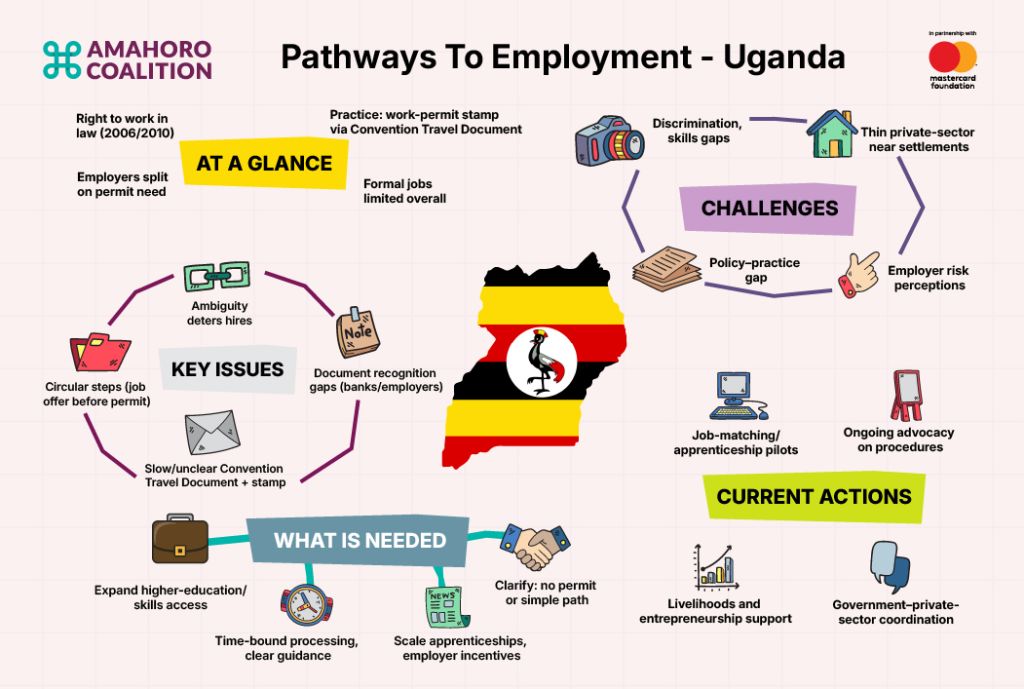
Get the full Uganda Country Report below:
Want to know when new country reports are released in the Pathways to Employment series? Fill in your details below, and we’ll notify you as soon as new reports go live.
We respect your privacy and we will keep your email address confidential. Your information will only be used to share updates related to this research series.
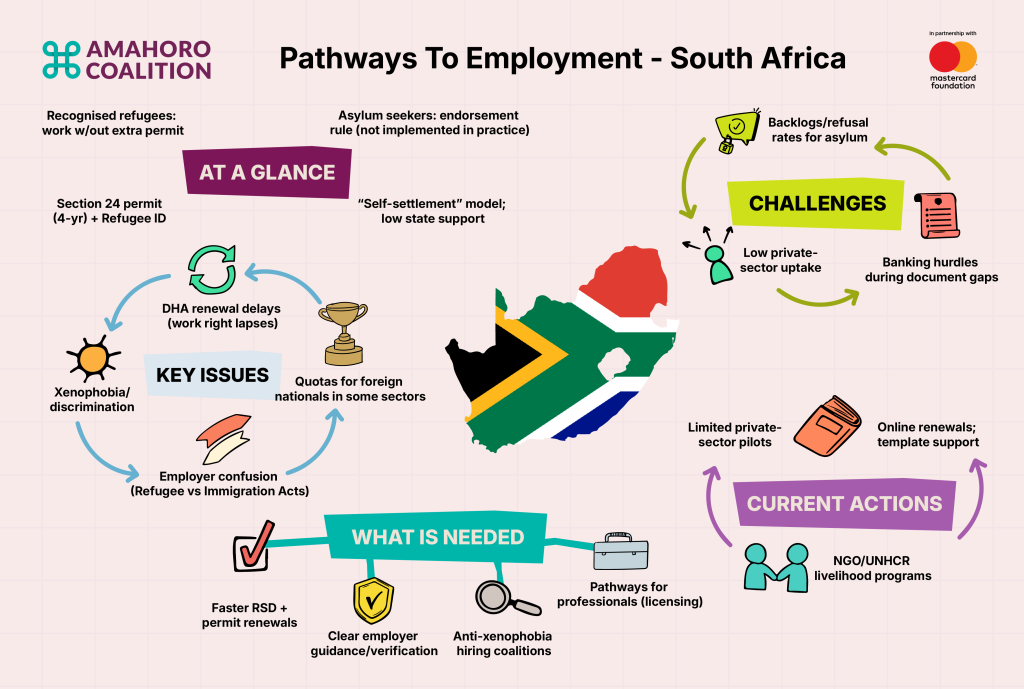
Get the full South Africa Country Report below:
Want to know when new country reports are released in the Pathways to Employment series? Fill in your details below, and we’ll notify you as soon as new reports go live.
We respect your privacy and we will keep your email address confidential. Your information will only be used to share updates related to this research series.
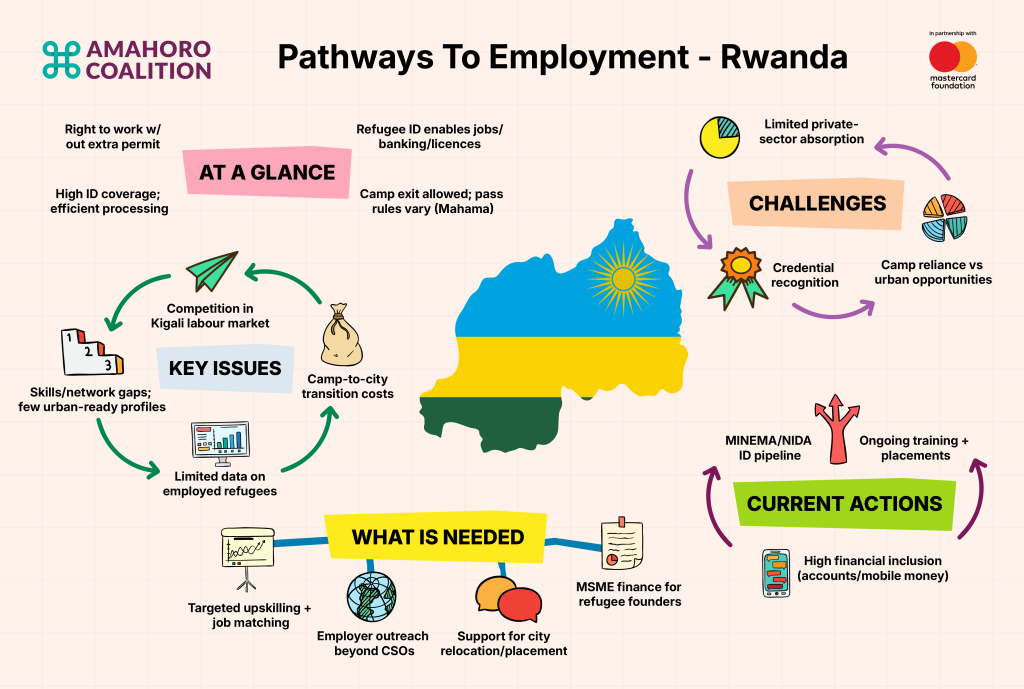
Get the full Rwanda Country Report below:
Want to know when new country reports are released in the Pathways to Employment series? Fill in your details below, and we’ll notify you as soon as new reports go live.
We respect your privacy and we will keep your email address confidential. Your information will only be used to share updates related to this research series.
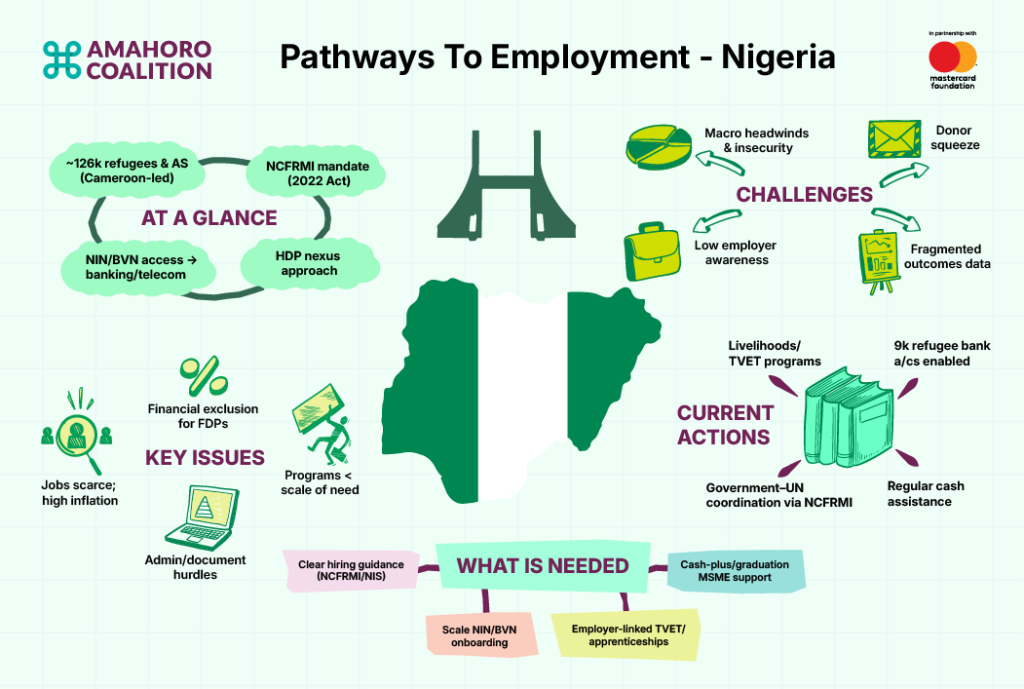
Get the full Nigeria Country Report below:
Want to know when new country reports are released in the Pathways to Employment series? Fill in your details below, and we’ll notify you as soon as new reports go live.
We respect your privacy and we will keep your email address confidential. Your information will only be used to share updates related to this research series.
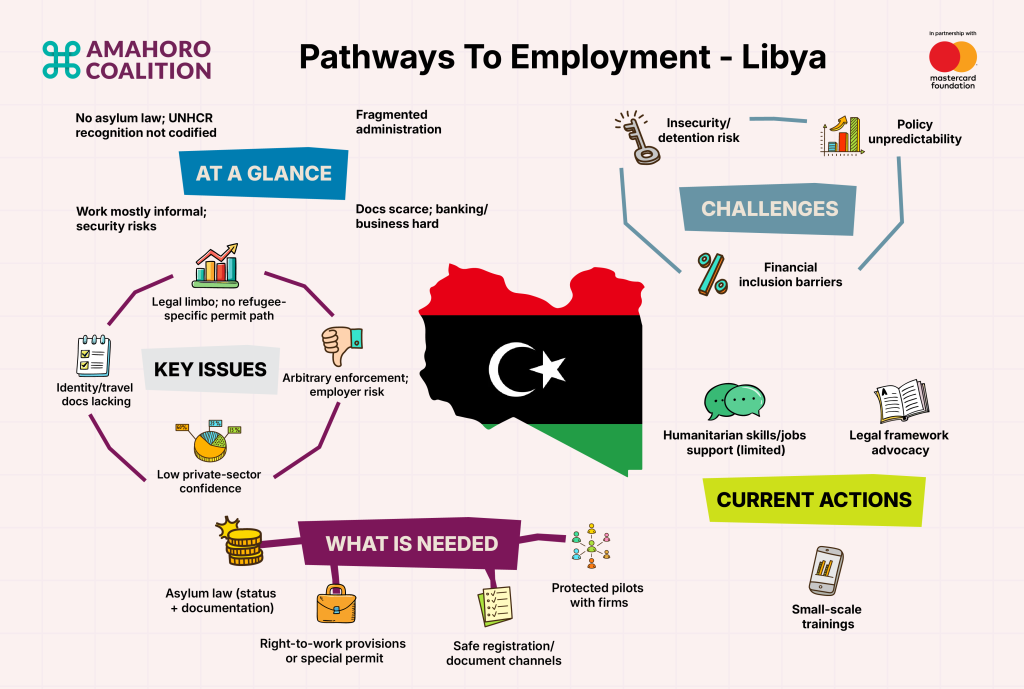
Get the full Libya Country Report below:
Want to know when new country reports are released in the Pathways to Employment series? Fill in your details below, and we’ll notify you as soon as new reports go live.
We respect your privacy and we will keep your email address confidential. Your information will only be used to share updates related to this research series.
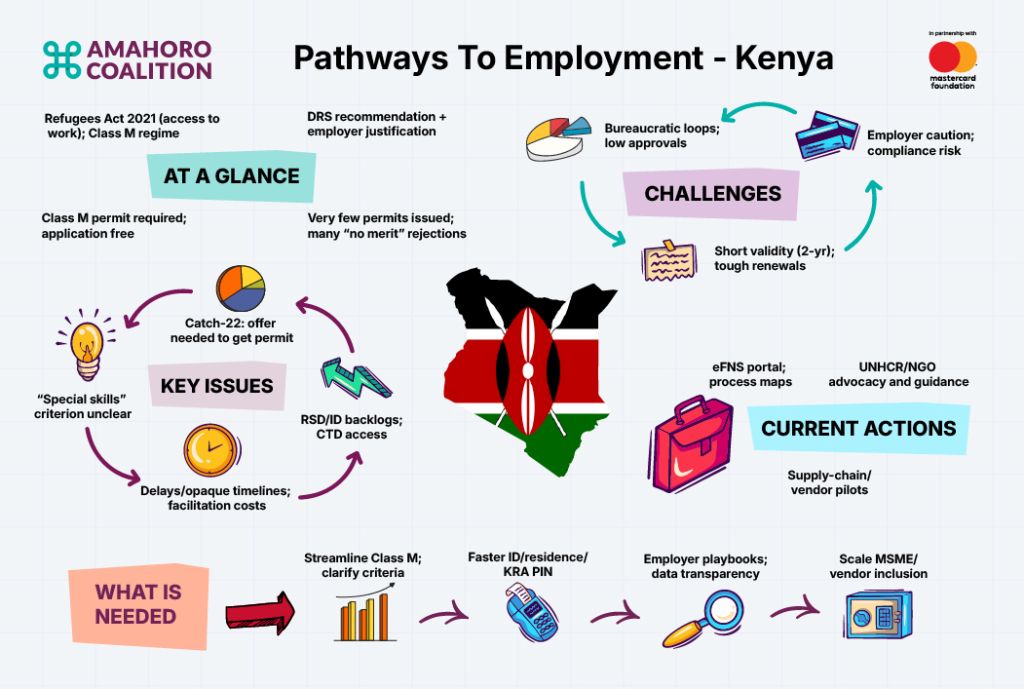
Get the full Kenya Country Report below:
Want to know when new country reports are released in the Pathways to Employment series? Fill in your details below, and we’ll notify you as soon as new reports go live.
We respect your privacy and we will keep your email address confidential. Your information will only be used to share updates related to this research series.
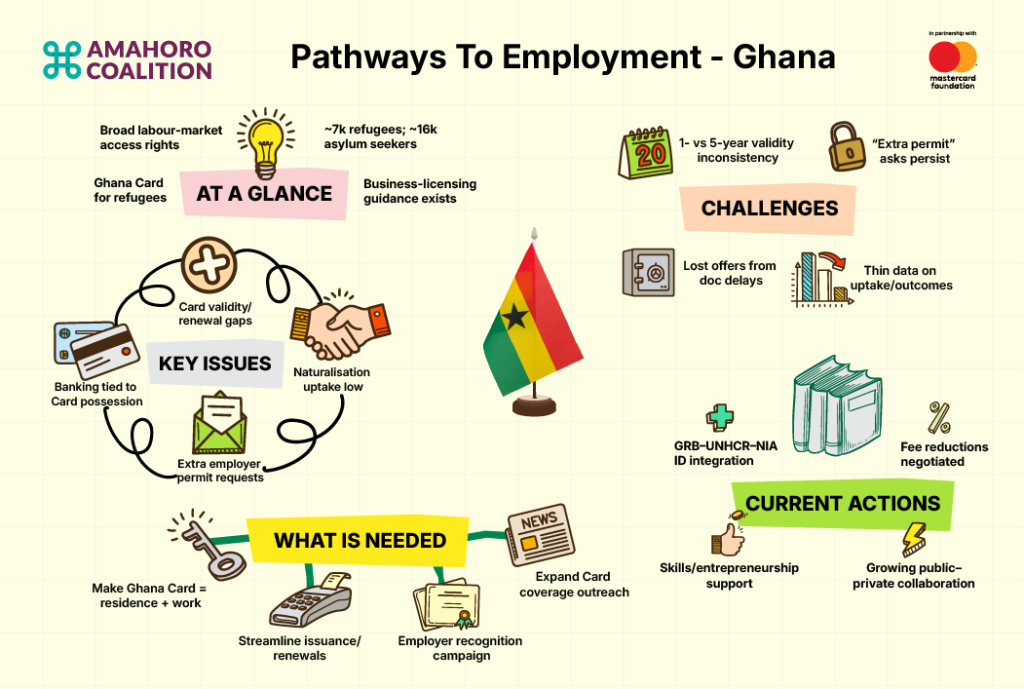
Get the full Ghana Country Report below:
Want to know when new country reports are released in the Pathways to Employment series? Fill in your details below, and we’ll notify you as soon as new reports go live.
We respect your privacy and we will keep your email address confidential. Your information will only be used to share updates related to this research series.
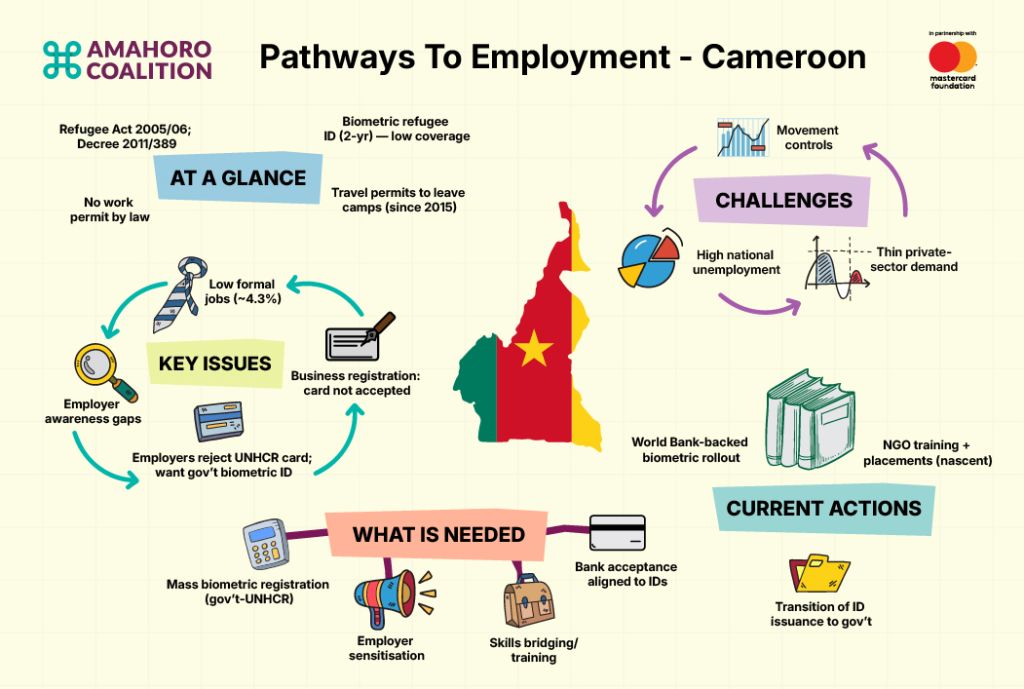
Get the full Cameroon Country Report below:
Want to know when new country reports are released in the Pathways to Employment series? Fill in your details below, and we’ll notify you as soon as new reports go live.
We respect your privacy and we will keep your email address confidential. Your information will only be used to share updates related to this research series.
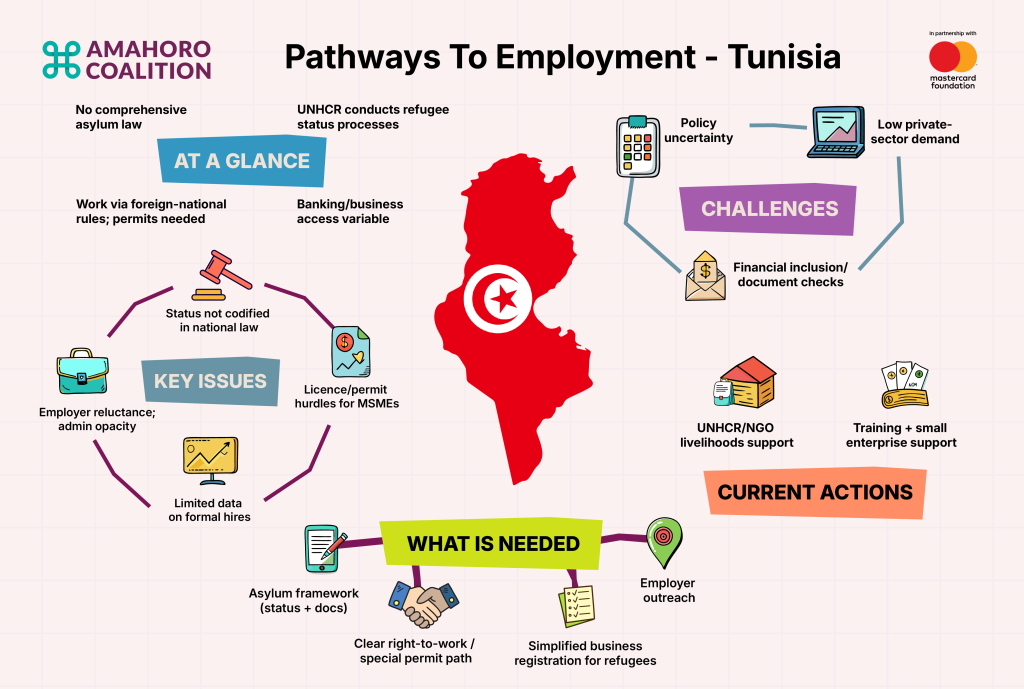

Get the full Tunisia Country Report below:
Want to know when new country reports are released in the Pathways to Employment series? Fill in your details below, and we’ll notify you as soon as new reports go live.
We respect your privacy and we will keep your email address confidential. Your information will only be used to share updates related to this research series.
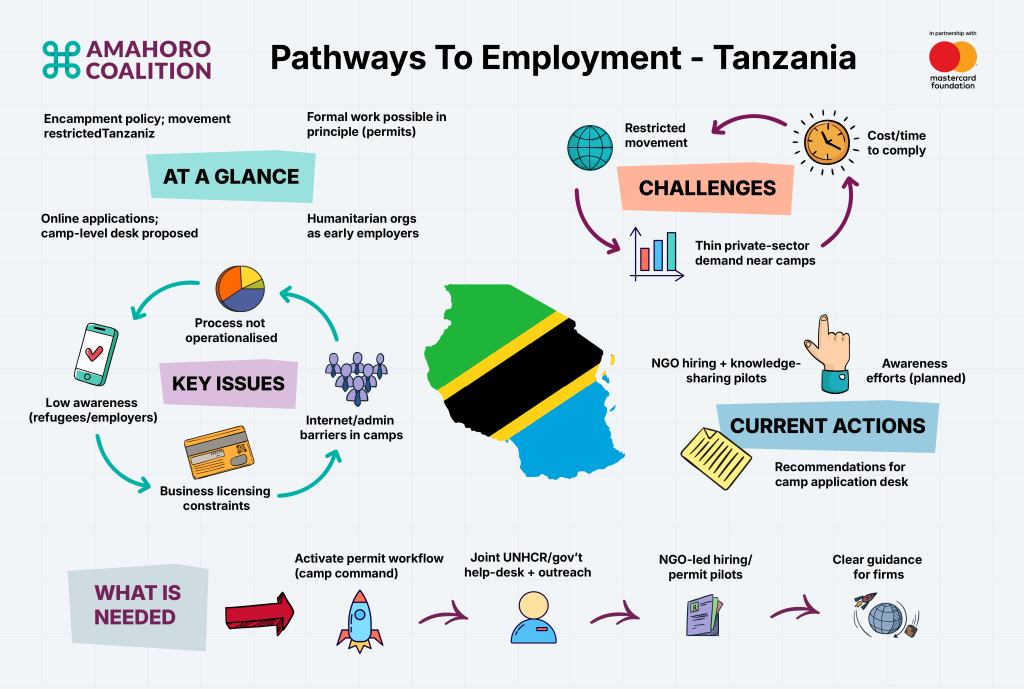

Get the full Tanzania Country Report below:
Want to know when new country reports are released in the Pathways to Employment series? Fill in your details below, and we’ll notify you as soon as new reports go live.
We respect your privacy and we will keep your email address confidential. Your information will only be used to share updates related to this research series.
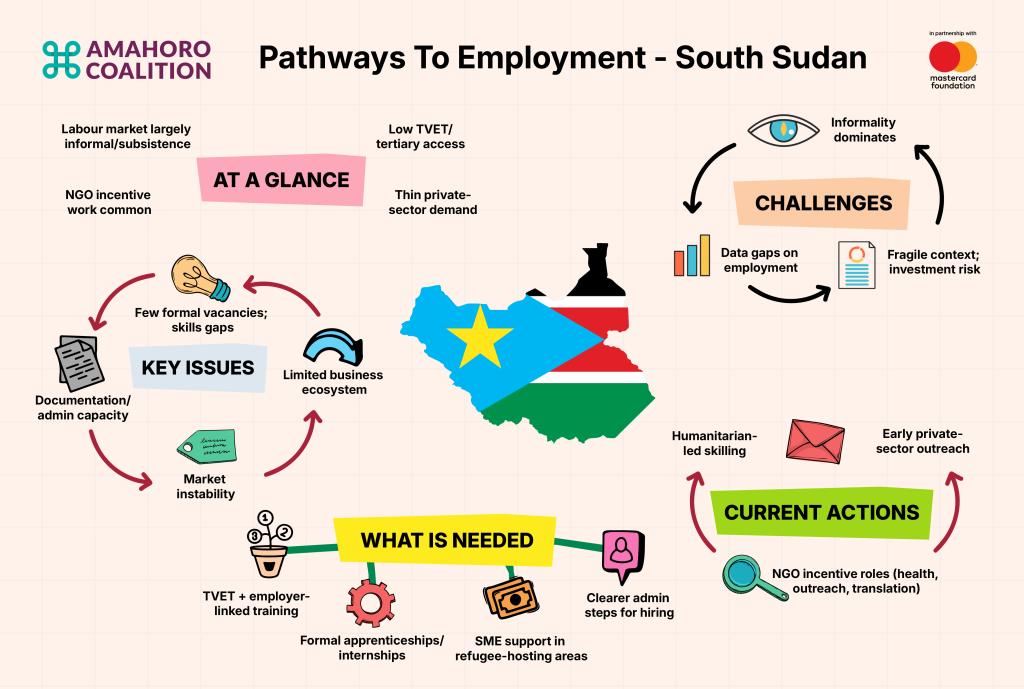

Get the full South Sudan Country Report below:
Want to know when new country reports are released in the Pathways to Employment series? Fill in your details below, and we’ll notify you as soon as new reports go live.
We respect your privacy and we will keep your email address confidential. Your information will only be used to share updates related to this research series.
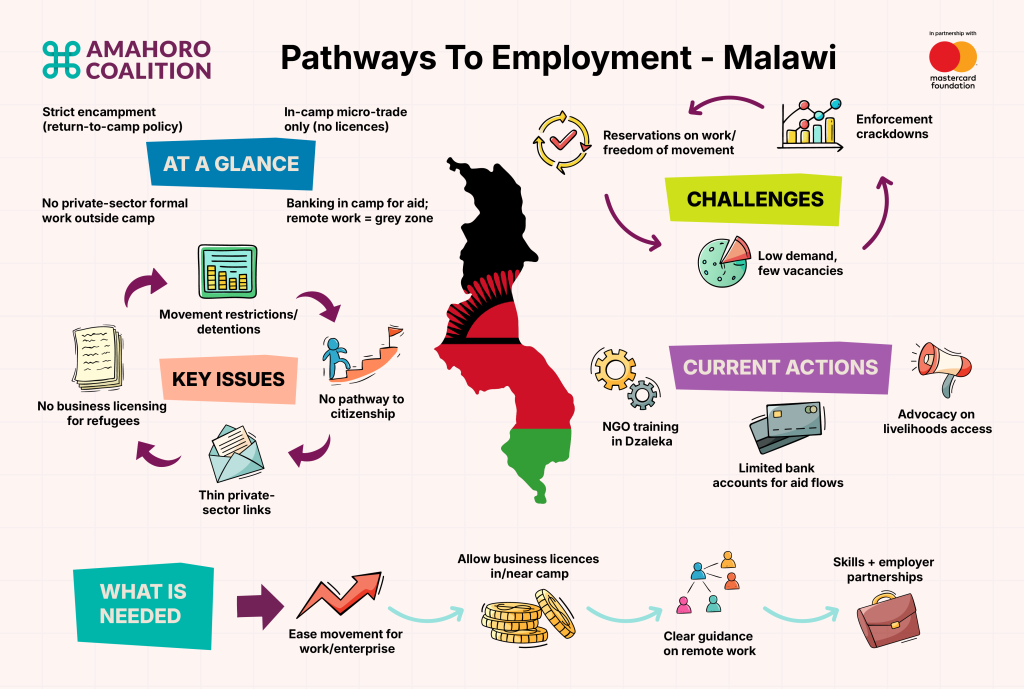

Get the full Malawi Country Report below:
Want to know when new country reports are released in the Pathways to Employment series? Fill in your details below, and we’ll notify you as soon as new reports go live.
We respect your privacy and we will keep your email address confidential. Your information will only be used to share updates related to this research series.
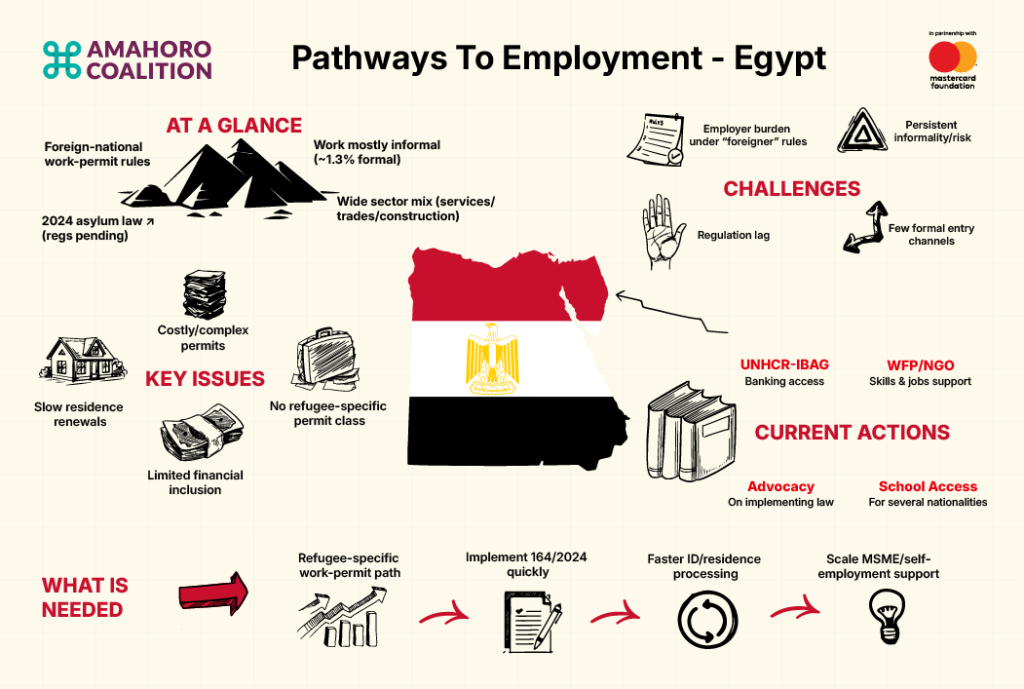

Get the full Egypt Country Report below:
Want to know when new country reports are released in the Pathways to Employment series? Fill in your details below, and we’ll notify you as soon as new reports go live.
We respect your privacy and we will keep your email address confidential. Your information will only be used to share updates related to this research series.
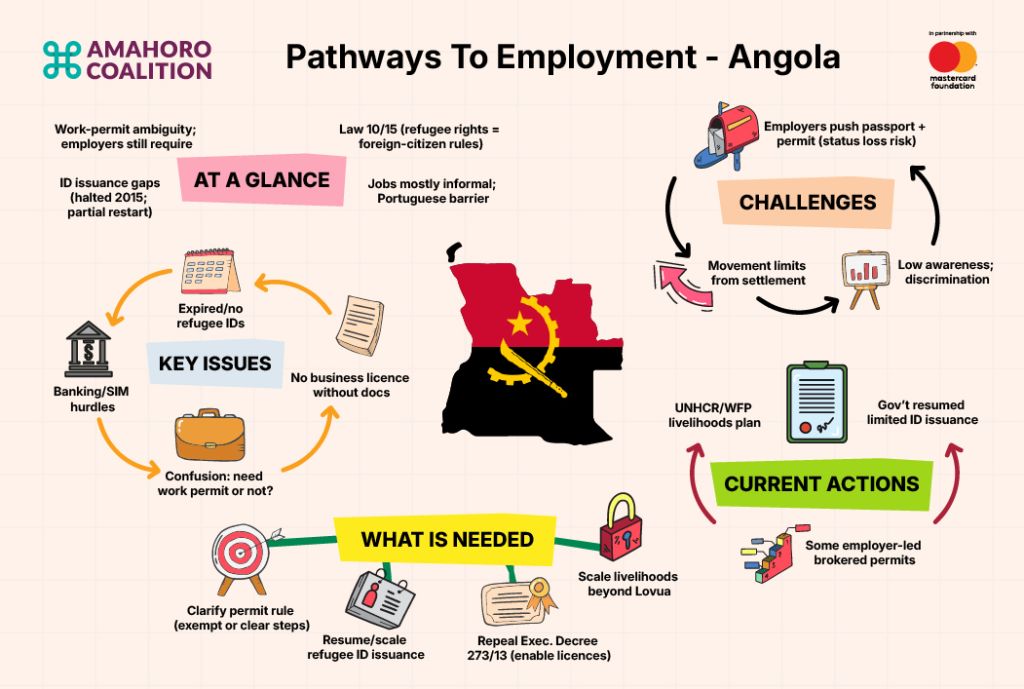

Get the full Angola Country Report below:
Want to know when new country reports are released in the Pathways to Employment series? Fill in your details below, and we’ll notify you as soon as new reports go live.
We respect your privacy and we will keep your email address confidential. Your information will only be used to share updates related to this research series.

While most people see data, Tilda sees stories waiting to be told. As Amahoro Coalition’s strategy developer and M&E lead,she transforms complex humanitarian data into crystal-clear insights across Sub-Saharan Africa’s forcibly displaced landscape.
Tilda’s knowledge and experience spans key markets across East, West, South and North Africa. Her unique academic cocktail—Real Estate from University of Nairobi mixed with Analytics from Heriot Watt Dubai—proves that the best strategists think in blueprints and bar charts.

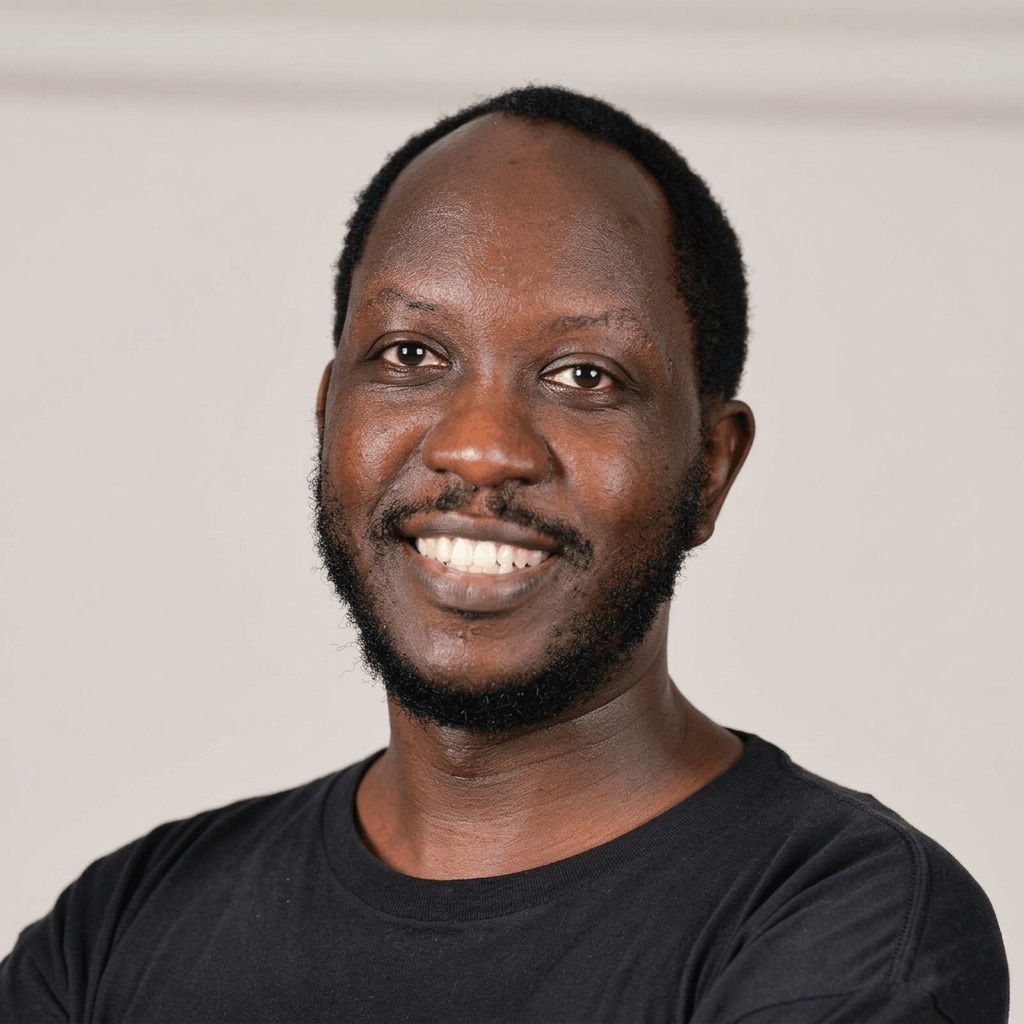
Gilbert Mucyo brings over 15 years of experience in storytelling, strategic communications, and public affairs. At Amahoro Coalition, he leads the organization’s strategic positioning through innovative storytelling and narrative change initiatives, including through the Mpatato Storytelling Lab.
Before joining Amahoro, Gilbert was the Regional Director of Communications & Storytelling at INKOMOKO, where he successfully led the organization’s rebrand and expanded its visibility across East Africa. He also previously headed Rwanda’s Office of the Government Spokesperson, where he coordinated a unified communications approach across government institutions.
Gilbert holds a Master’s degree in Media, Culture and Society from the University of East Anglia and a Bachelor’s degree in Communications from the National University of Rwanda.
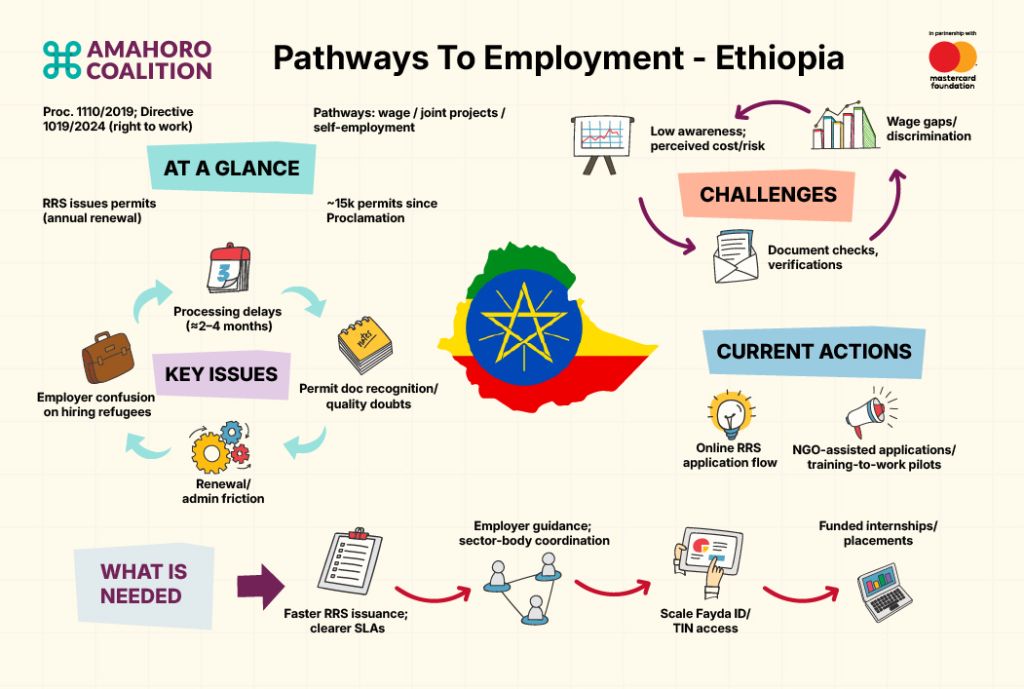
Get the full Ethiopia Country Report below:
Want to know when new country reports are released in the Pathways to Employment series? Fill in your details below, and we’ll notify you as soon as new reports go live.
We respect your privacy and we will keep your email address confidential. Your information will only be used to share updates related to this research series.