HACO Industries, one of Kenya’s oldest FMCGs, went to Kakuma refugee settlement in April 2025 expecting a Corporate Social Responsibility visit. They left with a new market strategy.
Inside Kakuma, which is home to over 300,000 Forcibly Displaced Persons (FDPs), HACO’s team found active enterprise ecosystems, entrepreneurial women running micro-businesses, and consumer markets that most Kenyan companies are yet to map.
The company’s ESG and Education Lead, Collin Namayuba, subsequently established a Kwa Mtaa container in the settlement, a fabricated salon and retail hub that gave displaced women a platform for income-generating work. The initiative expanded HACO’s market visibility, created local distribution relationships, and opened access to a new commercially viable consumer base.
“The trip to Kakuma showed me that it is just another community with people who have needs, and those needs come with opportunities,” said HACO Industries Managing Director Mary-Ann Musangi. “I was determined to venture into business there quickly and show other corporations what can be done in this environment.” For HACO, the opportunity extended beyond the settlement itself.
“One of our strategies is to expand to other markets, so we are recruiting refugee interns based in Kenya, training them, and sending them to their countries to spearhead those operations,” Musangi said. “It is easier for a local to sell to his brothers and sisters.”
The company’s ESG and Education Lead, Collin Namayuba, subsequently established a Kwa Mtaa container in the settlement, a fabricated salon and retail hub that gave displaced women a platform for income-generating work. The initiative expanded HACO’s market visibility, created local distribution relationships, and opened access to a new commercially viable consumer base.
“The trip to Kakuma showed me that it is just another community with people who have needs, and those needs come with opportunities,” said HACO Industries Managing Director Mary-Ann Musangi. “I was determined to venture into business there quickly and show other corporations what can be done in this environment.” For HACO, the opportunity extended beyond the settlement itself.
“One of our strategies is to expand to other markets, so we are recruiting refugee interns based in Kenya, training them, and sending them to their countries to spearhead those operations,” Musangi said. “It is easier for a local to sell to his brothers and sisters.”
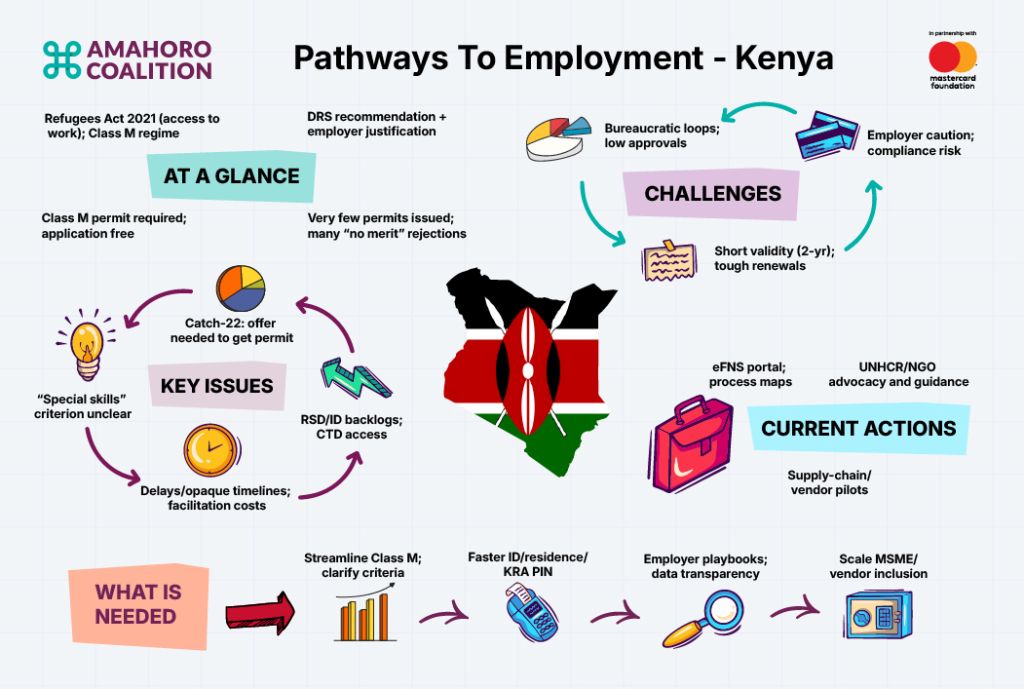
HACO is not alone. Across Kenya, companies are beginning to realise that the talent they describe as adaptable, multilingual, resilient, and capable of operating across diverse environments is often already present within displaced communities. But largely disconnected from formal recruitment pipelines.
Three things have consistently kept businesses and displaced talent apart: companies do not know where to source candidates, assume the process is legally complicated, and lack visible proof that the model works.
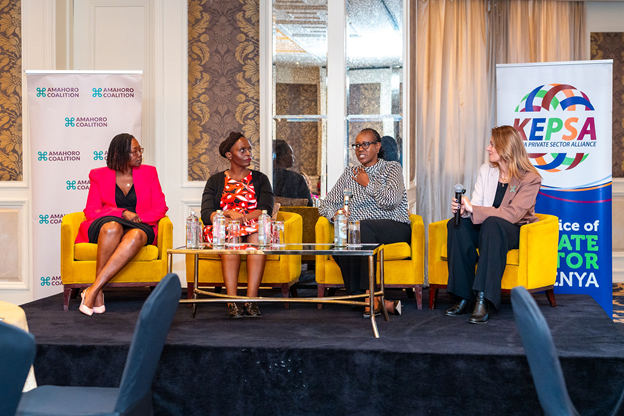
That was the problem a private sector roundtable hosted by Amahoro Coalition and the Kenya Private Sector Alliance (KEPSA) set out to solve.
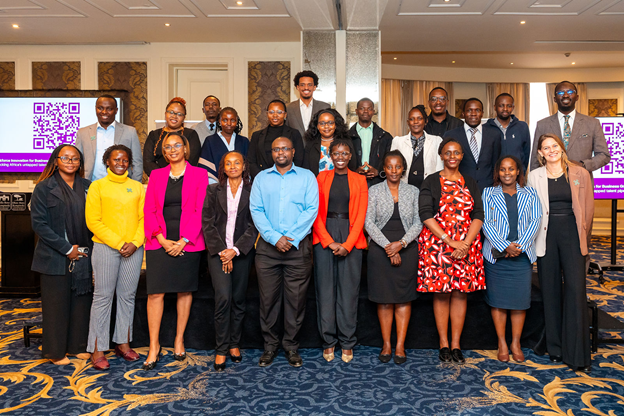
Held in Nairobi, the roundtable brought together representatives from twenty-one companies to explore how displaced talent could support workforce innovation, business growth, and recruitment needs.
“The event convened private sector members to showcase the untapped FDPs talent and how easily it can be accessed through our Skills Hub platform, alongside the wider business case for inclusive hiring,” explains Daisy Bartlett, Amahoro’s Strategy Developer, Private Sector Engagement.
The issue, participants agreed, is not necessarily a talent problem. It is a sourcing problem. Amahoro Coalition’s Skills Hub is a digital platform designed to connect forcibly displaced persons to meaningful economic opportunities across Africa. Companies submit a job description, timeline, and stipend expectation. Amahoro then manages outreach, candidate.
The platform also supports Amahoro’s Premier Internship Programme, which connects private sector companies with vetted and trained interns drawn from institutions including USIU-Africa, the University of Nairobi, Strathmore University, Kepler College in Rwanda, and a wider network of TVET institutions.
“FDP talent is often resilient, thinks outside the box, is culturally aware, and in many cases has experience navigating different countries, cultures, and languages,” Daisy explained. “They also tend to show strong loyalty and adaptability.” For companies attending the roundtable, one of the strongest proof points came from employers already hiring through the platform.
“The event convened private sector members to showcase the untapped FDPs talent and how easily it can be accessed through our Skills Hub platform, alongside the wider business case for inclusive hiring,” explains Daisy Bartlett, Amahoro’s Strategy Developer, Private Sector Engagement.
The issue, participants agreed, is not necessarily a talent problem. It is a sourcing problem. Amahoro Coalition’s Skills Hub is a digital platform designed to connect forcibly displaced persons to meaningful economic opportunities across Africa. Companies submit a job description, timeline, and stipend expectation. Amahoro then manages outreach, candidate.
The platform also supports Amahoro’s Premier Internship Programme, which connects private sector companies with vetted and trained interns drawn from institutions including USIU-Africa, the University of Nairobi, Strathmore University, Kepler College in Rwanda, and a wider network of TVET institutions.
“FDP talent is often resilient, thinks outside the box, is culturally aware, and in many cases has experience navigating different countries, cultures, and languages,” Daisy explained. “They also tend to show strong loyalty and adaptability.” For companies attending the roundtable, one of the strongest proof points came from employers already hiring through the platform.

NABU, a bilingual children’s storybook publisher, shared its experience recruiting through Amahoro in 2025 after being commissioned by UNICEF Sudan to create storybooks in English and Arabic.
Through Amahoro, NABU accessed illustrators, writers, proofreaders, and other creative professionals. The organisation hired sixteen creatives and retained them for additional projects after the initial assignment ended. It has also recruited interns through the Skills Hub in both Kenya and Rwanda. “We were very impressed by their skillsets and excellence and are retaining five creatives,” said Clara Masinde, NABU’s Regional Director for East Africa.
Masinde described candidates who brought strong multilingual capability, cross-cultural awareness, and a level of motivation that surprised her hiring team. Margaret Wachira, a fractional HR consultant with experience across DHL, Ogilvy, WPP, and Samsung, shared a similar experience after hiring refugee interns through Amahoro earlier this year.
“You don’t think about FDP talent until someone talks about it,” Wachira said. “Once you remove the ‘refugee’ tag, they are just people like us.” The Nairobi roundtable demonstrated a shift that is taking hold within parts of Kenya’s private sector: displaced professionals are beginning to enter hiring pipelines because they are solving a recruitment challenge.
Through Amahoro, NABU accessed illustrators, writers, proofreaders, and other creative professionals. The organisation hired sixteen creatives and retained them for additional projects after the initial assignment ended. It has also recruited interns through the Skills Hub in both Kenya and Rwanda. “We were very impressed by their skillsets and excellence and are retaining five creatives,” said Clara Masinde, NABU’s Regional Director for East Africa.
Masinde described candidates who brought strong multilingual capability, cross-cultural awareness, and a level of motivation that surprised her hiring team. Margaret Wachira, a fractional HR consultant with experience across DHL, Ogilvy, WPP, and Samsung, shared a similar experience after hiring refugee interns through Amahoro earlier this year.
“You don’t think about FDP talent until someone talks about it,” Wachira said. “Once you remove the ‘refugee’ tag, they are just people like us.” The Nairobi roundtable demonstrated a shift that is taking hold within parts of Kenya’s private sector: displaced professionals are beginning to enter hiring pipelines because they are solving a recruitment challenge.