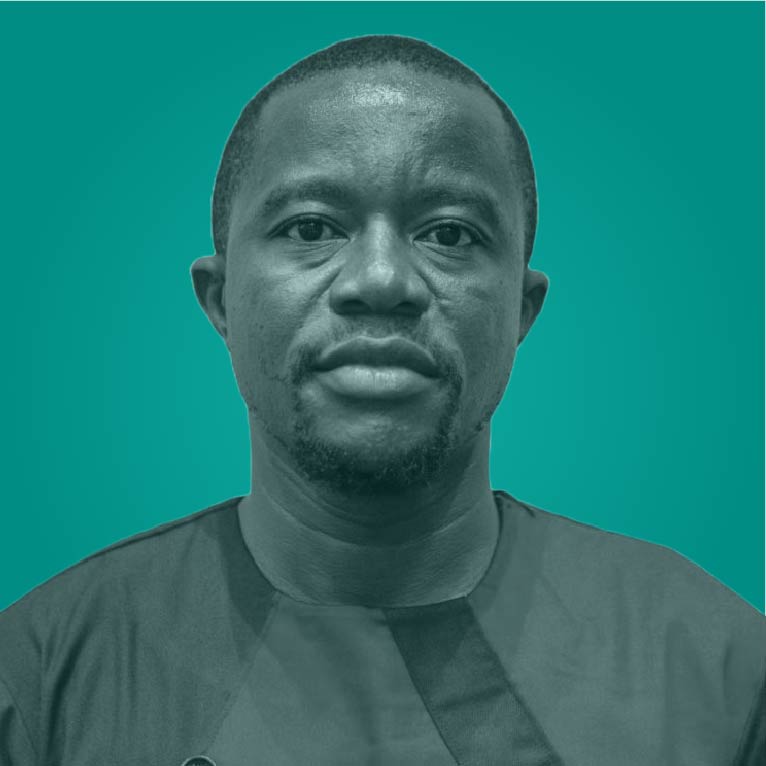
Munguzo Kapera arrived in Uganda’s Nakivale Refugee Settlement in 2017 speaking French and Swahili in a country where the official language is English. Information that could change his life such as scholarships, health services, training programmes, and jobs was inaccessible to him.
Noticeboards were in English. Offices were up to 13 kilometres apart. Often, information was outdated by the time people trekked across the settlement.


“Human time is one of the largest unmeasured economic drains in any displacement setting,” says Munguzo. “Time spent in transit could be spent earning or studying”. His response was to build the infrastructure he could not find, and to become, as his name in his mother tongue means, a pillar.
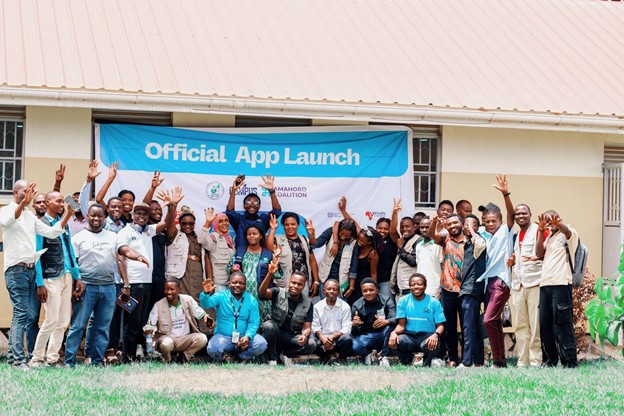
With eight employees, Munguzo who is also an Amahoro Coalition’s fellow, now runs two ventures, CAMPUS Digital Hub and ConnectRefugee, both designed to close the information and the economic gap inside displacement settings.
Munguzo founded CAMPUS Digital Hub to give young displaced people access to the structured training and market exposure he wished was available when he came. He later received a license from the International Labour Organization as a gig work trainer.

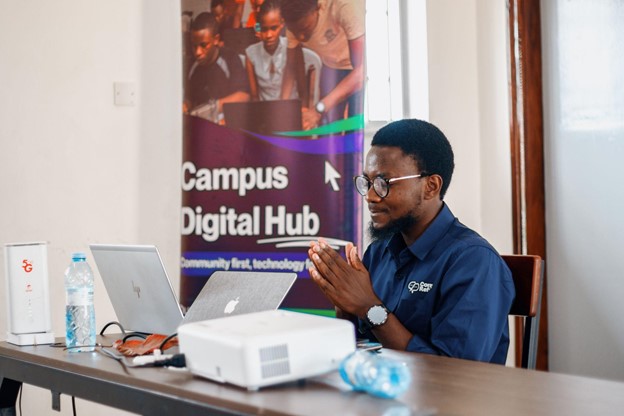
Over 100 people have completed the programme in the last three years. The model is designed for immediate income generation. Students are connected to clients even before completing training, allowing them to begin earning while still in class.
“80% of our students start earning before completing the course,” beams Munguzo. “A three-day gig pays around 130 dollars. The Hub is a distributed talent pipeline connected to real market demand.”
This multilingual platform aggregates verified updates from organisations operating in Nakivale and delivers them in five languages: English, French, Swahili, Kinyarwanda, and Arabic. Information includes education and job opportunities, healthcare services, food distribution, news and events.
“Information should reach people in a language they understand,” says Munguzo. “That’s why we will keep adding more languages to the app.”
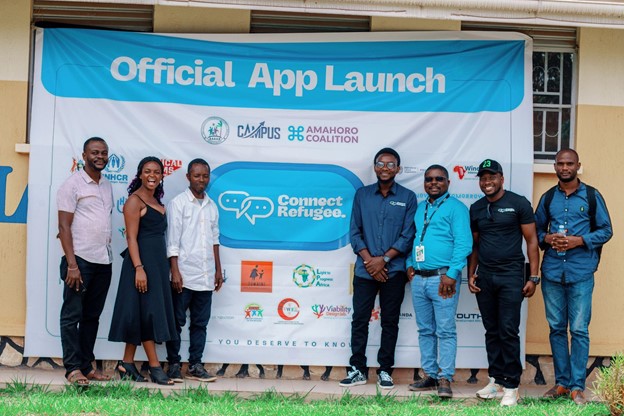
For decades, accessing information has largely depended on walking to offices, queueing for hours, or relying on fragmented word-of-mouth networks.
The economic cost includes lost working hours, missed deadlines, duplicated transport, and delayed access to services.
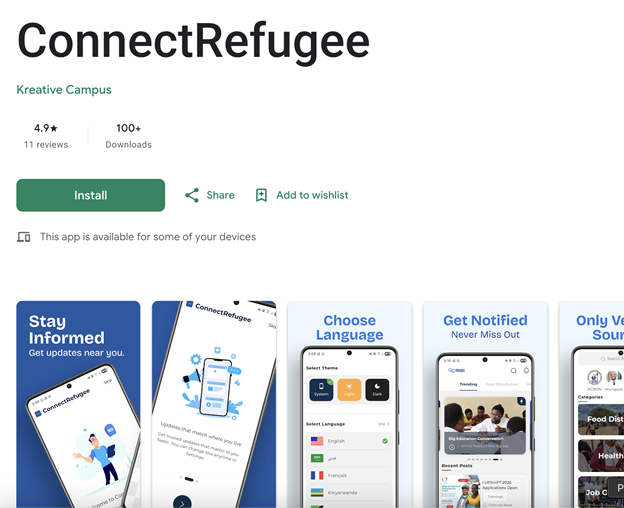
ConnectRefugee turns that friction into infrastructure.
The United Nations Office for the Coordination of Humanitarian Affairs reported a 40% humanitarian funding drop in 2025. Organizations are looking for faster and lower-cost ways to communicate across large populations. ConnectRefugee provides a scalable response to that operational challenge.
His long-term vision extends beyond Nakivale. Uganda hosts more than two million refugees across thirteen settlements according to Humanitarian Action’s Global Humanitarian Overview 2026.
He sees ConnectRefugee as public digital infrastructure for displacement settings across Africa, from Kakuma and Dadaab to settlements in Malawi and beyond. Standardising information flow inside communities that have historically depended on fragmented physical systems.
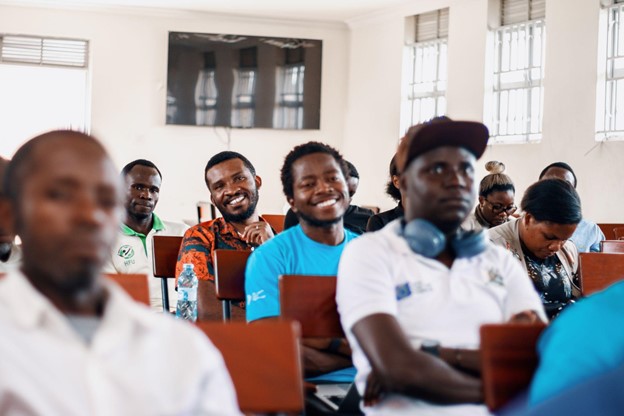
Just as mobile money transformed financial access in places where formal banking infrastructure was limited, Munguzo believes digital information systems can reshape how displaced communities access services, opportunities, and markets.