Annual Report 2025
Building Economic Inclusion for Displaced Communities.
Isaac Kwaku Fokuo
Message from the Curator
Over the past year, I have found myself returning to the same question in different rooms, with different partners and in different countries across Africa. How do we respond to displacement in ways that honour dignity, unlock potential and last? The scale and nature of displacement on the continent continue to challenge traditional humanitarian responses. Crises are lasting longer, needs are growing and fragmented and short-term interventions are no longer enough.

Key Achievements at a Glance
Total Funding
Disbursed
Jobs Created
Cost/Job
SROI
New Jobs Growth
$992,983
1,342
$740
6.68:1
221%
Additional
Funding raised
Funding
Multiplier
Women in Jobs
RDPs in Jobs
Key Sectors by Jobs created
$4.51M
4.54x
409 (30.5%)
664 (49.5%)
Sustainability (53.7%),
Agriculture(17.2%), IT and Innovation(11.8%), Social Impact(5.9%)
Skills Hub &aClient Engagement
Results
6,430 talents onboarded
2,000+ youth in work
35 placement partners
240,000+ job commitments secured
1,724 private sector companies on MIS
208 CSU partners onboarded
Key Achievements at a Glance
Total Funding
Disbursed
$992,983
Cost/Job
$740
Jobs Created
1,342
SROI
6.68:1
New Jobs Growth
221%
Additional
Funding raised
$4.51M
Funding
Multiplier
4.54x
Women in Jobs
409 (30.5%)
RDPs in Jobs
664 (49.5%)
Key Sectors by Jobs created
Sustainability (53.7%),
Agriculture(17.2%), IT and Innovation(11.8%), Social Impact(5.9%)
Skills Hub & Client Engagement
6,430 talents onboarded
35 placement partners
1,724 private sector companies on MIS
Results
2,000+ youth in work
240,000+ job commitments secured
208 CSU partners onboarded
Year in Review
2025 was a landmark year for Amahoro Coalition, marked by unprecedented growth, strategic partnerships, and tangible impact across our programs. Our work reached new heights as we expanded our geographic footprint, deepened our engagement with the private sector, and demonstrated the economic viability of investing in displaced communities.
Cohort 3 Recruitment Success
We successfully completed the recruitment, selection, and announcement of 41 exceptional new Amahoro Fellows for Cohort 3. The process drew 1,678+ applications through our new MIS system, enabling a more streamlined and data-driven selection process.
Skills Hub & Client Engagement
Diverse
Professional backgrounds including filmmakers, pastry chefs, and
environmental advocates
Fellowship Program
Building a Network of Leaders Creating Transformative Change
Our Fellowship program empowers displaced persons to become leaders capable of driving systemic change. By enhancing their capacity to establish and scale sustainable businesses and initiatives, we directly contribute to creating formal work opportunities, fostering economic resilience, and advancing inclusive growth in displacement-affected markets.
Through a 12-month program, each Fellow immerses themselves in curated and practical leadership, business management, and operations training. They also have the opportunity to secure up to $150,000 to scale their impact. Key achievements in 2025 included;
Fellowship Program
Economic Impact & Return on Investment
Our preliminary field assessments across Amahoro Fellowship enterprises reveal remarkable economic leverage from the program’s average funding of $14,997 per Fellow investment.
Key Findings
Amahoro is currently outperforming other benchmarks on fellows cost per job created at $740/job compared to an average benchmark of $1,184 per job.
The fellowship currently has an average job multiplication rate of 39.5 jobs per fellow.
The programme’s SROI of 6.68:1 exceeds a benchmark comparable of 5.0:1 for similar alleviation programmes.
The programme has recorded a 4.54x multiplier in additional funding attracted by fellows demonstrating strong co-investment potential.
Before joining the programme, fellows employed 428 people; post-funding, this grew to 1,342 jobs—a 214% increase demonstrating that refugee entrepreneurs face primarily liquidity constraints, though sustained revenue generation requires both capital and business model strengthening.
Fellowship Success Stories
Transforming Autism Support: Ariane Umuhoza (Cohort 1)
Ariane Umuhoza, a Rwandan refugee based in Cape Town, fundamentally transformed support for autistic children and their families through The Oasis Inclusive Centre, with the Amahoro Fellowship serving as a pivotal catalyst for growth. Since establishing the center in 2018, Ariane has built a comprehensive support system providing advocacy, specialized workshops, and autism-friendly transportation for 18 children attending the Alpha School for Learners with Autism.
The Amahoro Fellowship’s Funding Call 1 provided the essential resources that enabled Oasis to dramatically expand its digital presence through a new website, enhanced social media platforms, and an informative YouTube channel dedicated to sharing vital autism resources with a broader community. As a result, the Center was able to reach over 2,500 individuals through their growing digital presence.
From Book Drives to Nourishing Communities: Esther Kitumaini (Cohort 2)
The Amahoro Fellowship has been instrumental in transforming one fellow’s entrepreneurial journey from literacy advocacy to addressing a critical health need for mothers and children in Uganda. This case study highlights how the fellowship’s financial support and mentorship resulted in a bold transition that is creating lasting impact.
When selected for the Amahoro Fellowship in 2025, Esther Kitumaini arrived with plans
focused on book drives and literacy through her Book Drive Store venture. However, the intensive orientation in Kigali sparked a pivotal realization – her true passion lay in supporting maternal and child health during the crucial first 1,000 days of life, when brain development
is most critical.
Fellowship Success Stories
Digital Solutions for Fundamental Needs: Nancy Nyaleso (Cohort 2)
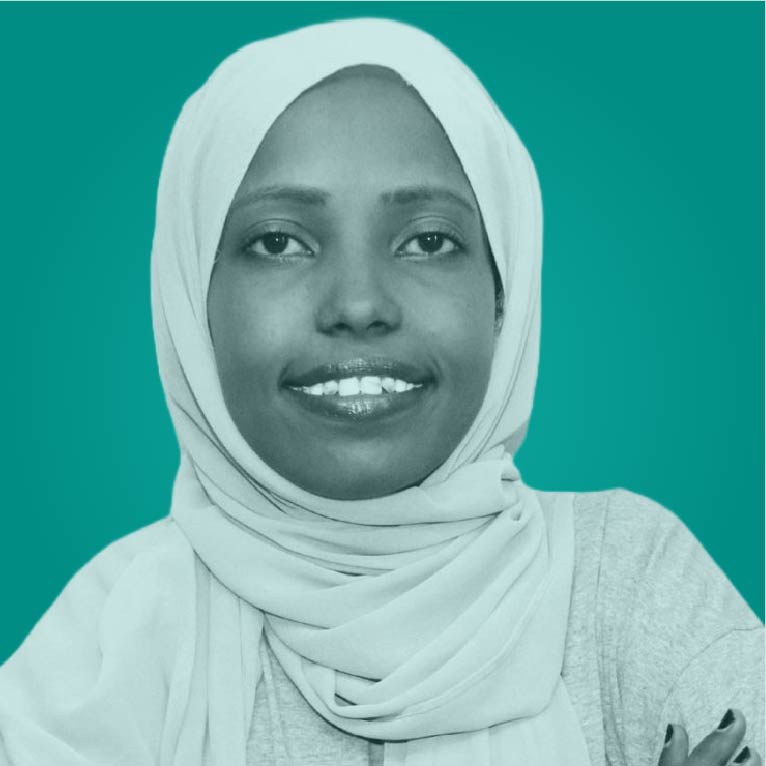
The Amahoro Fellowship has catalyzed groundbreaking initiatives addressing some of Africa’s most pressing yet overlooked challenges. Cohort 2 fellow Nancy Nyaleso exemplifies this transformative impact through her development of the Dignify e-wallet platform, an innovation revolutionizing menstrual health access across underserved communities through the EmpowerHer initiative.
Dignify is a tech-driven platform designed to streamline the financing, delivery, and real-time tracking of menstrual products, with a goal to ensure consistent access for 1,000,000 vulnerable girls by 2030. The wallet is also backed by a comprehensive 5-week health education program that focuses on improving psychosocial well-being and menstruation-related behavior among girls aged 13-18, including women with disabilities. The program covers essential topics from hygiene and puberty to reproductive anatomy, the menstrual cycle, sexual abuse awareness, menopause, and practical skills like reusable pad care and sewing.
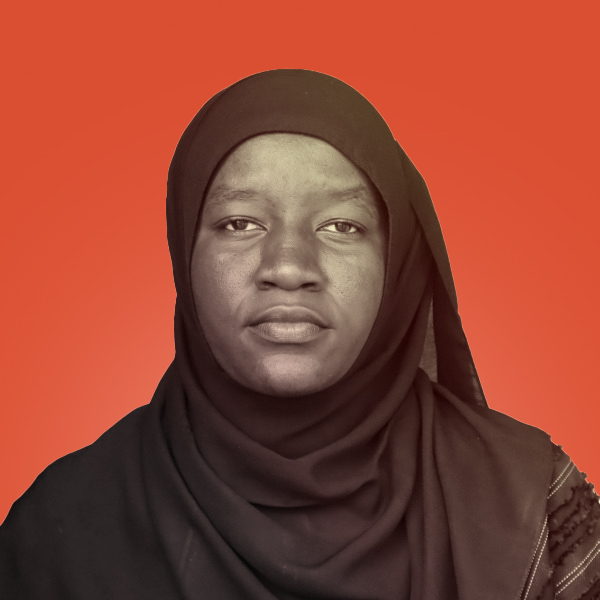
Turning Sports Into Opportunity: Lich Gatkoi Puok (Cohort 2)
The Refugee Basketball Initiative (RBI), founded by Cohort 2 Fellow Lich Gatkoi Puok, is a youth-led social enterprise based in Kakuma Refugee Camp, Kenya, that uses sport as a tool for peacebuilding, leadership development, and livelihood creation. Since joining the Amahoro Fellowship, RBI has evolved into one of the strongest examples of how refugee-led organizations can translate community-based engagement into measurable social and economic outcomes.
Through structured basketball training, mentorship, and life-skills programs, RBI has directly engaged more than 590 forcibly displaced persons to date, including 441 youth trained in basketball and leadership skills. The initiative also employs 10 displaced persons as coaches and coordinators, providing steady income opportunities within Kakuma’s constrained economic environment. Women currently make up over 40% of active participants and volunteers, underscoring the initiative’s commitment to inclusive participation and gender balance in leadership and sport.
Private Sector Engagement
In 2025, Amahoro Coalition significantly advanced its role as a champion for private sector involvement in creating economic opportunities for young refugees and displacement-affected people across Africa. By working strategically, establishing co-created job pipelines, and fostering investment-focused partnerships, Amahoro strengthened its ability to link skilled displaced persons with market-aligned employment while unlocking large-scale
livelihood opportunities in key countries.
Over the course of 2025, Amahoro significantly ramped up its outreach to the private sector. We engaged with over 380 private sector partners with these companies collectively committing over 340,000 jobs and livelihood opportunities for displaced persons across the continent.
Featured Partnerships
Talent Africa Company (Kenya, Nigeria, Uganda)
Committed to providing 10,000 displaced person jobs over a 10-year period, starting with a Career Clinic in Kakuma that led to initial 15 placements.
Kaltani (Nigeria)
A circular economy partnership that created four jobs and a significant supply-chain agreement with an Amahoro Fellow to buy 200 tonnes of waste monthly, helping a local business grow.
Outsource Global
Immediately provided 297 jobs in Nigeria, with plans to expand into Kenya soon after.
Additional Partners
GoodayOn, Samaritan Angels, CFAO, HACO, KEPSA, Riverside Holdings, TenX Nutrition, Wave, and Zeleman all moved forward with inclusive hiring, training programs, and internship pathways.
Private Sector Engagement
Amahoro also made further progress in mobilizing investment and philanthropic capital to unlock job and livelihood opportunities for displacement-affected communities. These partnerships continue to support private sector expansion, de-risk inclusive investments, and align philanthropic giving with sustainable economic outcomes.
These included:
Private Sector Engagement
a) Sports for Livelihoods: Samaritan Group Football Tournament
In Ghana, Amahoro Coalition partnered with the Samaritan Group toward the Refugee Football Scouting Tournament in Accra, to strengthen Amahoro’s sports-for-livelihoods initiative. The event, co-hosted with The Samaritan Group, brought together 120 young refugee players, showcasing emerging talent and offering pathways into professional football both locally and internationally. Following the tournament, 17 players were selected to join football clubs across Ghana, with the long-term goal of establishing a pan-African refugee football tournament.
Outlets such as SuperSports, My JoyOnline, Citi FM, Graphic Online, 3 News, and The Ghana Report highlighted the discovery of new refugee talent and the participation of respected national football figures. The tone across reports was consistently positive, framing refugee youth as ambitious, skilled, and worthy of national attention. This shift in narrative reflects a broader, cross-regional acknowledgment of sport as a pathway to inclusion and opportunity, positioning refugee participation not only within Ghana’s story of talent and resilience but also within a continental and global movement that sees sport as a bridge to dignity, livelihood, and belonging.
Private Sector Engagement
b) Strengthened Institutional Partnerships for Scalable Impact
Building on high-level engagements initiated earlier in the year, Amahoro finalized three strategic memoranda of understanding (MOUs) with major institutions in Nigeria, Somalia, and Kenya. Collectively, these partnerships aim to unlock livelihood opportunities for more than 210,000 forcibly displaced and host community members through coordinated efforts in job creation, financial inclusion, and affordable housing. The agreements reflect growing institutional confidence in Amahoro’s ability to align public, private, and philanthropic partners around a shared vision for systemic inclusion and economic transformation.
Private Sector Engagement
Bank of Agriculture Partnership (Nigeria)
At the Africa Food Systems Forum in Dakar in September 2025, Amahoro Coalition and the Bank of Agriculture (BOA) formalized a landmark partnership targeting 200,000 forcibly displaced persons and host community members across Nigeria. The collaboration establishes a joint framework for agribusiness development, job creation, and rural economic revitalization.
Amahoro’s Role
- Identify and prepare eligible beneficiaries for BOA-supported programs.
- Broker partnerships with agribusinesses, market off-takers, and private sector actors.
- Provide technical assistance in program design, impact measurement, and community engagement.
BOA’s Commitments
- Develop tailored financial products.
- Deliver financial literacy and agribusiness training.
- Leverage its nationwide branch network to reach displaced and host populations.
Together, the partners will advocate for inclusive agricultural and financial policies, embedding displacement-sensitive approaches into Nigeria’s broader food-security and rural-transformation agenda.
Hormuud Salaam Foundation Partnership (Somalia)
Amahoro expanded its footprint in Somalia through a groundbreaking partnership with the Hormuud Salaam Foundation (HSF), the social-impact arm of Hormuud Telecom and Salaam Somali Bank, two of Somalia’s largest private-sector institutions.
Special Focus
Africa Forum on Displacement 2025
The Africa Forum on Displacement (AFD) in Nairobi on April 28-29, 2025, was a transformative moment for Africa’s displacement agenda. With 415 people in attendance and over 1,100 joining virtually, the private sector turnout was an impressive 51.9% of attendees, a 72% increase from 2023. The forum solidified a continent-wide shift away from aid
dependency toward market-driven, circular economy solutions that benefit both refugees and host communities.
Key Numbers From AFD 2025
Attendance
Other Stats
Major Commitments Secured
Key Institutional Commitments
- Mastercard Foundation: $300M investment for 500,000 displaced youth.
- Bank of Agriculture: 20,000-job commitment for IDPs.
- New initiatives from IFC, Riverside Holdings, Kaltani, TGI, and others.
Client Engagement & Skills Hub
Amahoro launched an online Skills Hub Platform, a real-time channel for connecting job-ready displaced persons to employment opportunities powered by the MIS. The platform focuses on advancing linkages between Client Serving Organizations (RLOs, CBOs, Tertiary Institutions) and the Private Sector who are considered as the main employers.
Platform Architecture
Amahoro’s Skills Hub integrates three core interfaces that drive economic inclusion for displaced youth:
Talent Sourcing
Through Refugee-Led Organizations (RLOs), NGOs, universities, TVETs, and our proprietary community networks.
Skilling
Via strategic partnerships, such as soft skills training with TATC and
technical/hard skills through sector-aligned providers.
Placement
Through a growing network of employers across digital, hospitality, and other high-growth industries
Amahoro launched an online Skills Hub Platform, a real-time channel for connecting job-ready displaced persons to employment opportunities powered by the MIS. The platform focuses on advancing linkages between Client Serving Organizations (RLOs, CBOs, Tertiary Institutions) and the Private Sector who are considered as the main employers.
Skills Hub Overview
Distribution by Gender
Distribution by Host Country
Skills Hub Overview
Distribution by Education Level
Learning and Influencing
Amahoro’s unique position at the intersection of private sector engagement, talent development, and policy advocacy generates critical learnings that inform our strategy and the wider displacement-affected ecosystem. Through research, policy engagement, and strategic advocacy, we are reshaping the narrative around displacement and economic inclusion.
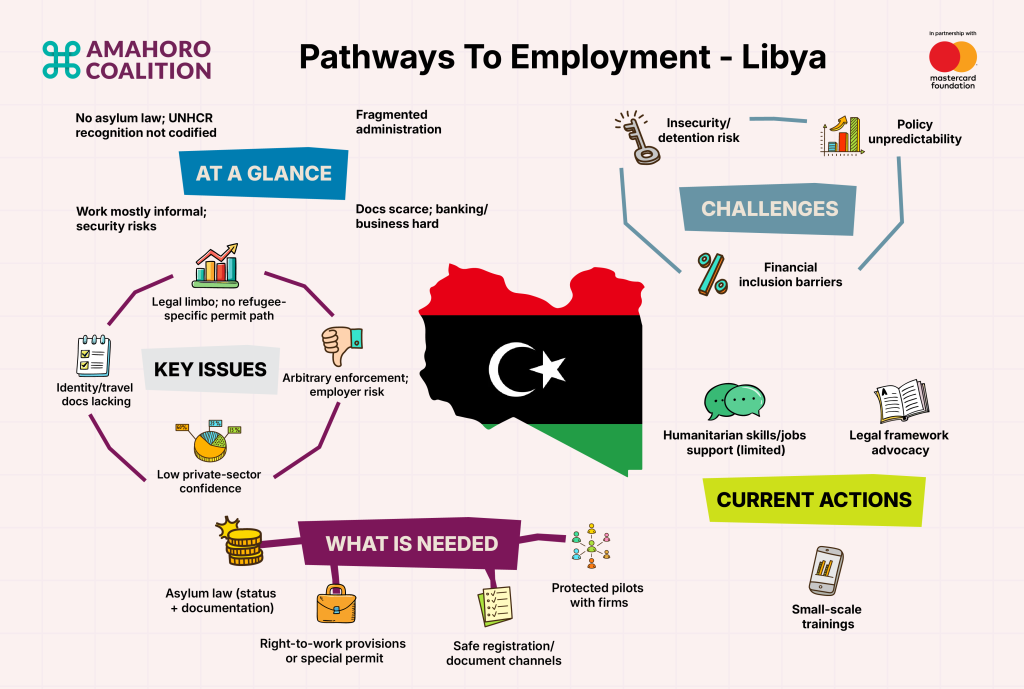
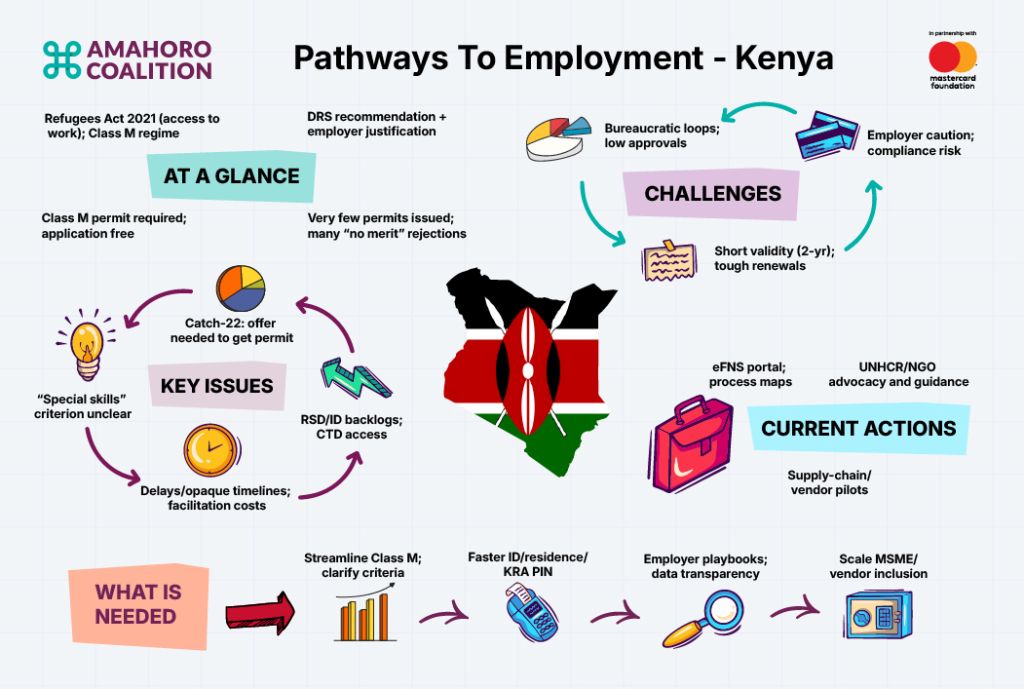
Pathways to Employment Series Launch
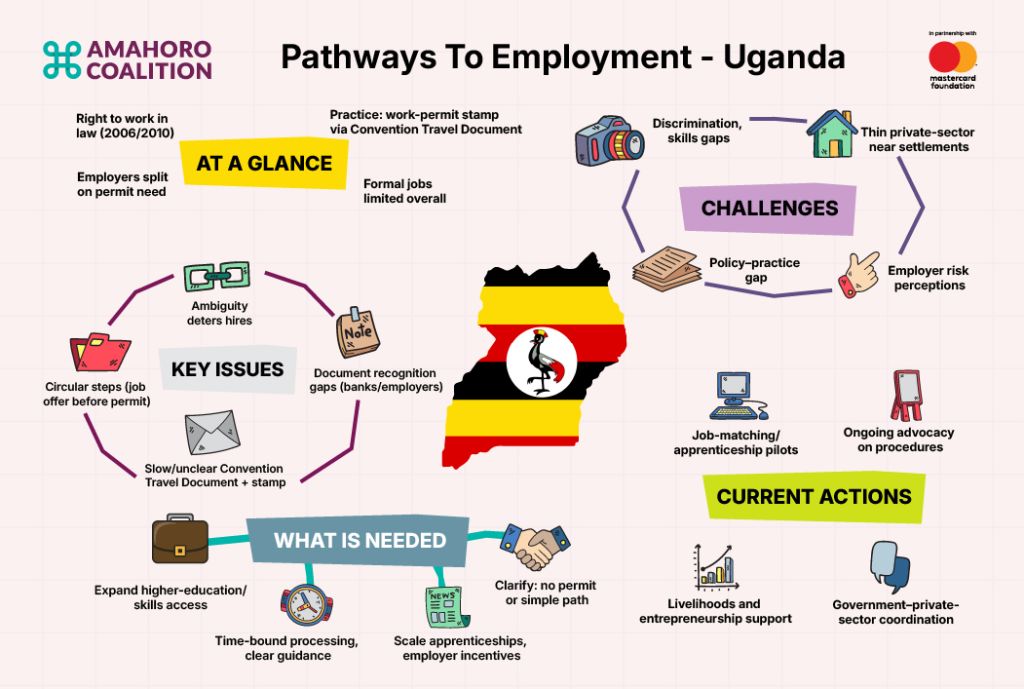
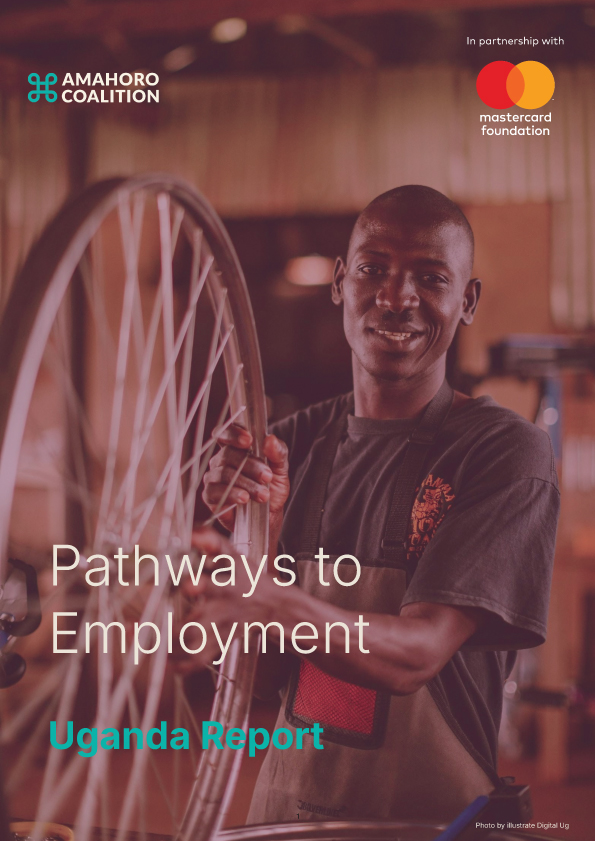
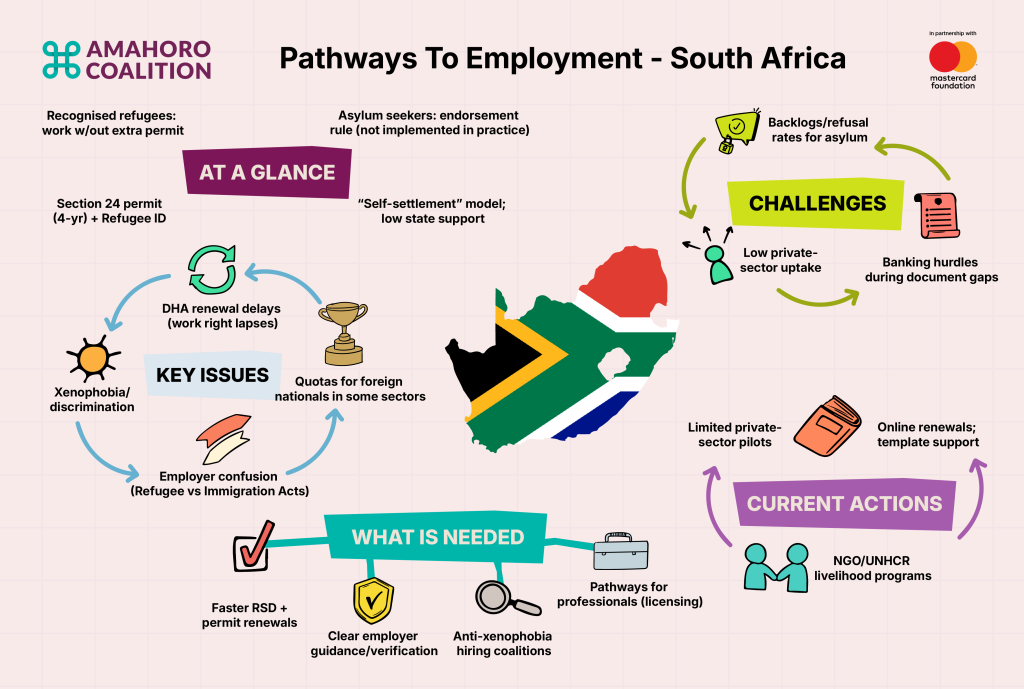
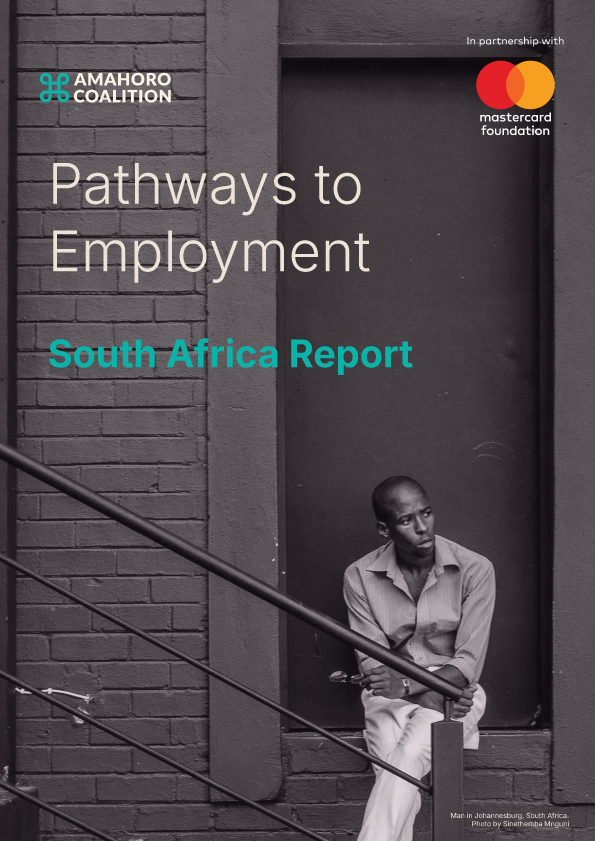
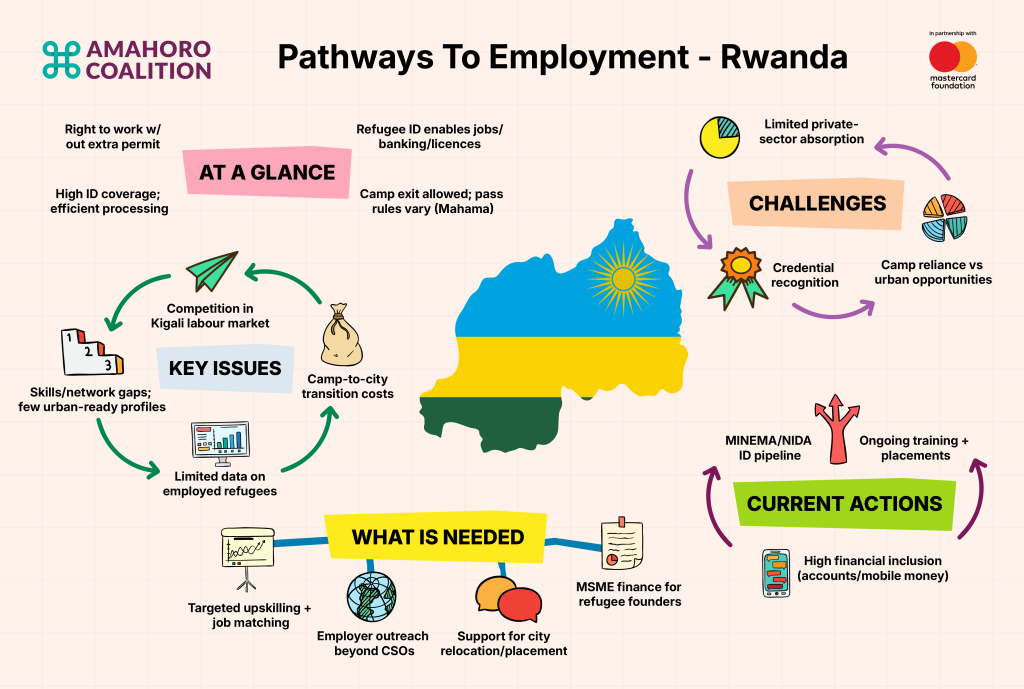
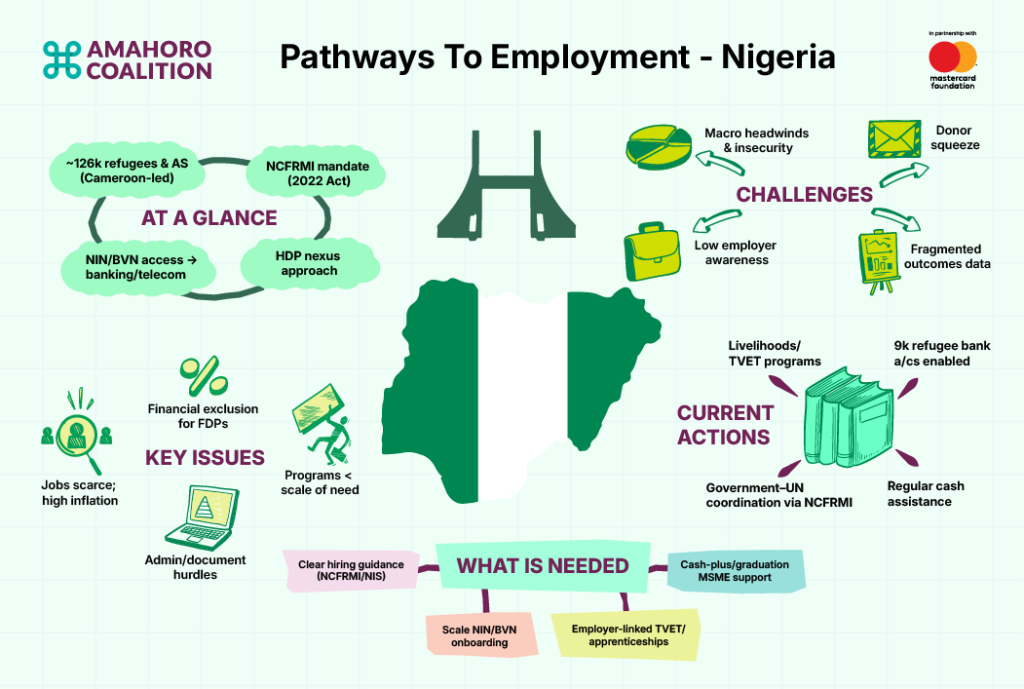
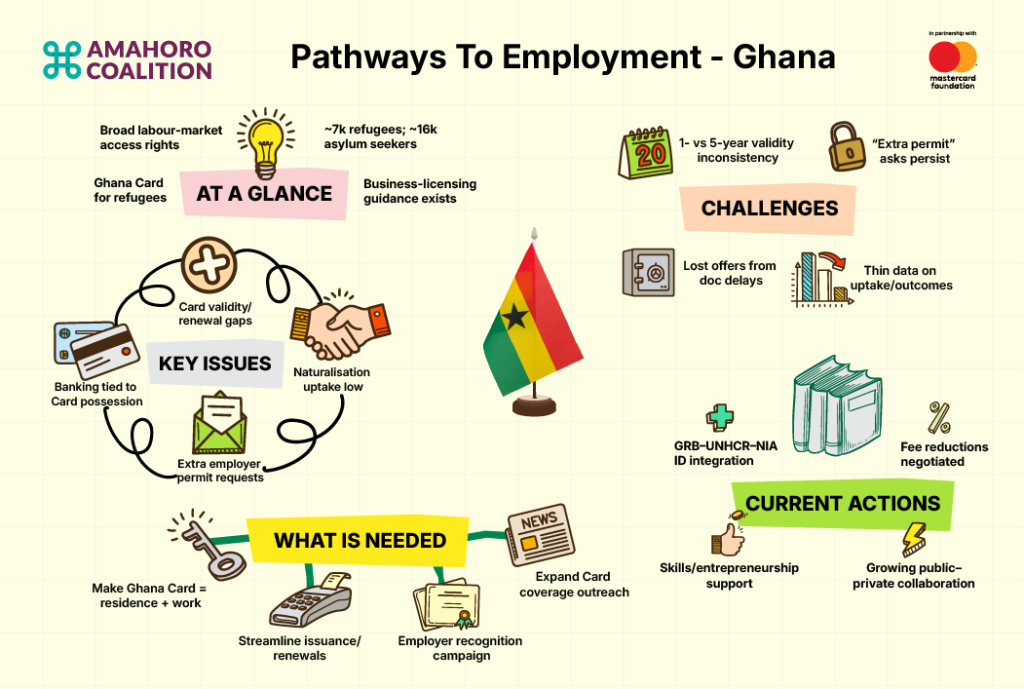
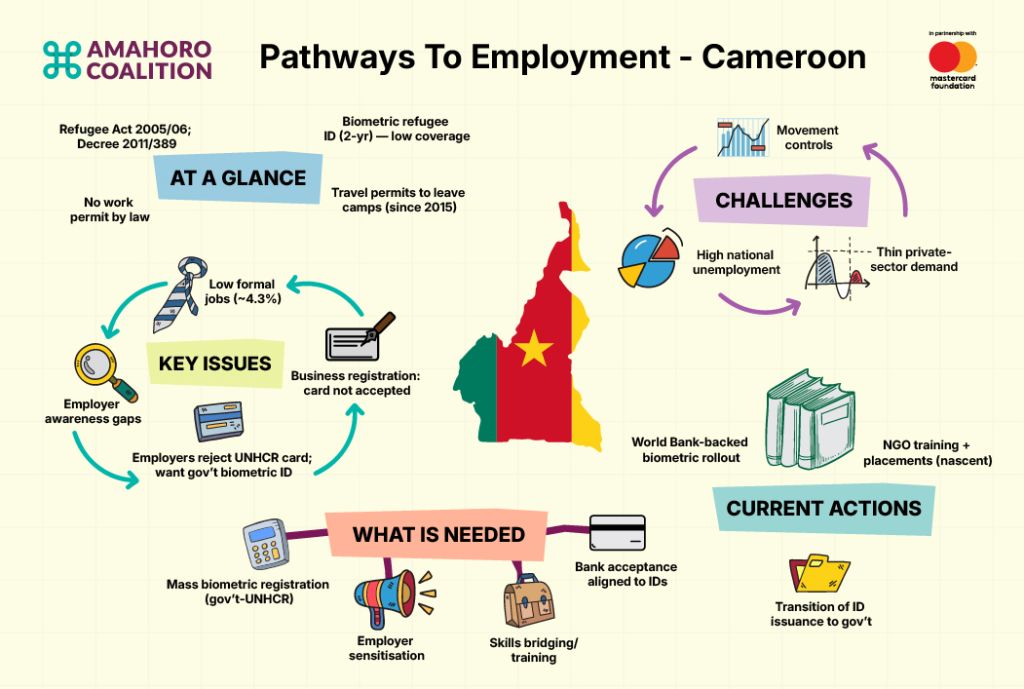
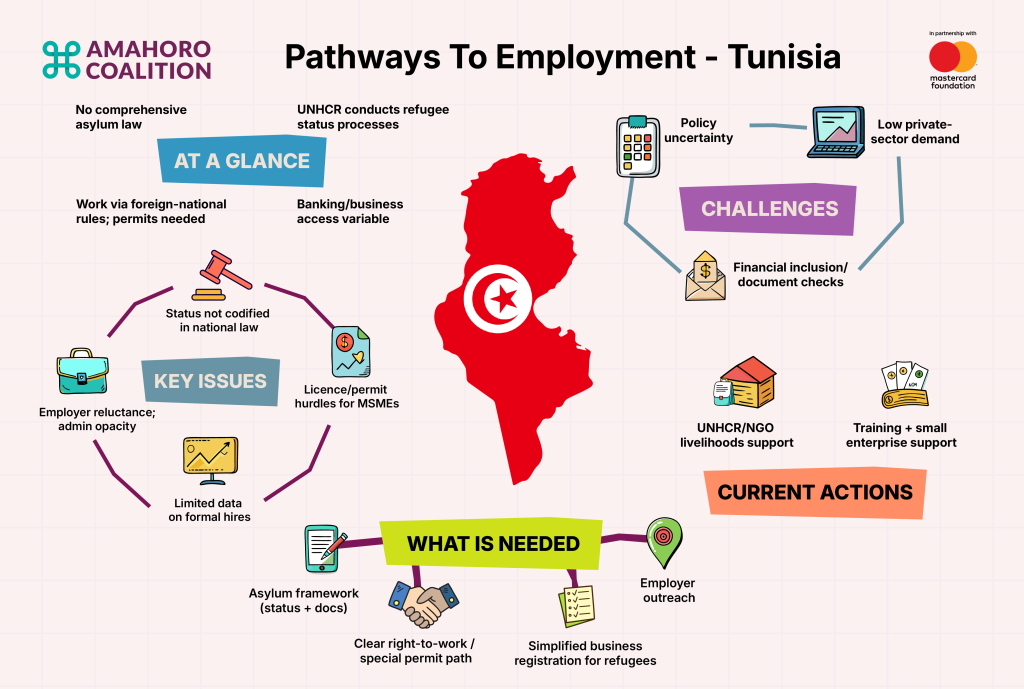
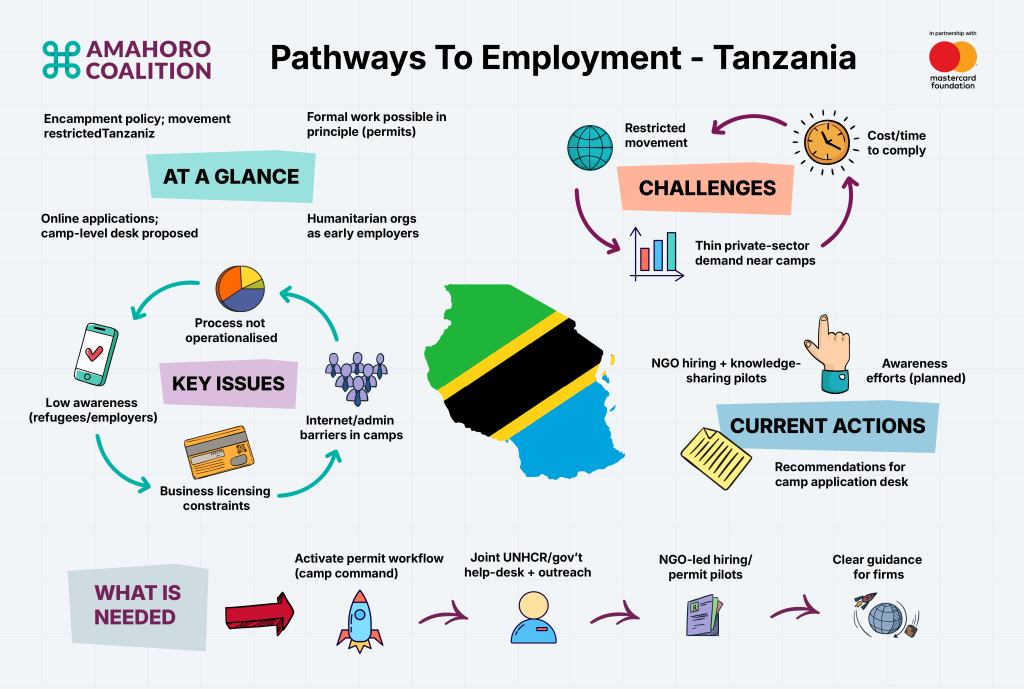
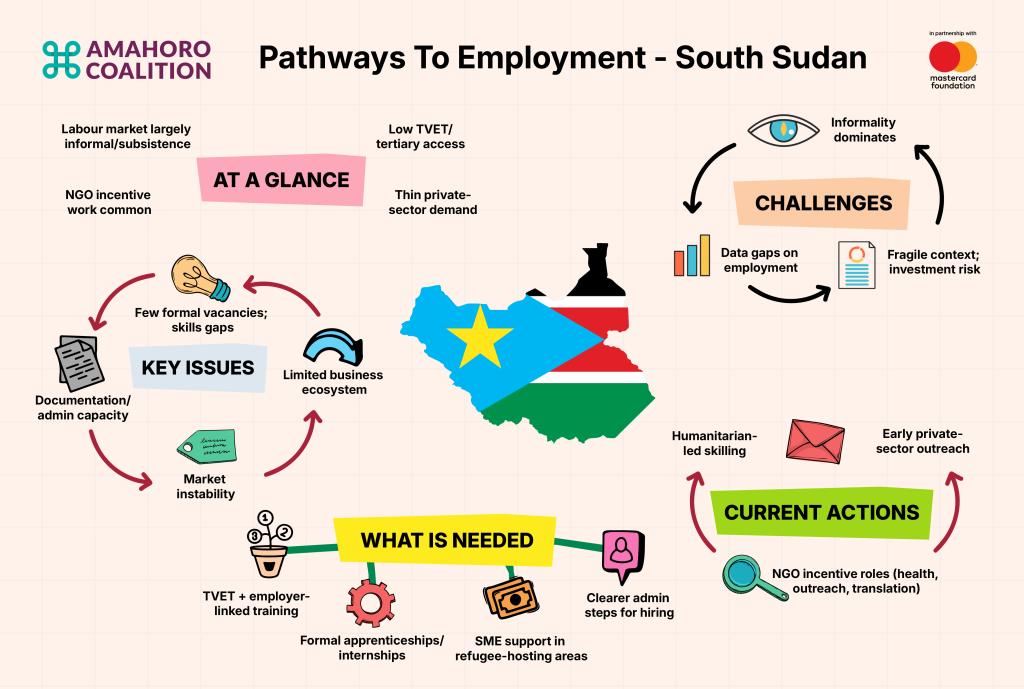
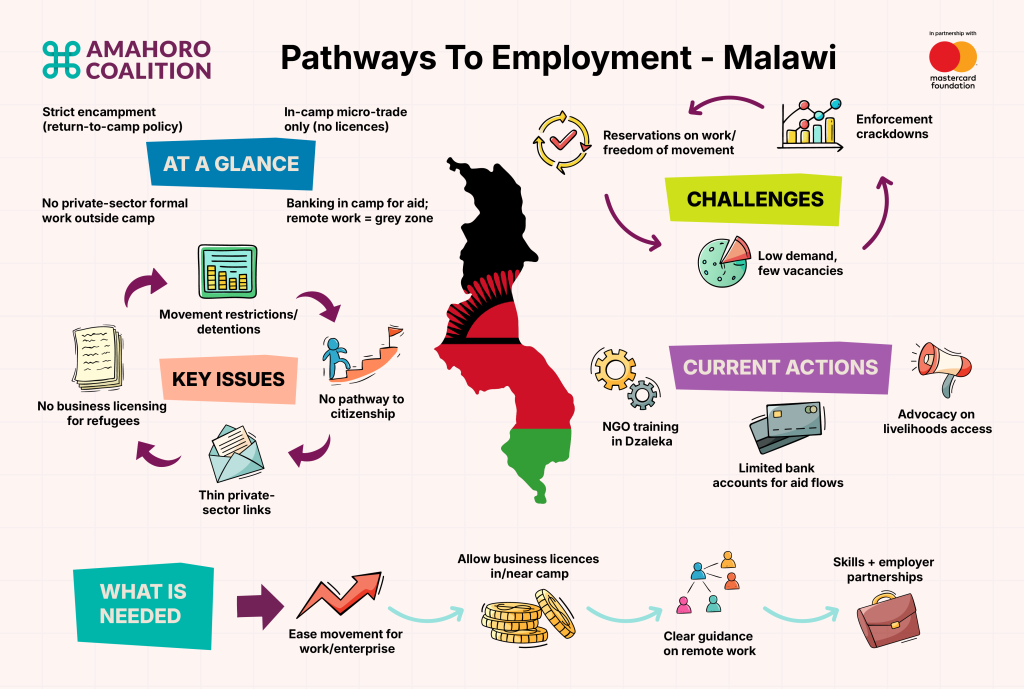
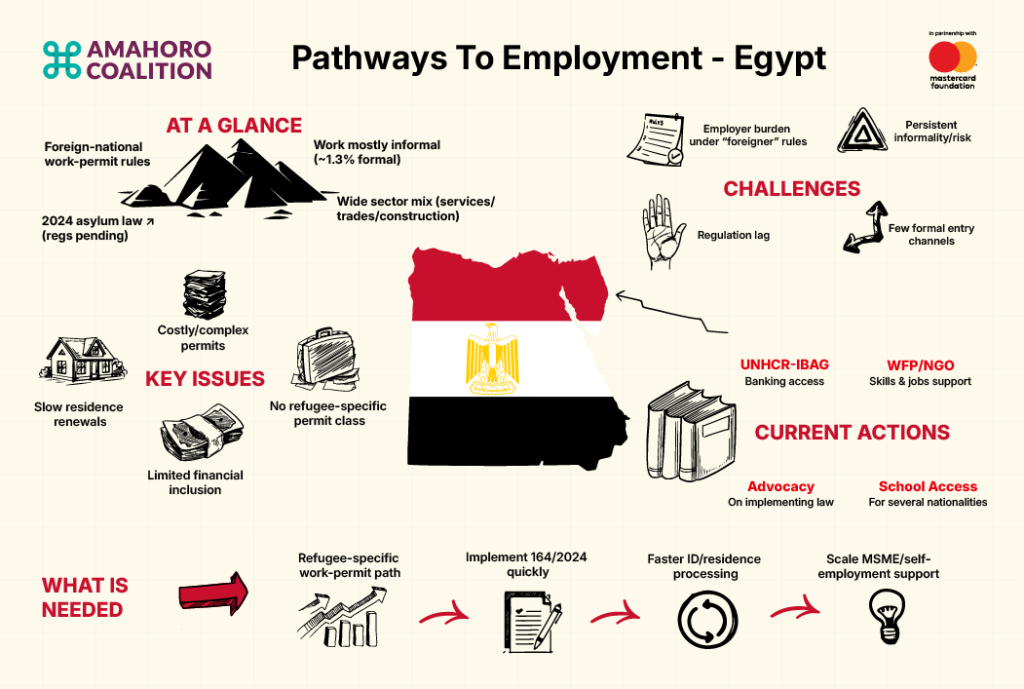
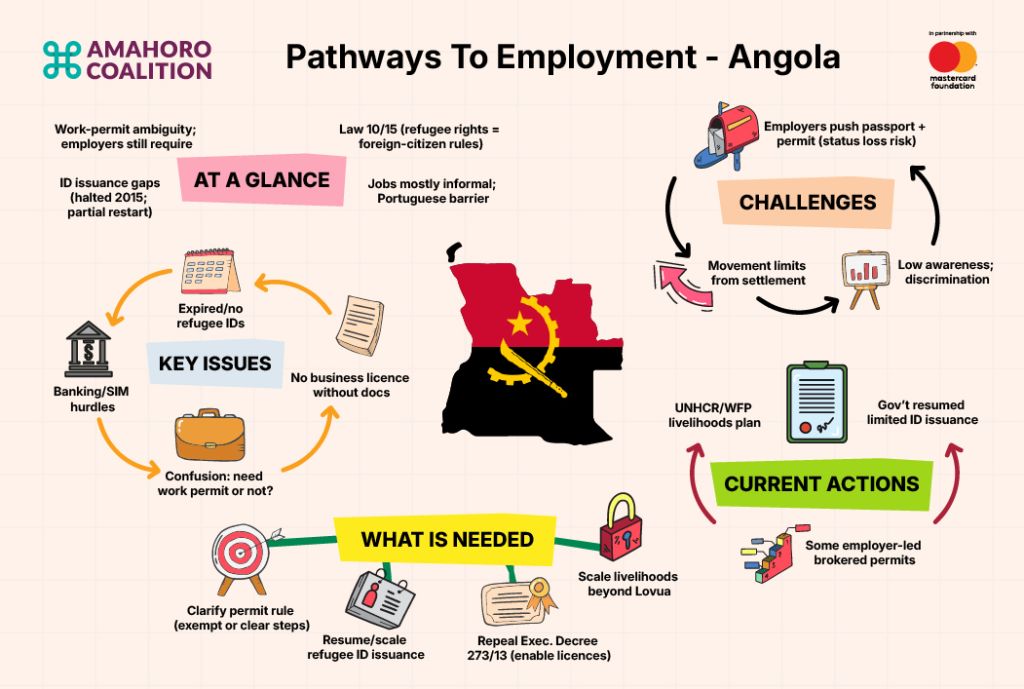
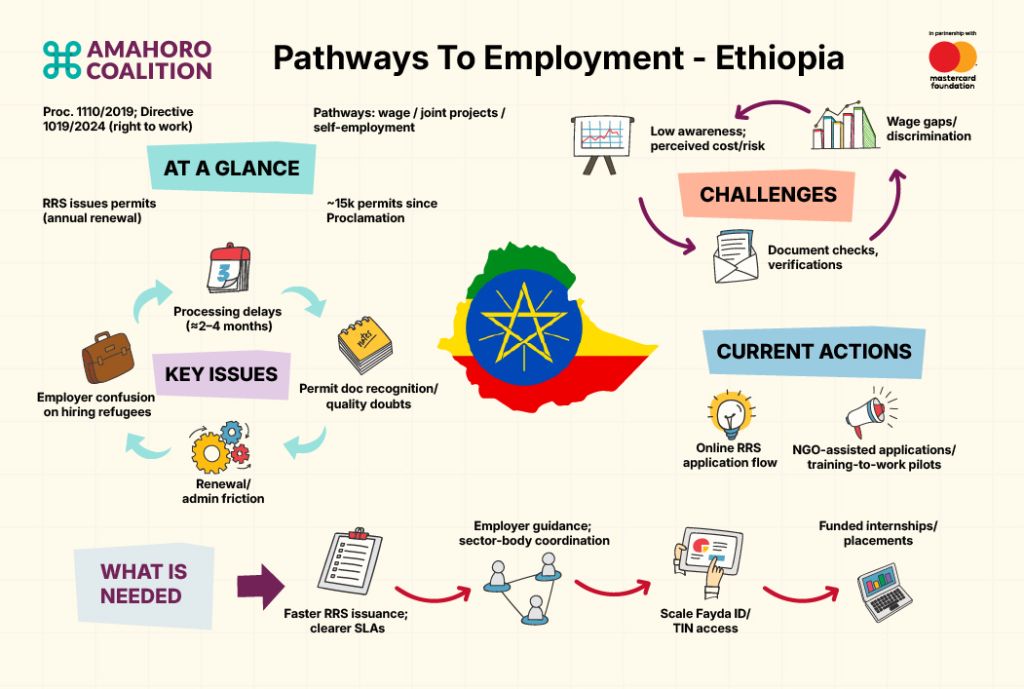
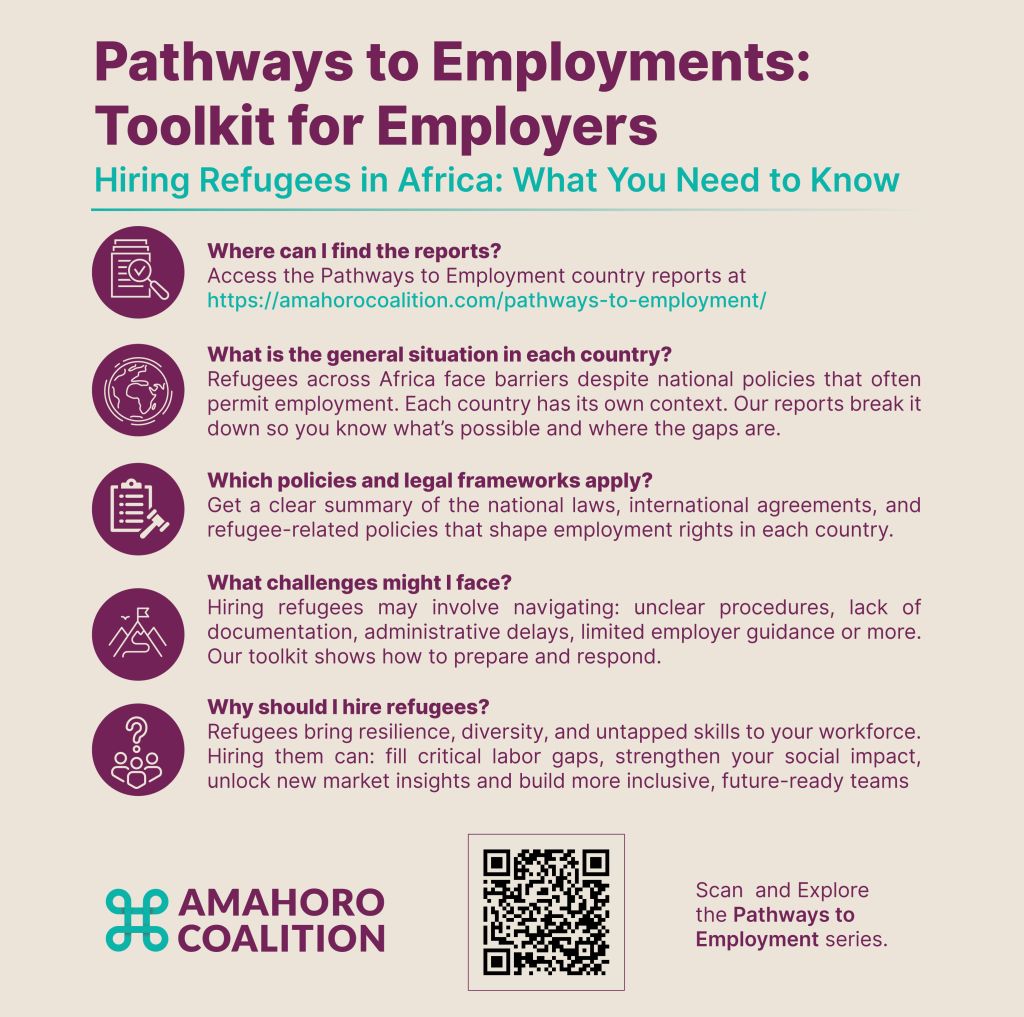
To address the gap between policy and practice, Amahoro Coalition, in partnership with the Mastercard Foundation, launched the Pathways to Employment series. This initiative examines refugee employment across 15 African countries, exploring legal frameworks, administrative processes, employer challenges, and ways to strengthen collaboration.
The series is part of a broader effort to connect Africa’s growing youth population, including those from displaced communities, with inclusive and dignified work opportunities. With a strong focus on women and young people, the reports aim to guide better policies and inspire new partnerships between the private sector and refugee talent.
Learning and Influencing
Policy Impact: Ghana ID Card Registration Initiative
In Q3, the Coalition mobilized mass Ghana ID card registration for 800 refugee clients in collaboration with the Ghana Refugee Board and the National Identification Authority. This initiative included an extension of the expiry date from the typical one-year duration to five years.
The Ghana ID unlocks critical pathways to economic participation and social protection. With it, refugees can register businesses, open bank accounts, seek formal employment, and access healthcare and education services. This initiative underscores the Coalition’s commitment to bridging policy and practice, ensuring that inclusive frameworks translate into real, accessible services for refugees.
Policy and Advocacy: UNGA Panel Discussion
On the sidelines of the United Nations General Assembly, the Amahoro Coalition convened a high-level dialogue titled “Borders and Business: How Migration Will Shape Global Markets.” The session brought together 33 private-sector leaders to explore how migration and displacement can serve as engines of innovation and economic growth rather than humanitarian dependency.
Key Institutional Commitments
- Passport Experience immersion exercise to ground discussion in lived realities of refugees.
- Personal testimonies reinforcing the link between dignity, opportunity, and inclusion.
- Insights from Bright Simons (Imani Africa) reframing displacement as a historical driver of progress.
- Case studies from Thailand's diaspora-driven industries to Kenya's Dadaab camp.
The panel concluded with a collective call to action for policymakers and investors to embed refugee inclusion within national economic strategies. This dialogue strengthened Amahoro’s advocacy position at the global level, directly influencing subsequent partner commitments to integrate refugees into trade, skills, and digital-innovation agendas across Africa.
Looking Forward to 2026
As we look to 2026 and beyond, Amahoro Coalition is positioned to scale our impact exponentially. Building on the strong foundations established in 2025, we are committed to deepening our work across all program areas while exploring new frontiers in economic inclusion for displaced communities.
Cohort 4 Launch
Amahoro is excited to launch Cohort 4 of the Fellowship Program in January 2026, bringing together 40 exceptional FDP leaders from across Africa, with a strong focus on increasing women’s representation in the program. Selected through a rigorous process, these Fellows exemplify resilience, innovation, and the potential to drive lasting impact in their communities. Building on the success of previous cohorts, the program will provide leadership training, mentorship, access to funding, and extensive networks to help Fellows scale their ideas and initiatives. With an emphasis on transformative change, leadership, and community impact, the Fellowship will equip them with tools to create sustainable solutions for refugee economic inclusion.
We are excited to witness the journeys and achievements of Cohort 4 in 2026 and beyond! Know a potential candidate? Want to support the program? Follow us on social media, share this opportunity, and help us build the next generation of changemakers!
Looking Forward to 2026
Be part of #AFD2026: the largest gathering of African private sector leaders addressing the challenges of displacement
This year, we will convene the fourth Africa Forum on Displacement (AFD), a pivotal moment to move from commitments to action. Building on powerful editions in Kigali, Accra and Nairobi, the Forum will bring together leading private sector voices from across Africa to review progress on job creation pledges and to unlock the next wave of bold, scalable commitments. This is not a conversation we can have in isolation. The insights, experience,
and leadership represented in this session are exactly what will shape the agenda and raise the level of ambition. We warmly invite you to be part of a community that is turning inclusion into growth and displacement into economic opportunity. More details on the Forum’s theme, dates, and venue will be shared in the coming weeks. Until then, stay closely engaged by following us on our social media platforms and subscribing to our Road to AFD 2026 quarterly newsletter (read the latest issue here).
Looking Forward to 2026
A Vision for the Future
Amahoro Coalition’s work in 2025 has demonstrated that economic inclusion for displaced communities is not just a moral imperative, it is an economic opportunity that benefits entire societies. By investing in displaced persons as entrepreneurs, leaders, and contributors to economic growth, we are building a more prosperous and resilient Africa.
The path forward requires continued collaboration between governments, private sector, civil society, and displaced communities themselves. Together, we can create a future where displacement is not a barrier to opportunity but a catalyst for innovation and growth.
We are grateful to our partners, donors, Fellows, and team members who have made this year’s achievements possible. As we look to 2026, we remain committed to our vision of economic inclusion and to supporting the extraordinary potential of Africa’s displaced communities.