Unlocking the Potential of Refugee Markets in Africa
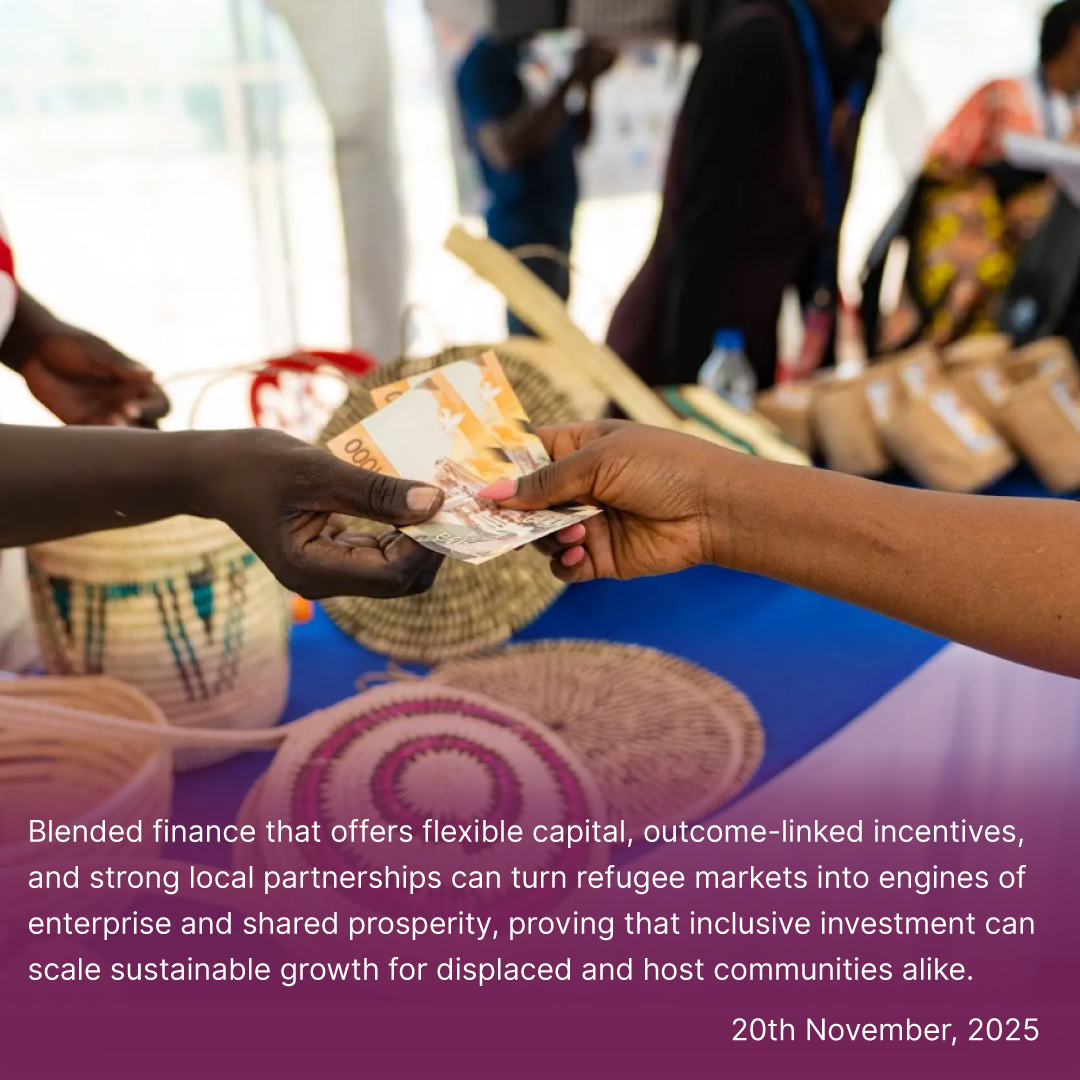
So how should we structure blended finance for refugee markets in practice? There are three important considerations here. First, provide patient and flexible capital. Multi-year tenors, grace periods, and collateral-light underwriting reflect the realities of refugee-led and host-community businesses and give them time to mature. Character-based lending, group guarantees, or purchase-order financing can substitute where title deeds are not available. Second, link finance to outcomes that matter. Interest-rate step-downs or bonus payments tied to verified milestones like refugee jobs created, energy or water connections delivered, on-time repayment align private incentives with public goals and make success measurable. Third, build partnerships that combine capital with local delivery. Donors and DFIs bring concessional layers and risk sharing; local financial institutions and operators bring distribution; humanitarian and refugee-led organizations bring trust, data, and customer insight; governments unlock the policy moves that sustain scale, such as recognizing refugee IDs for KYC and clarifying the right to work.
Once the system recognized the discipline and potential of people it had overlooked, products and channels evolved, and inclusion became a growth strategy rather than a concession. Refugee markets are ready for the same shift. If we pair the density and energy of these economies with the finance they need, and use blended instruments to bridge the last mile from pilot to scale, the result will be enterprises that hire, households that spend and save, and communities, both refugee and host, that prosper together. We have enough evidence to move beyond doubt; the task now is design at scale.