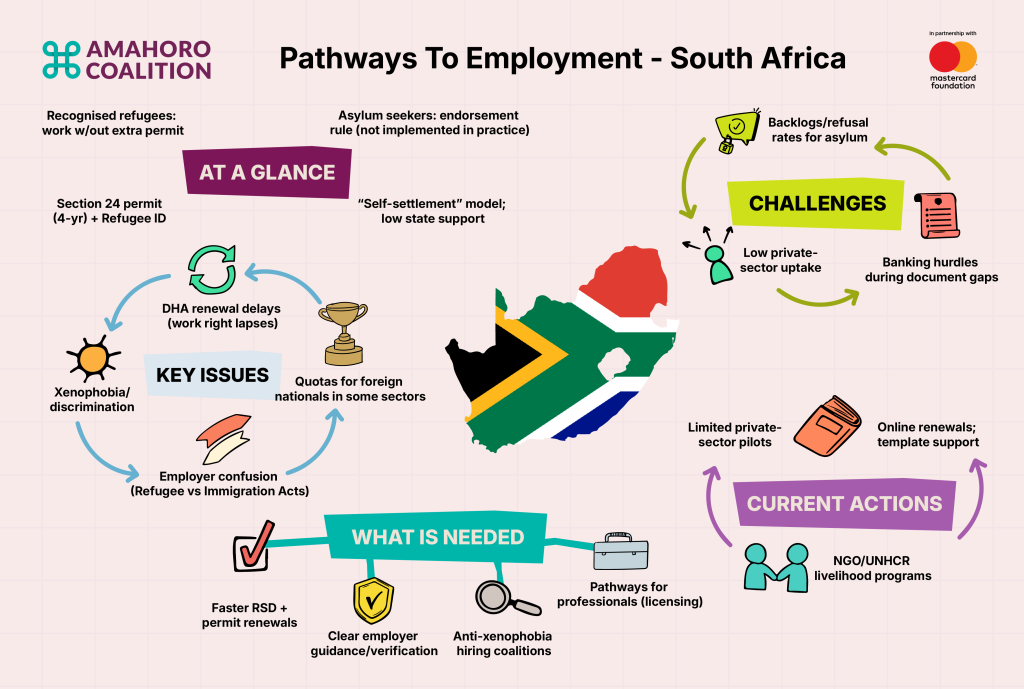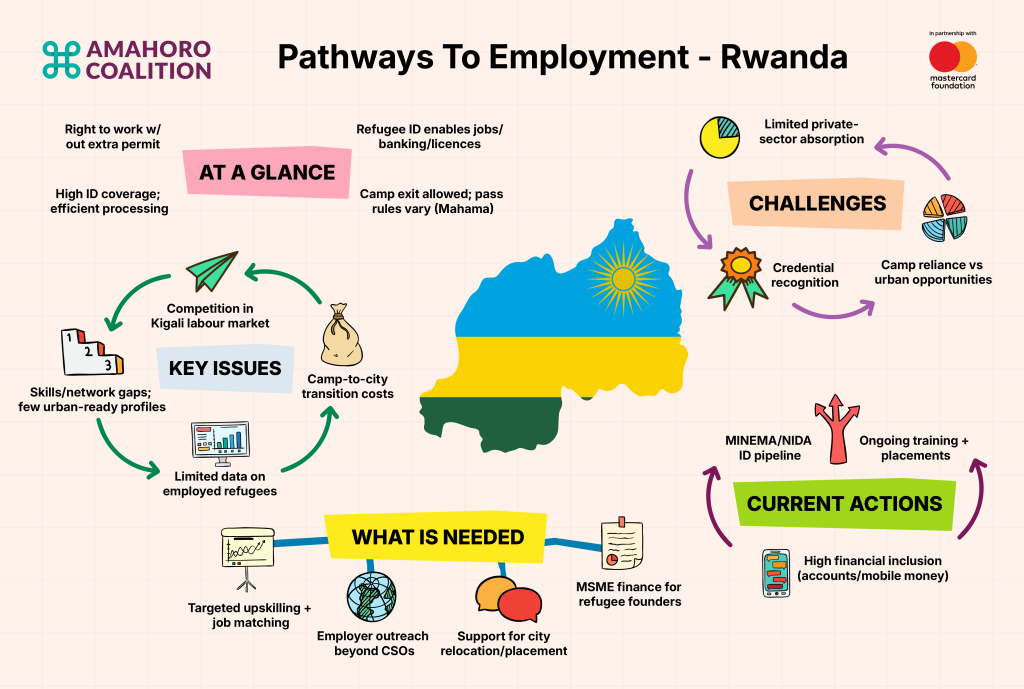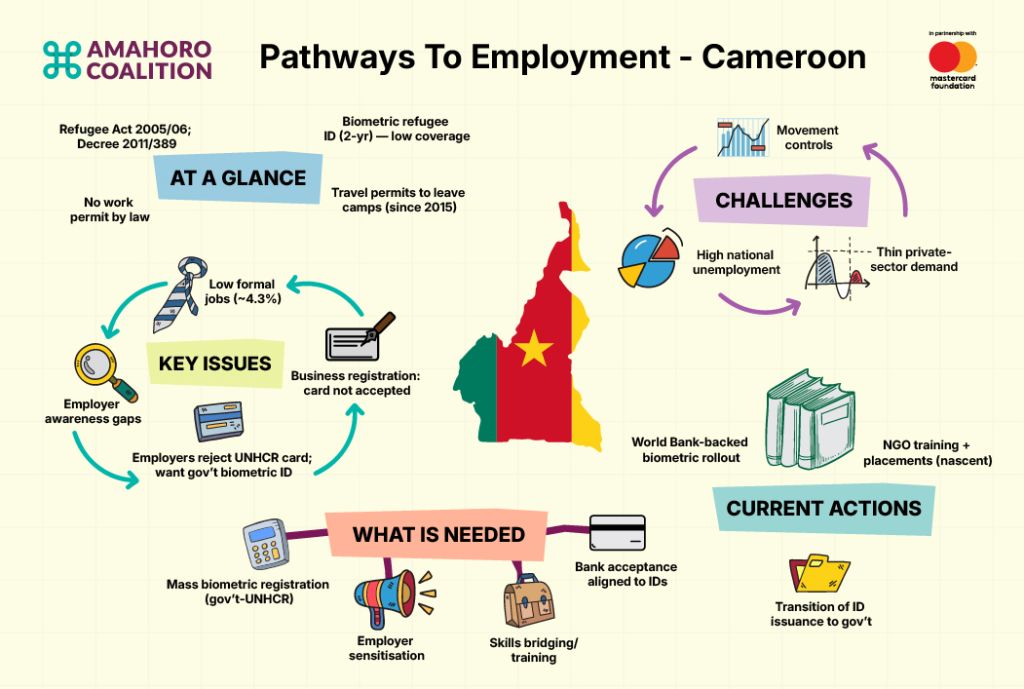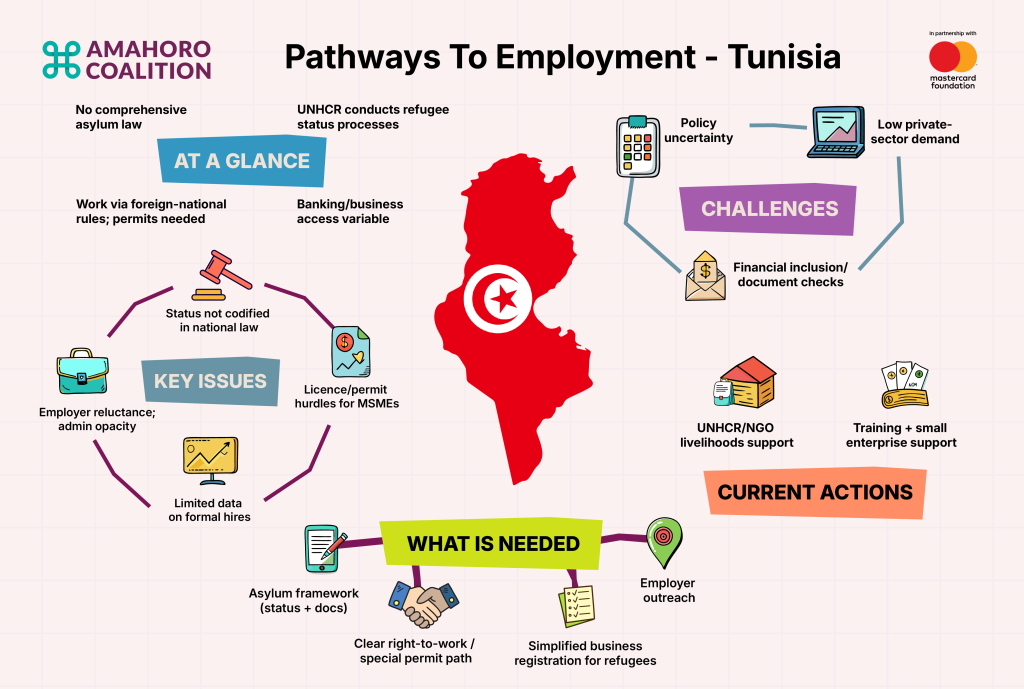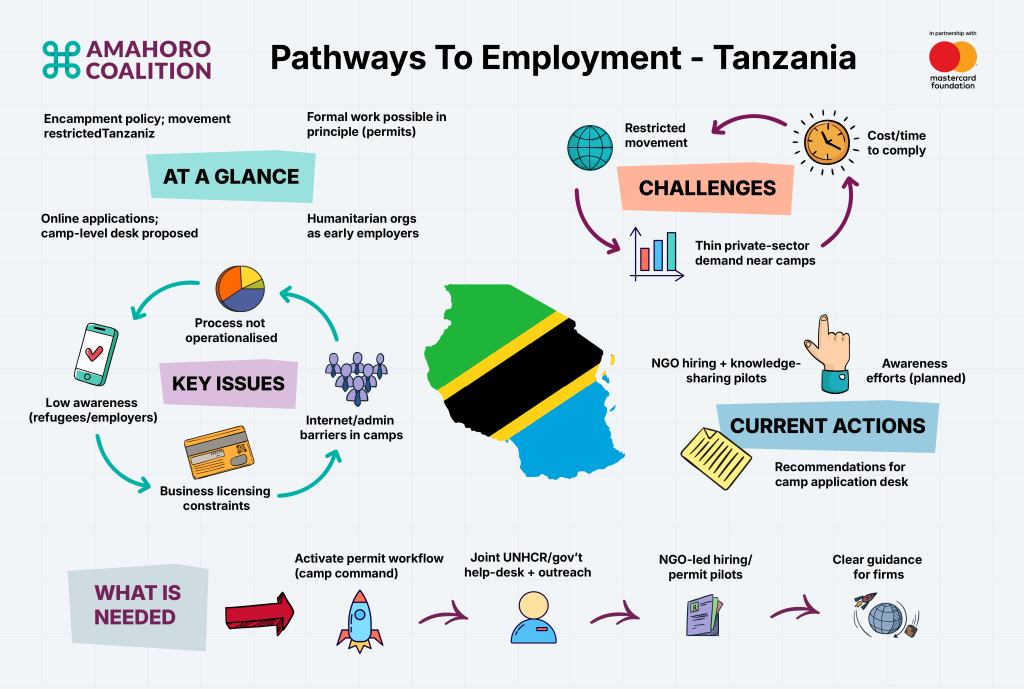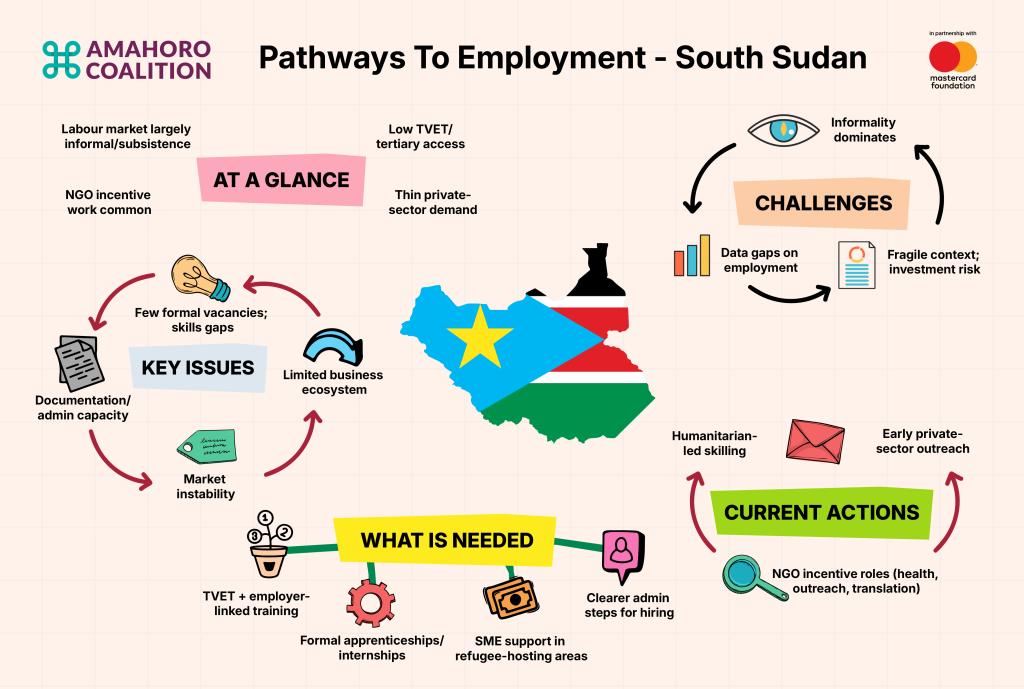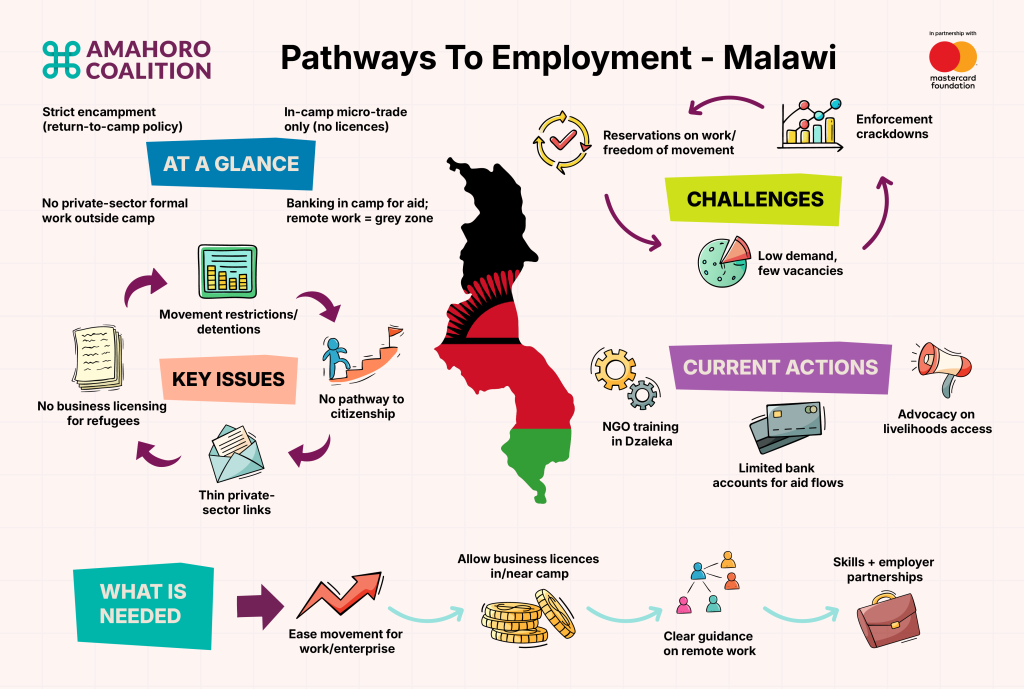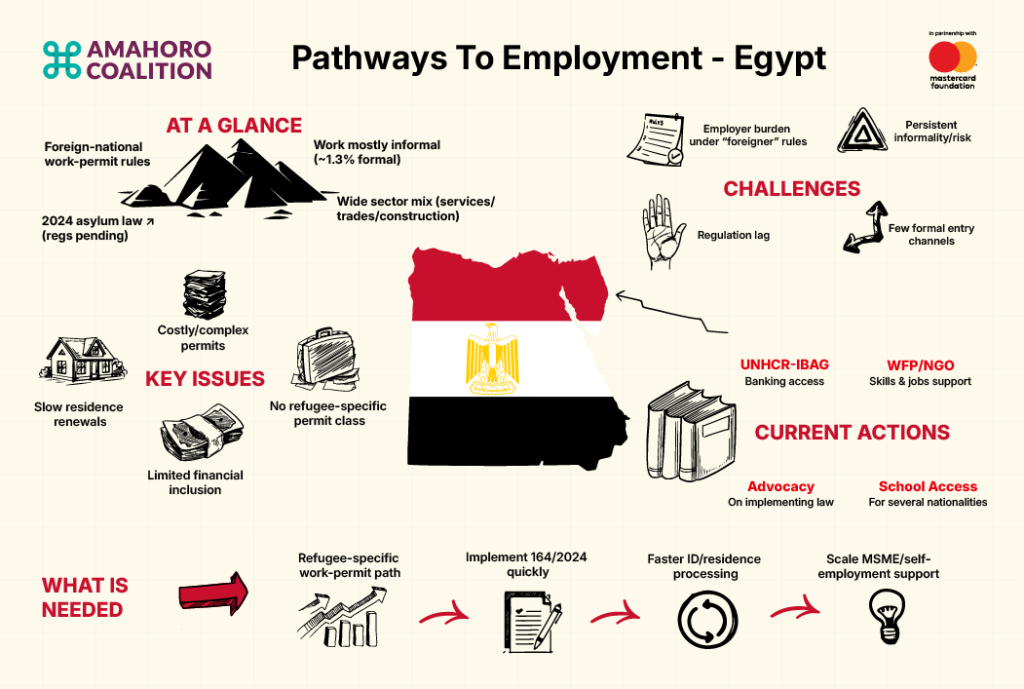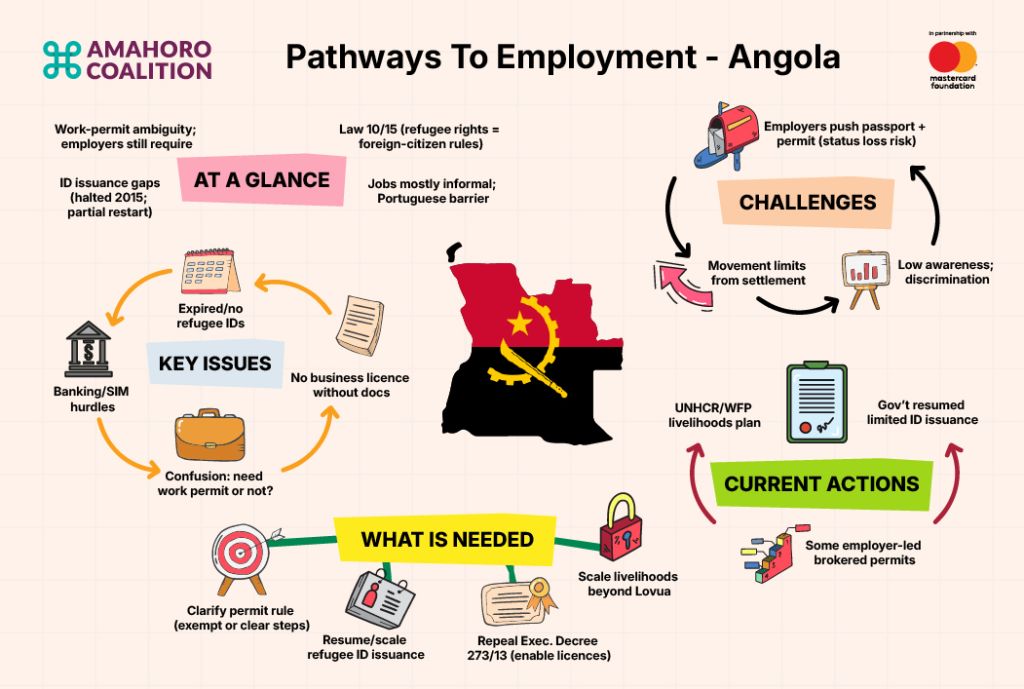
The traditional model of displacement management in Africa has reached a breaking point, as the East, Horn, and Great Lakes (EHAGL) regions grapple with a record humanitarian funding gap that saw only 44% of required budgets met in 2023. While global standards now push for the economic inclusion and self-reliance of refugees, these aspirations often collide with the practical realities of managing high-volume, low-skilled migration within stretched local economies. This disconnect has historically led to “rights-reneging” policies, restricting movement and the right to work, as states attempt to mitigate the social and economic pressures on their own populations. By moving toward a model of Responsibility-Sharing, Africa can finally align its high-level policy goals with the actual dynamics of its workforce.
Some Key Insights from the Report that illustrate the path forward:
- The Reality of African Migration: Migration is overwhelmingly intra-regional, with the EHAGL region accommodating approximately 70% of its own protection-seeking population.
- The “Mixed Migration” Challenge: Refugees, asylum seekers, and economic migrants move through the same corridors, yet rigid policies continue to treat them as entirely separate categories.
- A Policy-Reality Disconnect: Current East African Community (EAC) frameworks prioritize high-skilled mobility, creating a gap that fuels irregular migration and restricts the rights of the actual workforce on the ground.
- The Path to Responsibility Sharing: Distributing hosting obligations equitably across EAC member states is the most practical pathway to relieve social and economic pressures.
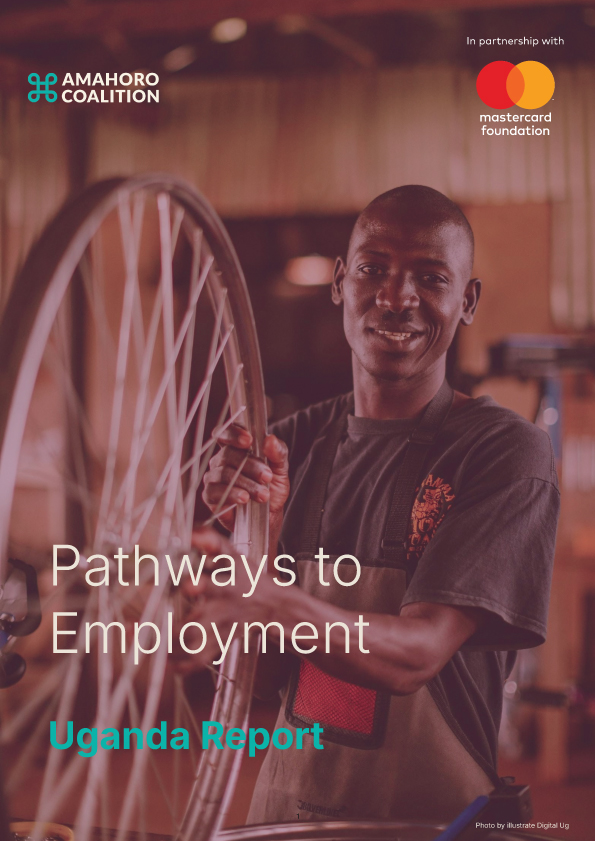
Download the report to explore how we can move beyond aid dependency toward a regional strategy that guarantees socio-economic rights and fosters true self-reliance.