Women who
Build Markets
Women who
Build Markets
It takes a great deal to earn a seat at the builders’ table. By builders, we mean those who confront complex challenges in their communities and transform them into opportunity. Those who create markets where others see constraints, and generate economic impact while doing so.
Across the Amahoro Coalition ecosystem, several women sit confidently in that category. They are founders scaling businesses, executives steering strategy, and decision-makers influencing how capital and policy flow across multiple African countries. Many bring lived experience of displacement, which has fuelled their resolve to build practical, inclusive, commercially viable solutions.
Together, they have co-created over 200 jobs, proving that market leadership and inclusion are mutually reinforcing forces.
Food and Beverage
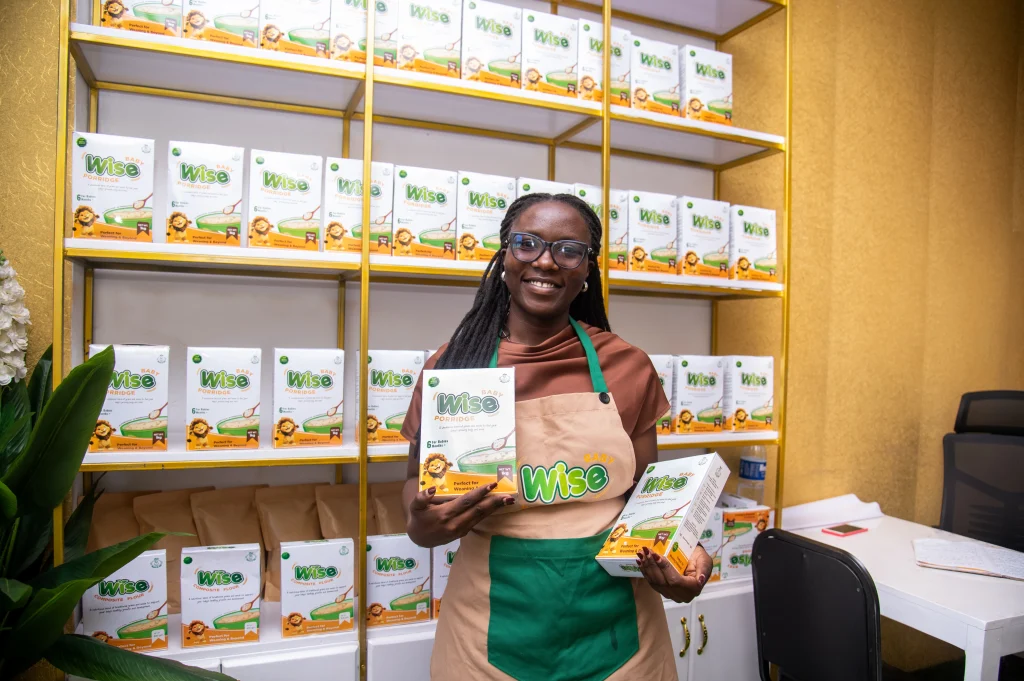
Wise Baby Porridge
According to UNICEF, 64 million children in Africa under five, nearly one in three, face severe food poverty. For children in refugee settlements, the risks are even more threatening.
A high population in the settlements makes it hard to access nutrient-rich diets, increasing exposure to stunted growth, illness and preventable death. Esther Kitumaini knows this reality too well.
Born in the Democratic Republic of Congo and displaced to Uganda at only 13, she grew up understanding food scarcity.
But it was the loss of her cousin’s baby in a refugee camp, due to complications linked to poor nutrition, that transformed awareness into resolve.
The tragedy was not caused by the absence of food. It was caused by the absence of the right food.
Esther saw not a charity gap, but a market inefficiency.
Why were most child nutrition products imported and priced beyond the reach of low-income households? And why were local supply chains not leveraged to produce affordable, high-quality alternatives for refugee communities?
Her answer became Wise Baby Porridge.
Working with a food scientist and a nutritionist, Esther developed an affordable, nutrient-dense porridge formula tailored to young children in underserved communities.
But she is building more than a product. She is designing a local value chain that sources from farmers and creates income opportunities for women.
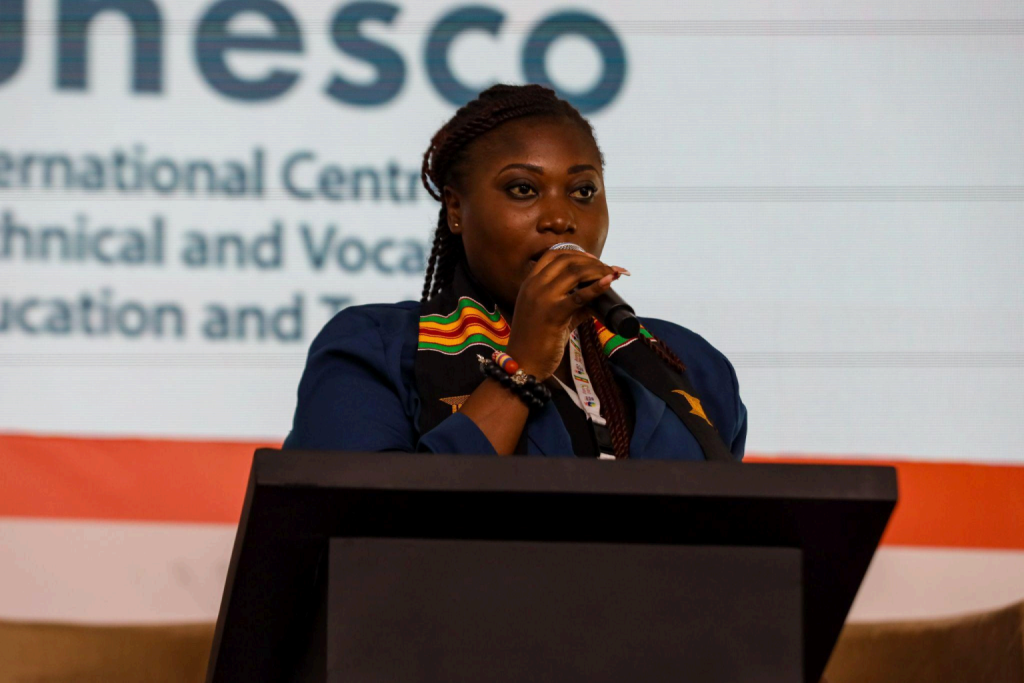

Grace Bogui – Attiéké Love
At 13, Grace Bogui crossed into Ghana as a refugee from Côte d’Ivoire, carrying the weight of conflict, separation from her brother, and the aftershocks of violence that had fractured her family.
But displacement only disrupted her childhood, it did not diminish her ambition.
Years later, in a university dorm room in Accra, she began rebuilding through food. Cooking attiéké, a staple from home, Grace started taking small orders from students and local customers. What began as informal meal deliveries evolved into Attiéké Love, a growing food enterprise supplying ready meals across the city.
Grace built the business deliberately. She reinvested profits, moved operations out of her hostel, and hired fellow displaced women. After joining the Amahoro Fellowship, she strengthened her operations, invested in delivery infrastructure, and expanded online sales.
Today, Attiéké Love employs seven displaced women and has catered high-level gastronomy events, including at the residence of the Ivorian Ambassador to Ghana. The brand now exports raw attiéké to customers in Canada, the UK, and the United States.
Her long-term ambition is to localise cassava production and integrate displaced farmers into her supply chain.
“I want women in the camps to own their place in a value chain that feeds nations,” Grace says.
She is not just serving meals. She is building a cross-border African food brand rooted in displacement and scaled through enterprise.
Her long-term ambition is to localise cassava production and integrate displaced farmers into her supply chain.
“I want women in the camps to own their place in a value chain that feeds nations,” Grace says.
She is not just serving meals. She is building a cross-border African food brand rooted in displacement and scaled through enterprise.
Grace Bogui – Attiéké Love
At 13, Grace Bogui crossed into Ghana as a refugee from Côte d’Ivoire, carrying the weight of conflict, separation from her brother, and the aftershocks of violence that had fractured her family.
But displacement only disrupted her childhood, it did not diminish her ambition.
Years later, in a university dorm room in Accra, she began rebuilding through food. Cooking attiéké, a staple from home, Grace started taking small orders from students and local customers. What began as informal meal deliveries evolved into Attiéké Love, a growing food enterprise supplying ready meals across the city.
Grace built the business deliberately. She reinvested profits, moved operations out of her hostel, and hired fellow displaced women. After joining the Amahoro Fellowship, she strengthened her operations, invested in delivery infrastructure, and expanded online sales.
Today, Attiéké Love employs seven displaced women and has catered high-level gastronomy events, including at the residence of the Ivorian Ambassador to Ghana. The brand now exports raw attiéké to customers in Canada, the UK, and the United States.
Her long-term ambition is to localise cassava production and integrate displaced farmers into her supply chain.
“I want women in the camps to own their place in a value chain that feeds nations,” Grace says.
She is not just serving meals. She is building a cross-border African food brand rooted in displacement and scaled through enterprise.
Grace Bogui – Attiéké Love
Heaven Abraham Mesfin – Heaven’s Glimpse
With no formal culinary training, Heaven Abraham built Heaven’s Glimpse from her kitchen in Nairobi into a revenue-generating bakery with a loyal client base.
Originally from Eritrea, Heaven’s journey to Kenya, through Ethiopia, required her to repeatedly rebuild. That instinct to start again became an asset in business. In 2021, a cake she baked for a friend generated unexpected demand. She paid attention. Instead of keeping it informal, she taught herself baking techniques, pricing, sourcing, and customer retention.
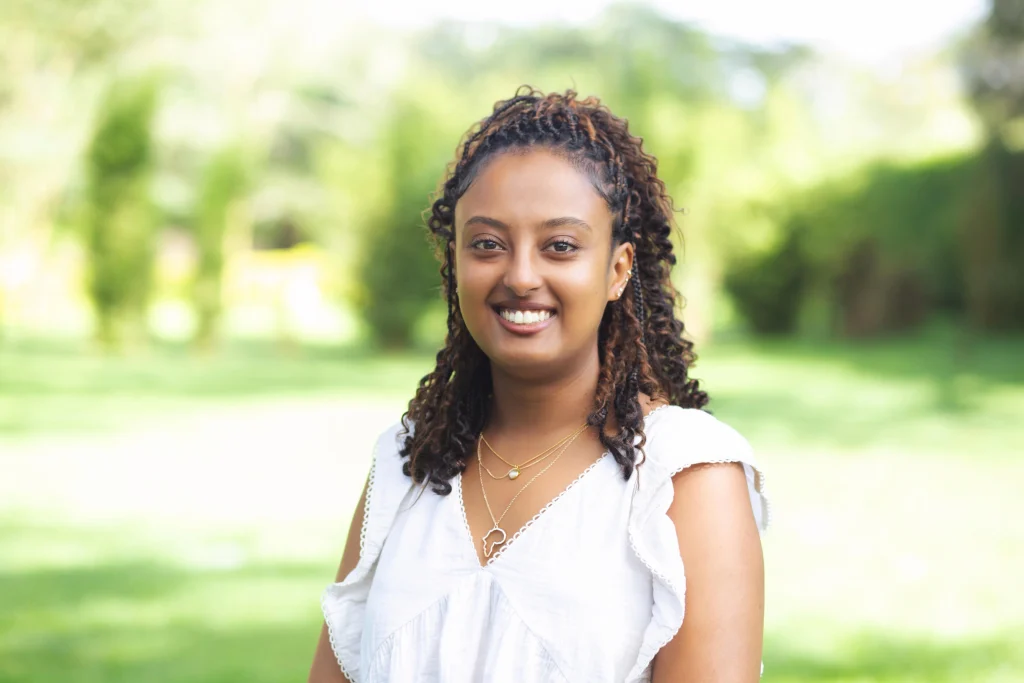
Today, Heaven’s Glimpse serves more than 100 returning customers and supplies baked goods to four cafés across Nairobi. The business produces cakes, pastries, desserts, fresh juices, and offers catering services, competing on quality and customization.
Her enterprise supports her family and generates small income opportunities for refugees and host community members. Heaven is now preparing to transition from home-based production to a physical bakery and café, formalizing operations and positioning the brand for growth within Nairobi’s competitive food market.
Ruth Chisom Onyeugo – Asili Foods
Ruth Chisom Onyeugo is building food systems that move beyond subsistence and into scale.
As someone with lived experience of displacement, she understands how fragile access to food and income can become when systems fail. That perspective informs Asili Foods, the agro-processing company she founded, which has produced and distributed more than 4,700 kilograms of natural spices and food products across Nigeria, the United States, and the United Kingdom.
At the core of that growth is an inclusive supply chain integrating 127 displaced women farmers, strengthening local sourcing while reducing post-harvest losses. Ruth is not simply aggregating produce. She is repositioning smallholder women as contributors to regional and global trade.
Beyond Asili, she leads SHE Harvest, equipping rural women with agricultural training and access to locally fabricated processing equipment. As Head of the Agriculture Business Cluster at WETI, she has supported 47 women farmers to secure their first international exports.
Through the Amahoro ecosystem, Ruth continues to refine partnerships that align capital, production, and markets.
Her thesis is clear: resilient food systems must be commercially viable and built to include the women who power them.
Mental Health
Rita Brown – Easy FitGang
Rita Namurembe Brown has lived in Kakuma Refugee Camp since 2000. For her, displacement is not a chapter. It is the environment in which she built her education, career, and enterprise.
After completing her primary and secondary studies in Kakuma, she earned a diploma in Social Work from Regis University and an Associate degree in Business Administration from the University of Southern New Hampshire. She is now preparing to pursue a bachelor’s degree in Public Administration, strengthening the governance lens behind her work.
As a certified yoga instructor, Rita has turned wellness into both a livelihood and a systems intervention. She teaches yoga onsite and online, delivering structured programs that address stress, physical health, and resilience in high-pressure environments.
In 2020, she co-founded Easy FitGang, a refugee-led social enterprise providing youth in Kakuma with access to sports, fitness, arts, and team-building programs. The initiative creates skills pathways and income-generating opportunities while positioning wellness as an economic asset, not a luxury.
Through the Amahoro ecosystem, Rita continues to refine Easy FitGang’s growth strategy and visibility.
Her work reframes movement and mental health as infrastructure for productivity, leadership, and long-term self-reliance within refugee economies.
As a child fleeing conflict in South Sudan, Nyibol Racheal carried trauma she did not yet have language for. By primary six, the weight of it nearly cost her life. In school, her distress was dismissed as spiritual weakness. Years later, a psychology class gave it a clinical name: depression, PTSD, mental health.
That clarity shifted her trajectory.
Nyibol began writing her story in a simple exercise book, printed seven copies with her own savings, and sold them within her community. The conversations that followed revealed a gap: refugee programming prioritised livelihoods, but mental health remained largely unaddressed.
With $25 of her own money, she co-hosted her first community dialogue. That small convening became the foundation of the Refugee Mental Health Network.
Since joining the Amahoro Fellowship, Nyibol has strengthened her leadership capacity, secured a physical office, and grown her team to four. The Network now delivers structured group therapy programs, supporting survivors of violence and young people navigating trauma.
Her long-term vision is to establish mental health hubs across Uganda’s 13 refugee settlements, training and employing refugees as caregivers.
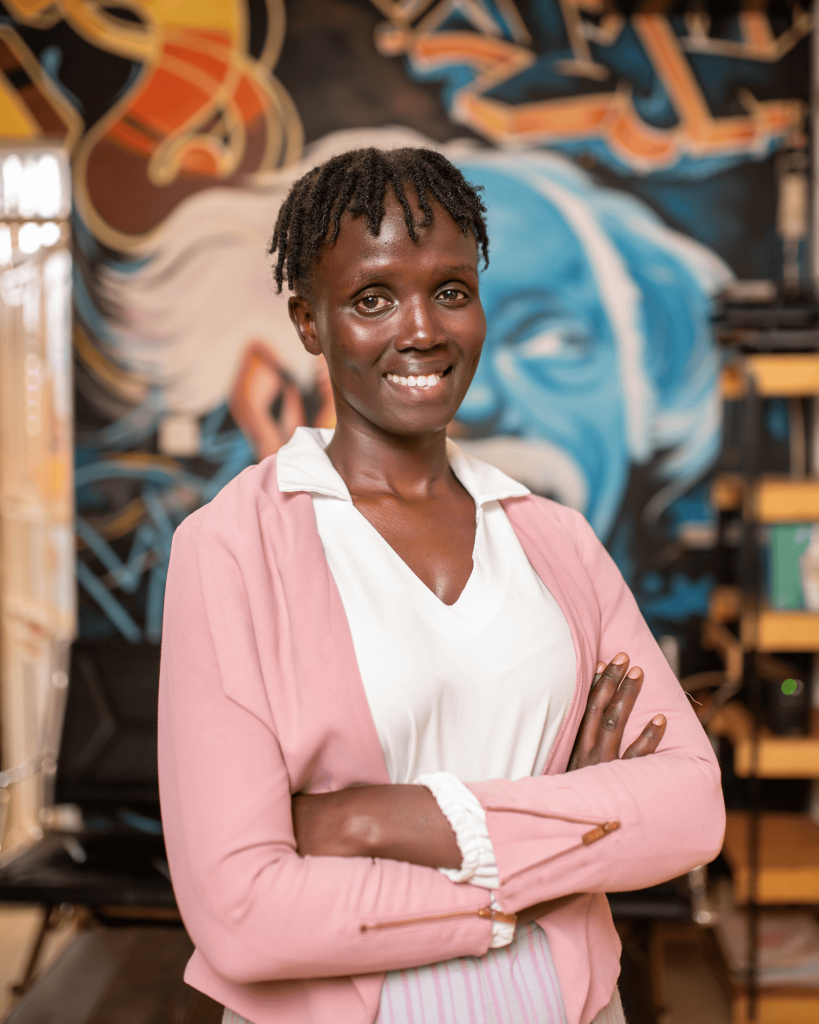
Nyibol is building mental health infrastructure within refugee economies, proving that psychological stability is foundational to productivity, leadership, and long-term economic participation.
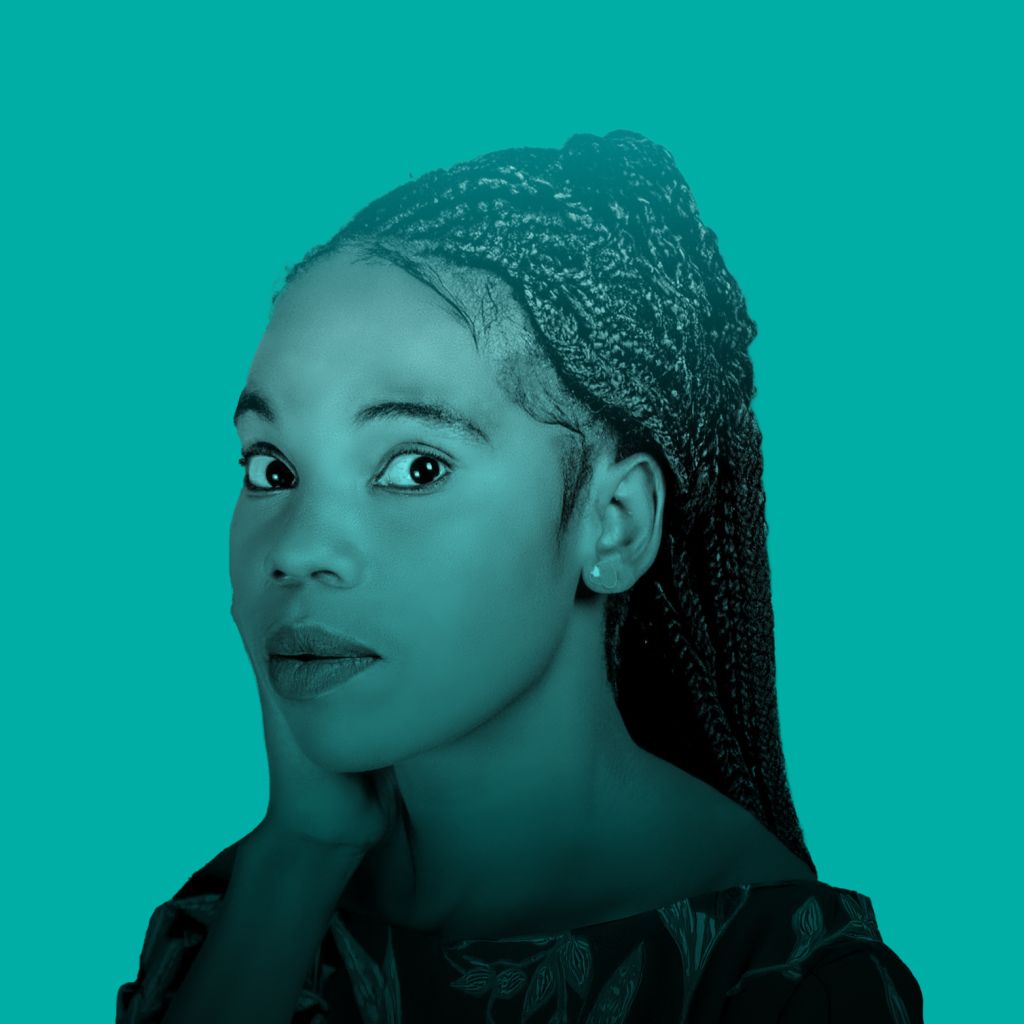
Nelly Kininga – NGO Founder
Nelly Kininga builds ecosystems of care that sustain communities.
For over six years, she has led and grown an organization supporting orphaned children, not simply by delivering services, but by designing governance structures, refining strategy, and building operational systems that last. She understands that impact without structure collapses.
With a foundation in mental health counseling, Nelly integrates psychosocial support into the core of her model. Through crisis intervention, mindfulness-based techniques, and evidence-informed practice, she strengthens individual stability, knowing that economic participation begins with psychological safety.
Her academic training across Business Administration, Social Work, Data Science, and Psychology shapes how she leads. She thinks in systems, measures what matters, and adapts to shifting realities.
As part of the Amahoro ecosystem, Nelly is sharpening the bridge between mental health and economic inclusion. Her work positions care as productive infrastructure, enabling young people not only to cope, but to participate, contribute, and lead.
Industry 3: Education
Drucilla Adah – Read and Rise South Sudan
Drucilla Adah builds institutions where others see fragility.
After spending 19 years in Uganda as a refugee from South Sudan, she returned to Juba in 2019 and encountered a generation of children enrolled in school but disconnected from books, teachers, and structured learning. Rather than launch a short-term program, she began laying foundations.
What started as informal reading sessions evolved into Read and Rise South Sudan, now serving more than 300 boys and expanding to girls. She later mobilised over 450 books to establish a community library, ensuring access to learning materials beyond privilege.
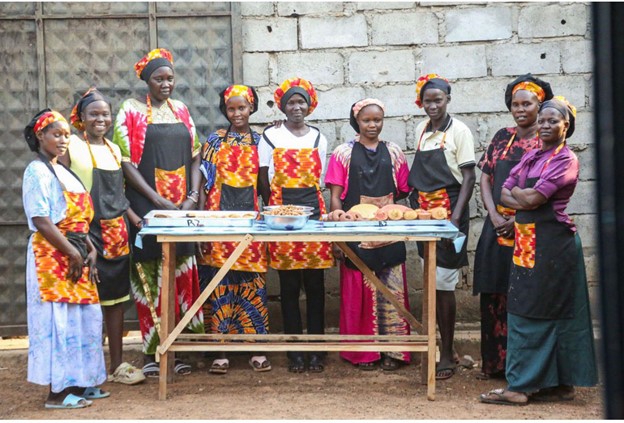
Sustainability became her next focus. Through the Amahoro Fellowship, Drucilla secured $10,000 to formalise her model and introduced a revenue engine: a baking enterprise that trains young women in production, financial literacy, and business management. Six of the first ten trainees have already launched income-generating ventures.
The model is deliberate. Baking revenues sustain literacy programs while equipping women with marketable skills.
Drucilla is building more than libraries. She is constructing an education-to-enterprise pipeline designed to strengthen South Sudan’s human capital from the ground up.
Ariane Umuhoza – Founder of Oasis Inclusive Center
Ariane Umuhoza turned a doctor’s dismissal into a business model.
A refugee from Rwanda now living in South Africa, she was told her toddler’s speech delay was the result of “foreigners speaking too many languages.”
The comment delayed his autism diagnosis by a year. But it also revealed how displaced families raising children with disabilities were being misdiagnosed, misunderstood, and underserved.
Ariane chose to build a response grounded in understanding and competence. She studied autism, mapped service gaps, and founded Oasis Inclusive Centre to provide structured support to autistic children, particularly within displaced communities.
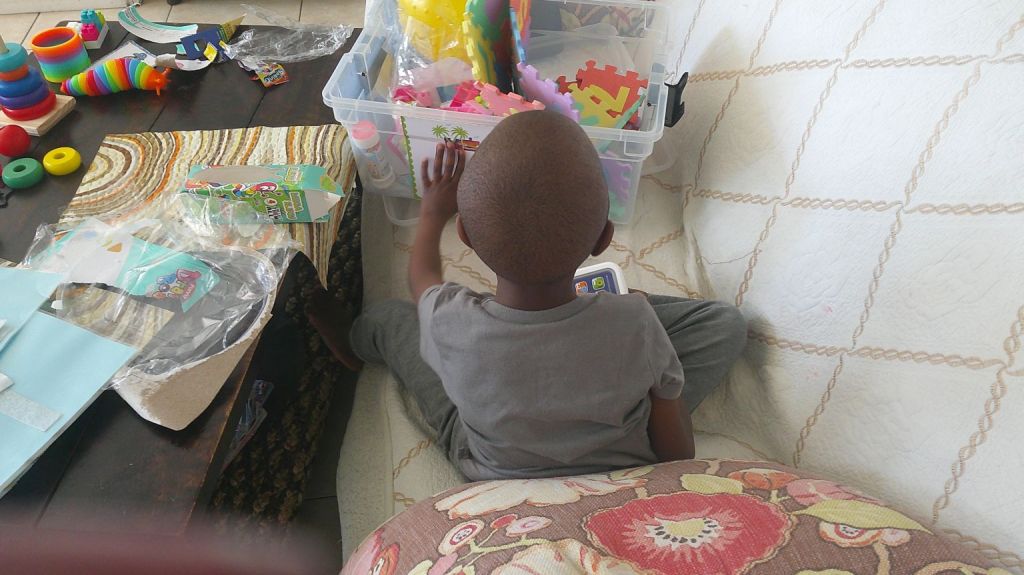
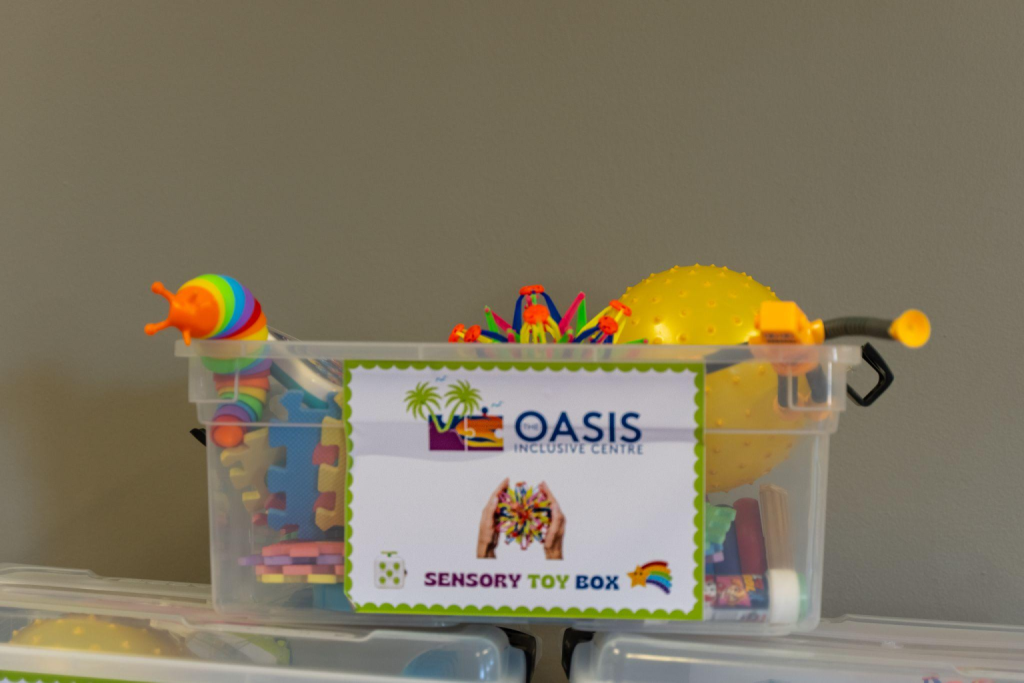
Through the Amahoro Fellowship, she refined her growth strategy and expanded revenue streams. Oasis now runs bilingual parent workshops across borders, distributes sensory toolkits to displaced families, and in 2025 launched autism-friendly tourism experiences in Cape Town, welcoming over 300 international visitors in four months while creating local employment.
“We are not waiting to be included,” Ariane says. “We are building inclusion.”
Ariane demonstrates that accessibility, when designed intentionally, creates both dignity and economic value.
Beza Firdu – Lunchbox for Ethiopia
Beza Firdu is tackling one of Ethiopia’s most direct barriers to educational performance: hunger.
Through Lunchbox for Ethiopia, launched in early 2024, she now provides daily nutritious meals to 390 secondary school students across two schools in Addis Ababa. The focus is deliberate. She targets Grade 10 and Grade 12 students, cohorts sitting high-stakes national exams that determine progression into higher education or the workforce.
Beza understands displacement and system friction firsthand. She fled Ethiopia at six and grew up as a refugee in South Africa, watching her mother build a livelihood from informal trade when formal employment was closed off. Years later, after completing her master’s degree, Beza returned to Ethiopia and identified a structural gap: students arriving at school unable to concentrate because they had not eaten.
Lunchbox for Ethiopia operates through local supplier partnerships and bulk procurement, maximising limited capital. Support from the Amahoro Fellowship strengthened her operating model and expanded reach.
What began with 20 students has grown steadily as stigma around receiving meals reduced.
Beza is building a nutrition-to-performance pipeline, linking food security to academic outcomes and long-term economic participation.
Gloria Asiimwe – Ademaria Initiative
Gloria Asiimwe – Ademaria Initiative
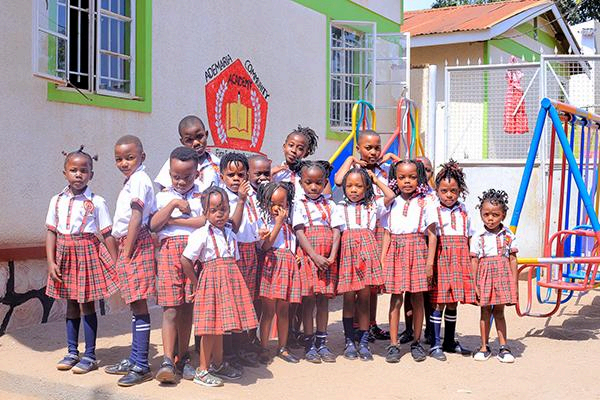
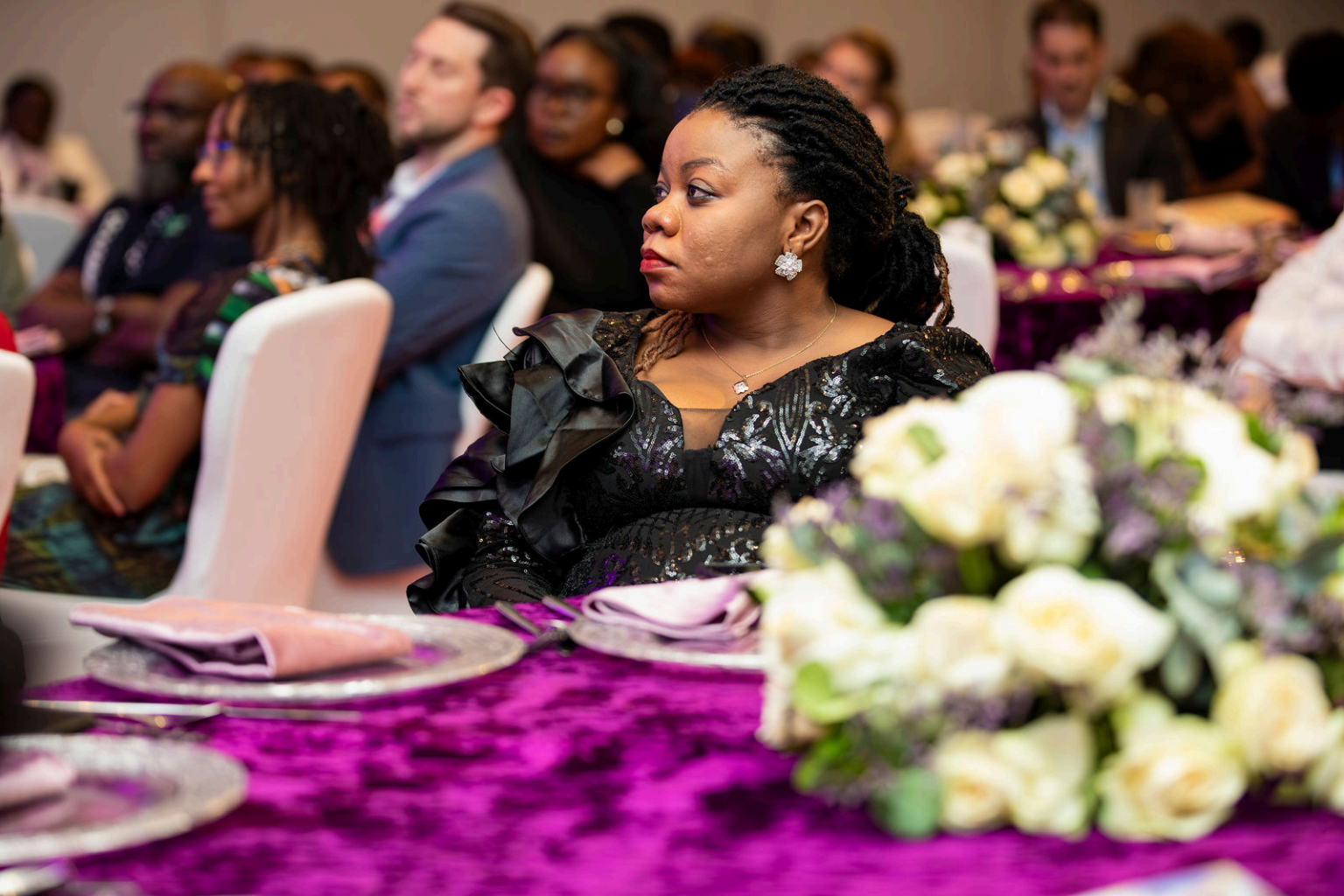
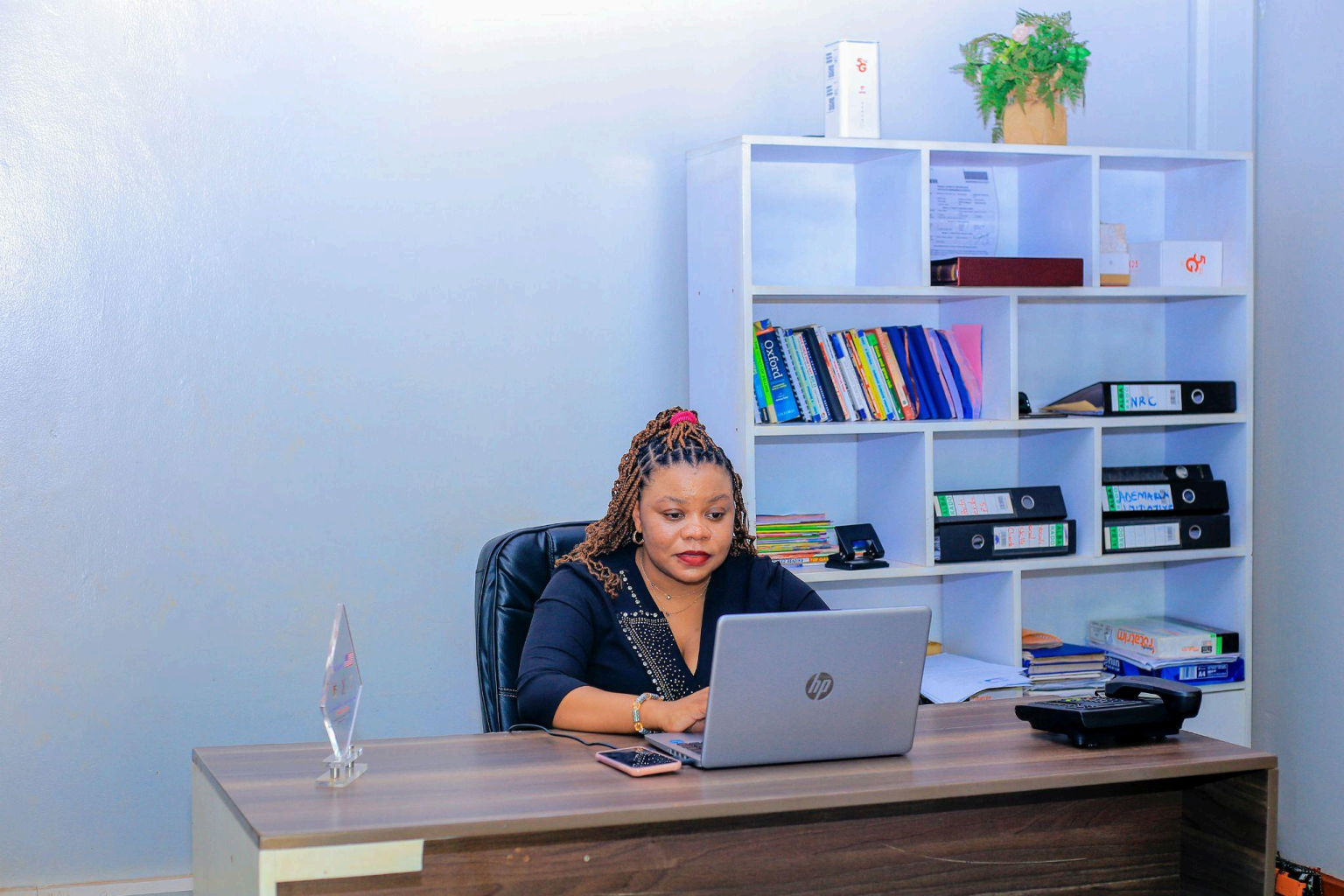
Gloria Asiimwe is building a workforce model that removes one of the biggest barriers to women’s income: childcare.
A refugee from the Democratic Republic of Congo who rebuilt her life in Uganda after fleeing conflict as a child, Gloria understands how fragile economic stability can be. During COVID-19, when childcare options collapsed, she experienced firsthand how quickly mothers are pushed out of the labour market.
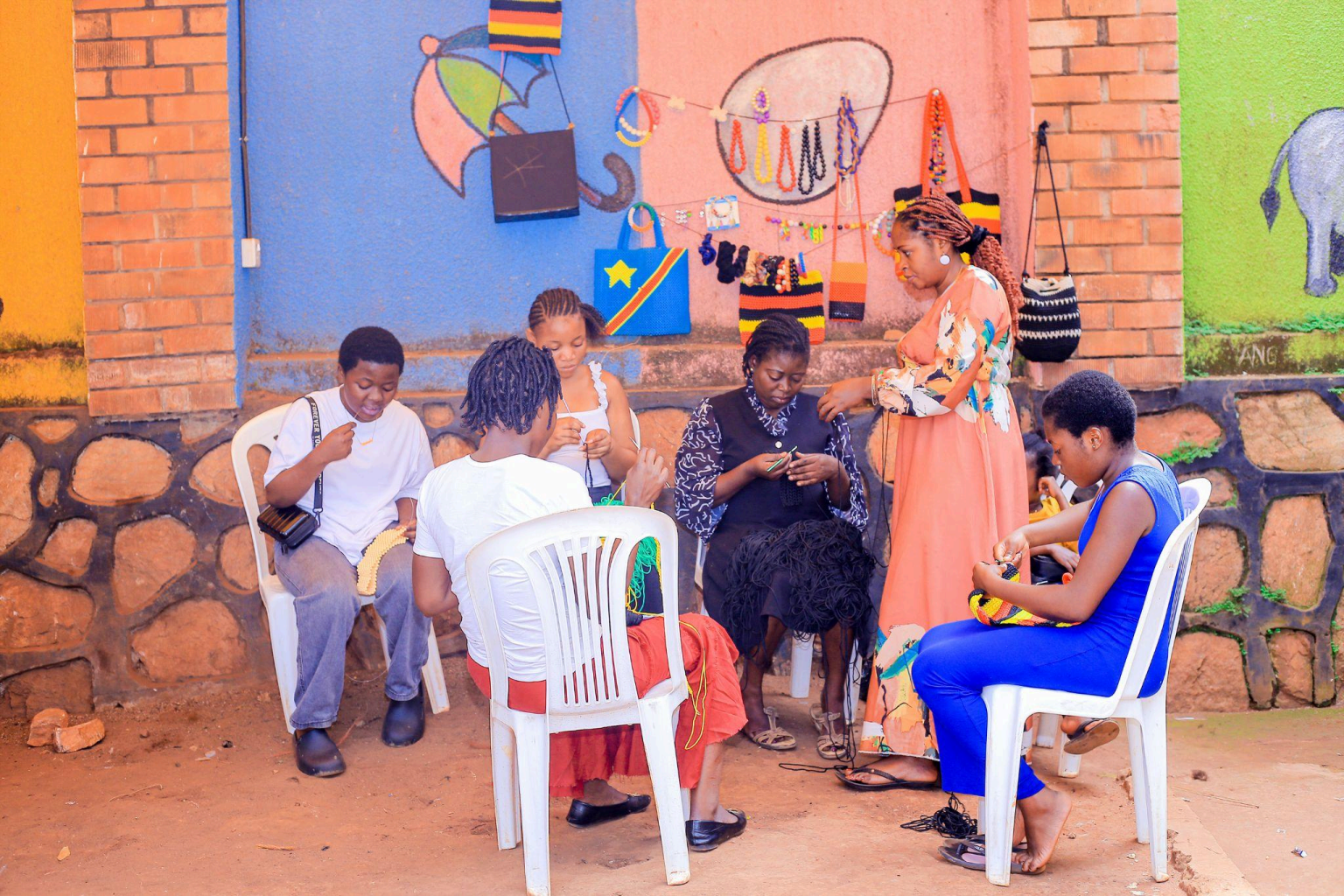
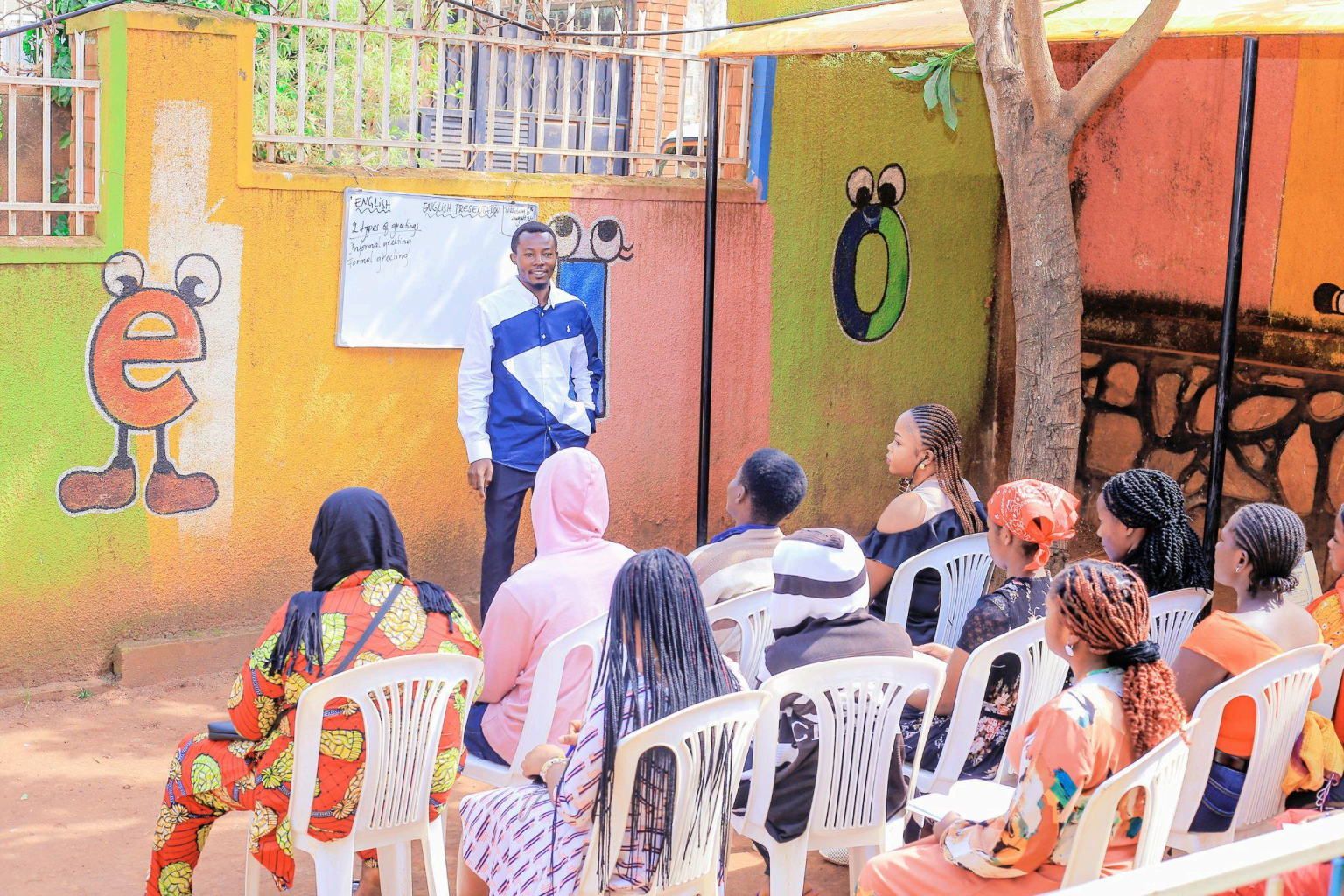
She responded by founding the Ademaria Initiative, a refugee-led enterprise that combines early childhood education with vocational training. While children receive structured learning, their mothers train in hairdressing, tailoring, soap-making, and financial literacy, creating immediate income pathways.
To date, the model has supported more than 70 women and 60 children. Several participants have transitioned from zero income to launching small businesses, including retail kiosks and service-based ventures.
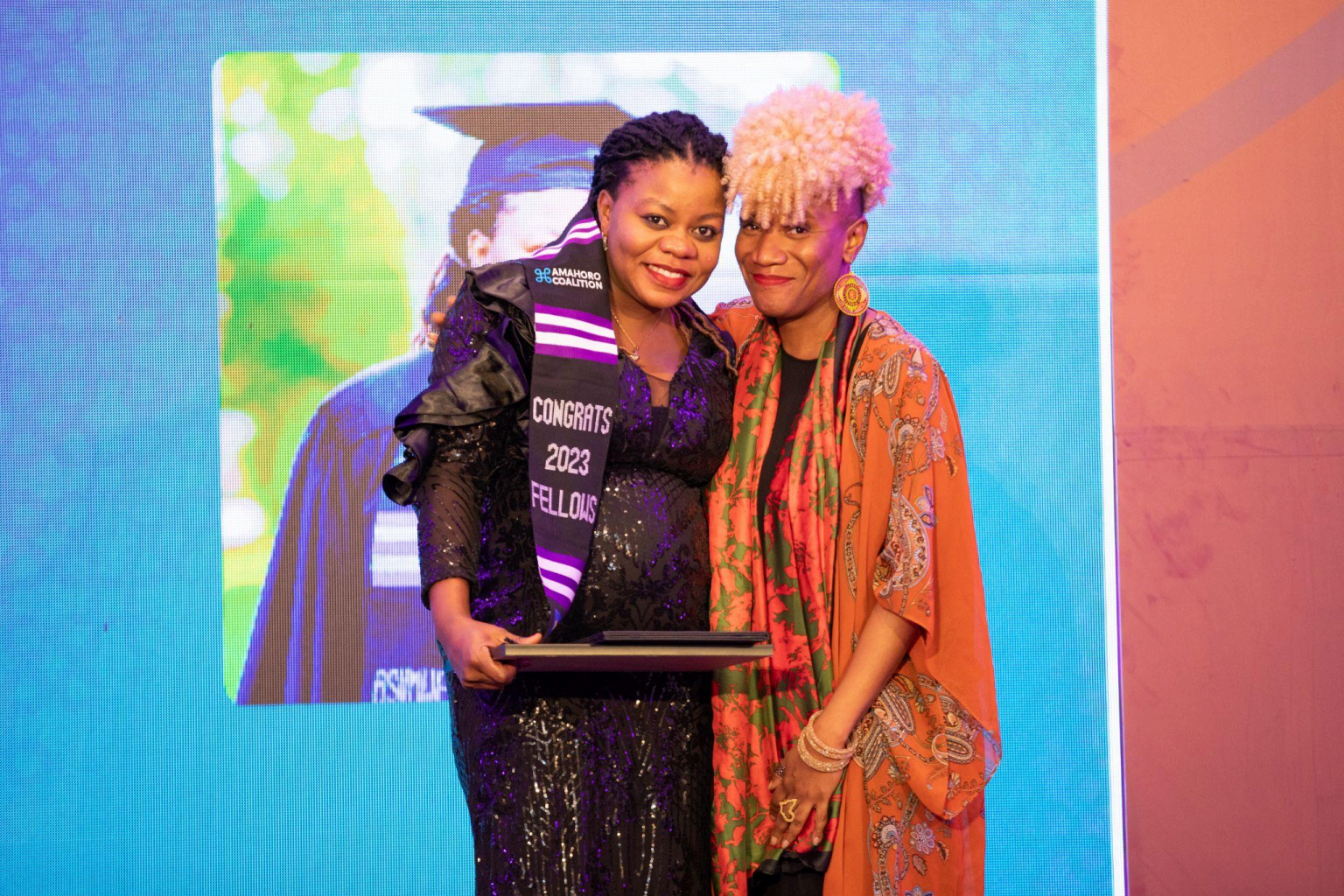
Through the Amahoro Fellowship, Gloria strengthened her business model, formalised operations, and shifted toward community co-design.
Her approach is clear: when childcare and income generation move together, women participate more fully in the economy. She is building security for two generations at once.
Beauty & Personal Care
Catherine Isaiah – Hair Entrepreneur
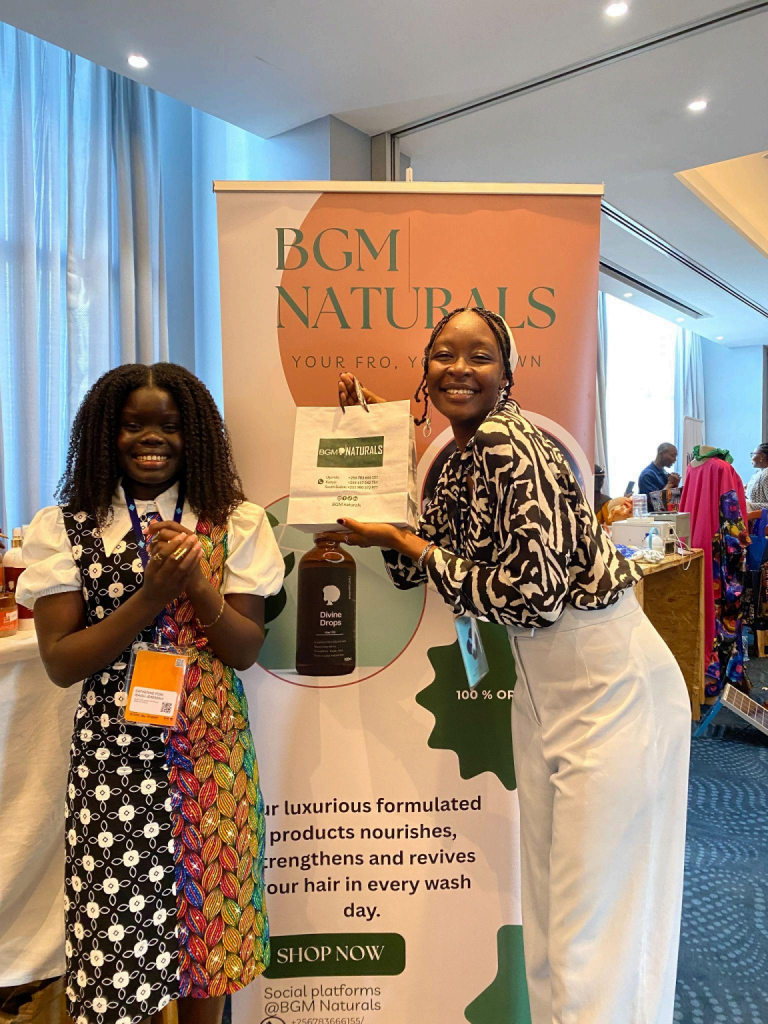
With over 1,000 customer orders each month, more than 500,000 followers, and upwards of 20 million social media interactions, what started with 60 dollars has grown into a cross-border beauty brand.
Catherine Isaiah, a South Sudanese entrepreneur based in Uganda, is the founder of Black Girl Magic Naturals. It’s an organic hair and skincare company serving customers across three countries and shipping globally.
She started by formulating products at home after growing frustrated with chemical-heavy, high-cost alternatives that did not serve textured hair well.
Demand grew quickly. One moisturizer became a product line, and direct-to-consumer sales through social media became a scalable distribution channel. Today, the business generates over 5 million Ugandan shillings in monthly revenue, with export-ready packaging and expansion plans underway.
Through the Amahoro Fellowship, Catherine sharpened her growth strategy, secured mentorship, and began transitioning from solo operator to employer. She is now hiring and positioning the brand for larger-scale production.

“We’re not just selling a product,” she says. “We’re promoting our culture.”
Catherine is building a culturally rooted beauty brand that competes on quality, community, and digital reach.

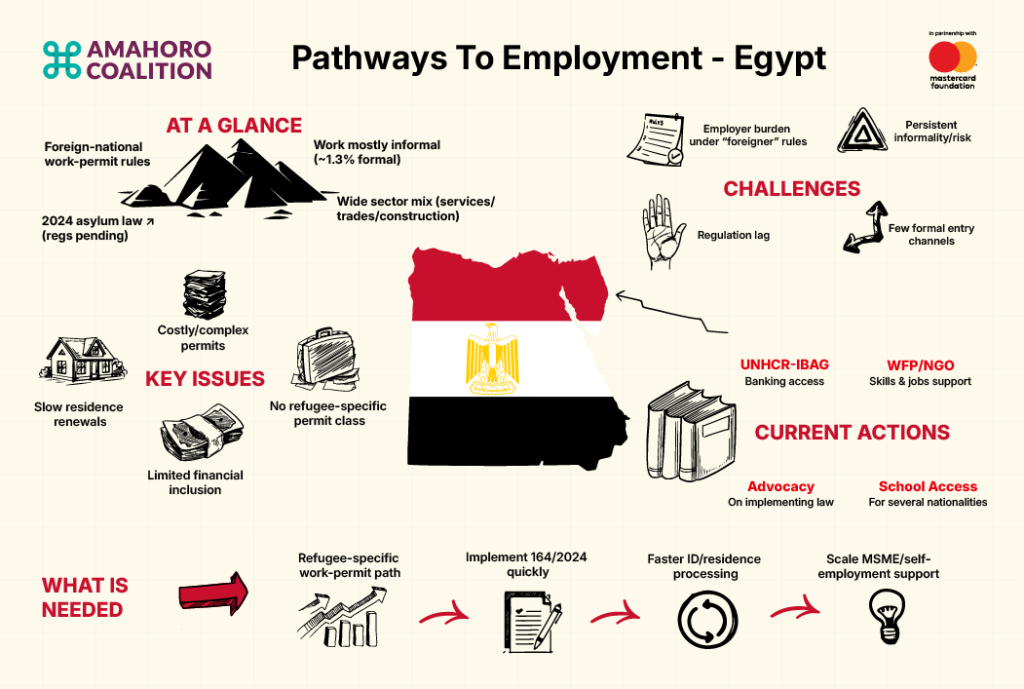
Dr. Nahla Omer Zayed -Pharmaceuticals & Beauty brand in Egypt
Dr. Nahla Omer Zayed is building a beauty brand that moves across borders with intention.
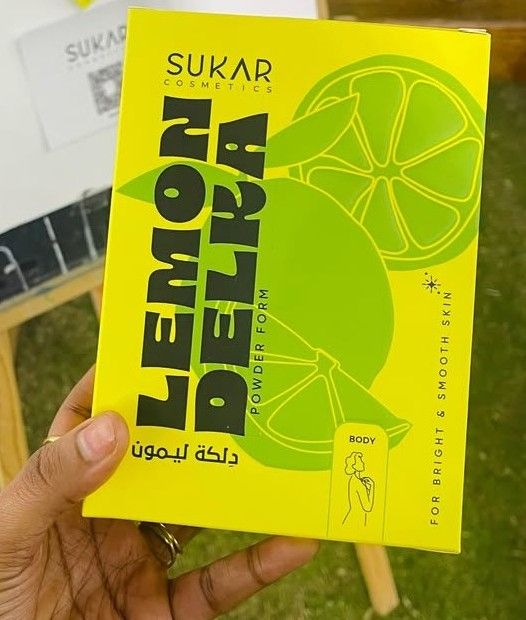
A pharmacist with nearly a decade of experience in pharmaceuticals and product innovation, she founded SUKAR Cosmetics to deliver high-quality, affordable products rooted in African heritage and formulated with scientific rigor. Her approach blends technical precision with a clear understanding of market demand.
Now building operations in Egypt, Dr. Omer has expanded SUKAR with an 11-product launch and successfully shipped her first batch to Sudan. The products are distributed through pharmacies in Egypt and available directly to consumers through the company’s website, strengthening both retail and direct-to-consumer channels.
She has secured impact funding, including support linked to a USAID-backed initiative, reinforcing production and growth capacity. A Global MBA graduate in Impact Entrepreneurship from Università Cattolica del Sacro Cuore in Italy, she continues to represent African founders on continental and global stages.
Through SUKAR, Dr. Omer is scaling a brand that combines science, heritage, and disciplined expansion into a commercially competitive African cosmetics enterprise.