

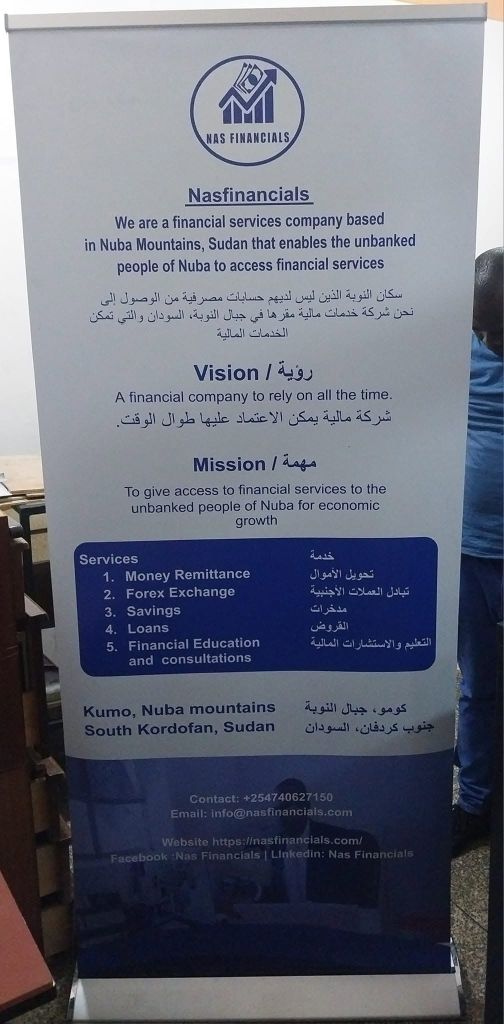
Within two years, Nas Financials has built a financial network serving more than 2,000 clients, processing over 5,000 transactions, and facilitating more than US$550,000 in remittances. All through a team of five employees supported by digital systems and community agents.
Founded by Almarat Ngutulu, the company became the first formal financial services provider in Sudan’s Nuba Mountains region.
Before its arrival, families stored cash at home, entrepreneurs relied on informal lenders charging up to 120% annual interest, and remittances from relatives abroad were costly, uncertain, and could take months to arrive..
Every economy depends on money moving safely, quickly, and predictably. Without formal financial services, families struggle to access financial services, businesses cannot access capital, and trade rarely extends beyond local markets.
Nas Financials was founded to change that. What began as one family’s struggle to receive money has become the region’s first formal financial services provider, connecting thousands of people to remittances, savings, and credit while demonstrating how financial infrastructure can accelerate economic growth in one of Sudan’s most underserved regions.
An Economy Without Banks
Ngutulu experienced the brunt of unpredictable and informal money transfers first-hand after conflict separated his family in 2000. While his mother and siblings sought safety in Kenya’s Kakuma Refugee Camp, his father remained in Sudan, sending finances whenever he could. The money often took months to reach them. School fees was late. Household plans changed and financial uncertainty became part of everyday life.
Decades later, after studying Business Administration and Software Engineering, Ngutulu returned to the Nuba Mountains and realised the problem extended far beyond his family.

Home to over 2 million Nuba people and 700,000 IDPs following the 2023 Sudan war, the region lacks the financial infrastructure that allows economies to function.
“When I came back, I realised people were not failing because they lacked ideas,” Ngutulu says. “They lacked access to financial services.”
The absence of banking affected far more than personal finances. It limited trade, restricted investment, slowed business growth, and made it difficult for people to move money into and out of the region.
Building What the Market was Missing
Ngutulu began by solving the problem he knew best: moving money.
When Nas Financials launched in March 2024, its first service was domestic and international remittances, allowing families to send and receive money safely, quickly, and at lower cost. What had once taken weeks or even months through informal networks could now be completed through a formal, regulated system.
As someone living and working in Dubai, sending money to my family in the Nuba Mountains was always difficult, with Nas Financials, I am now able to send money very easily and quickly
Abdo Osman Saeed – Customer
The company is quickly expanding beyond remittances.
Families who once stored cash at home will now be able to save securely.
Entrepreneurs who depended on informal lenders will gain access to affordable credit. First-time users of formal banking will receive financial literacy training alongside savings products designed to help households build financial resilience.
For the first time, communities in the Nuba Mountains could access formal financial services without leaving the region.
For customers, the difference is immediate.
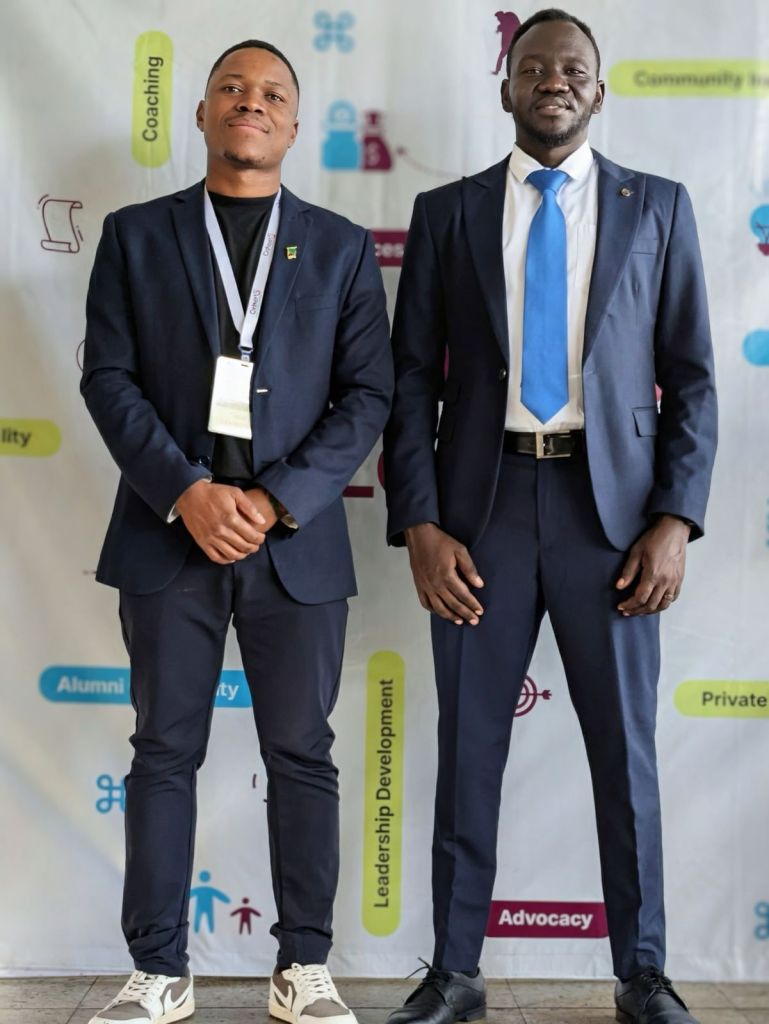
Nas Financials combined digital platforms with community-based agents who bring services closer to customers.
Today, the company operates two physical locations in the Nuba Mountains and Juba, South Sudan while continuing to expand through trained agents, online intermediaries, and customer relationship management systems that allow services to reach communities where traditional banks have never operated.
For customers, the difference is immediate.

I often struggled to send money to my family in the Nuba Mountains. Each time, I had to find someone to make an exchange. It always took a long time and sometimes even failed. Nas Financials’ fast and affordable remittance service instantly solved my problem.
Abbas, a Sudanese living in Nairobi.
Research from Boston University shows that expanding formal banking services in underserved regions can raise local GDP by about 0.36% per branch. In the Nuba Mountains, more than US$550,000 has already flowed through Nas Financials’ platform, capital that is beginning to circulate through households, businesses, and local markets rather than remaining dormant in informal systems.
“The reason we exist,” he says, “is to promote business between regions, help people make a livelihood for themselves while creating jobs, and build stronger local economies.”
From Access to Growth
Joining the Amahoro Coalition Fellowship in 2025, helped Ngutulu refine both the business and its long-term strategy.
Through mentorship and peer learning, he has strengthened the commercial model, sharpened the company’s growth strategy, and expanded relationships with entrepreneurs, investors and partners working across Africa.
Today, Nas Financials is preparing for its next stage of growth.
The company plans to expand its community agent network, introduce additional financial products including insurance, strengthen lending for small businesses, and deepen connections between the Nuba Mountains and regional markets across East Africa.
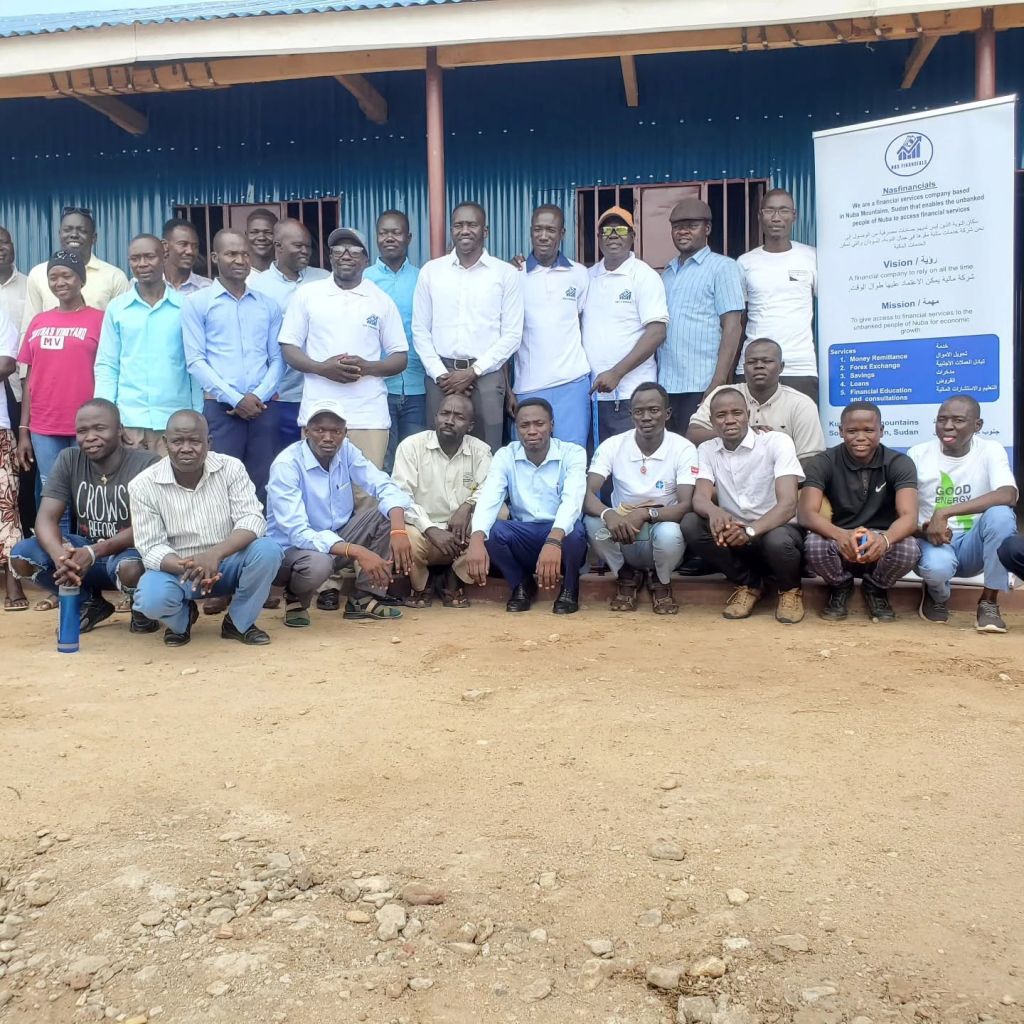
Ngutulu believes economic transformation begins with people who choose to build solutions where others see limitations.
“Let’s be creators,” he says. “Creators contribute to change in the community by providing solutions.”
Today, money moves differently through the Nuba Mountains.
For communities that have never had a formal financial system, every new account opened, every loan issued, every remittance received, and every entrepreneur financed represents a step towards an economy that can finance its own future.