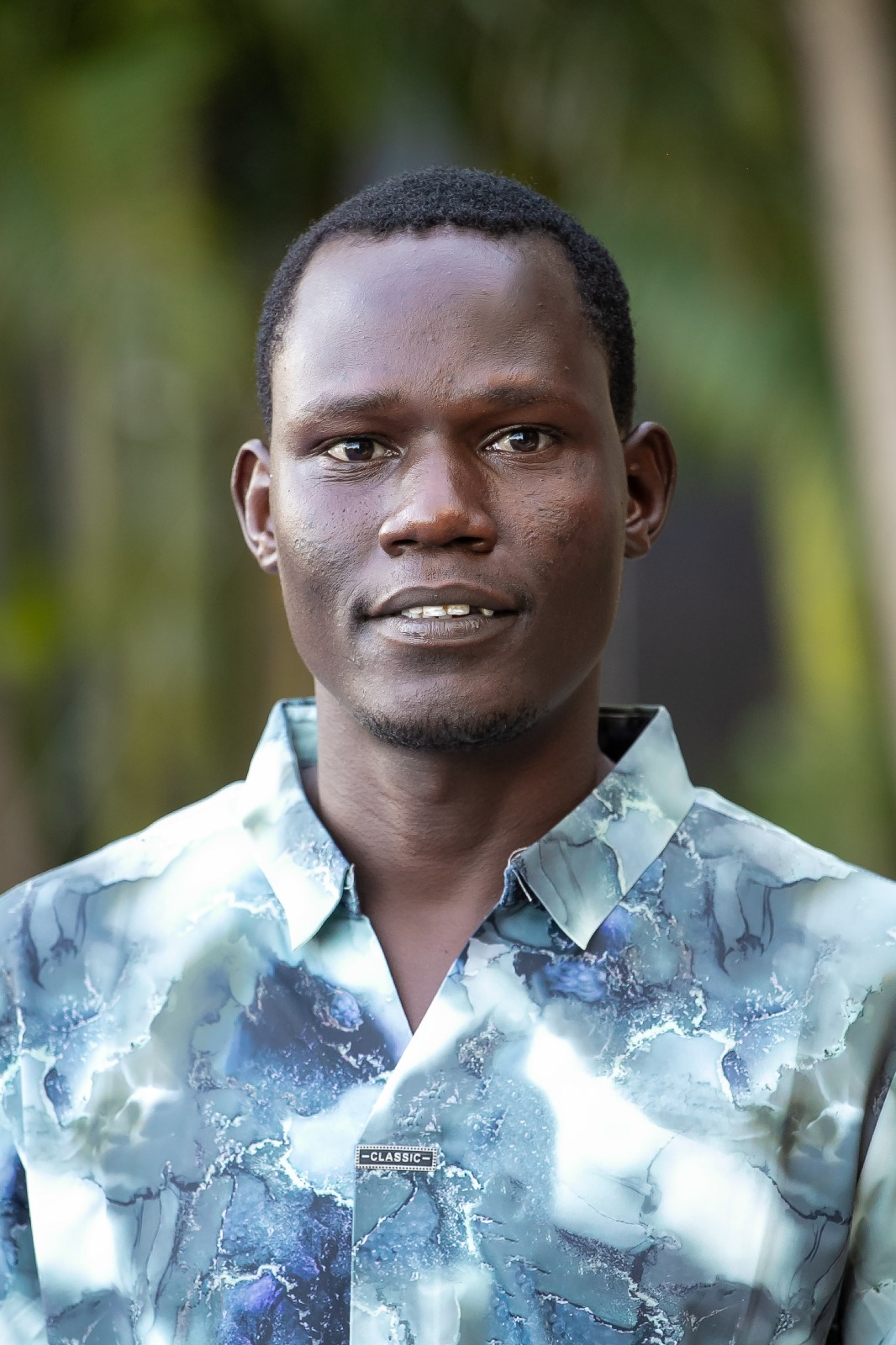
As a preschool teacher in Kakuma Refugee Camp, Dominic Amanya noticed that whenever food ran out in the school feeding programme, attendance dropped sharply. He founded Kakuma Social Ventures in 2022, a climate-smart agriculture enterprise that grows food inside the camp, employs displaced youth, and builds the supply chain that keeps children in classrooms.
Kakuma Refugee Camp hosts more than 300,000 forcibly displaced people, yet produces very little of its own food. Most supplies arrive either through humanitarian assistance or are trucked in by traders.
As global aid declines, official development assistance fell by 23 percent between 2024 and 2025, the largest drop on record. Food rations continue to shrink, communities are becoming increasingly vulnerable to disruptions in external supply.
Hunger is no longer simply a humanitarian concern. It is becoming an education challenge, an economic challenge, and a resilience challenge.

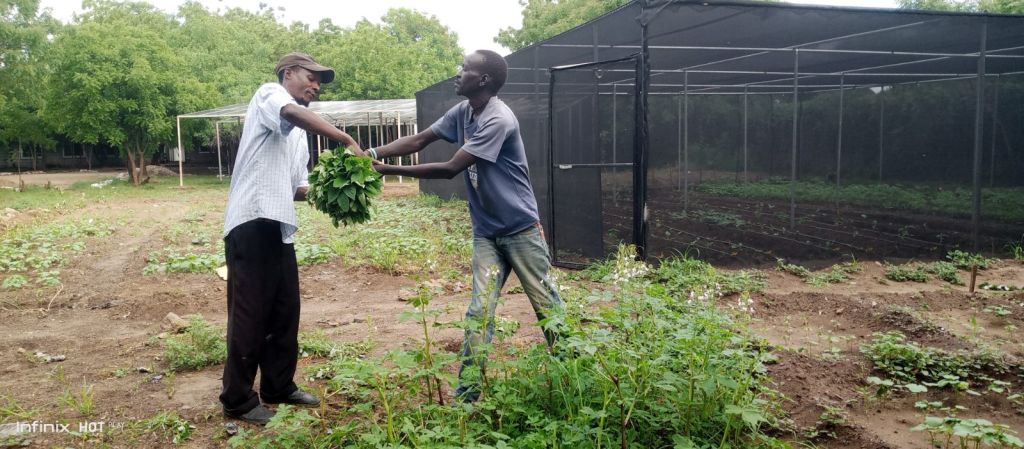
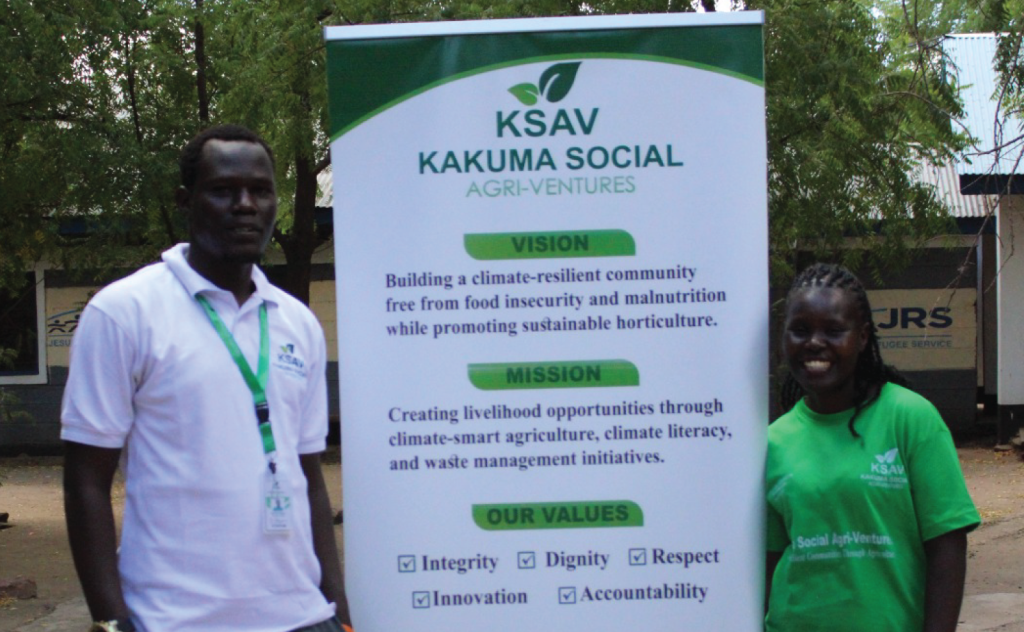
Dominic’s response was not another feeding programme. It was to build a local food system. Starting with a small demonstration farm inside Kakuma, Kakuma Social Ventures is producing climate-resilient crops, training farmers, employing displaced youth, and demonstrating how agriculture can reduce dependence on humanitarian food aid while strengthening the local economy. What began as a class project has evolved into a business testing how displaced communities can grow more of the food they consume and, in doing so, build greater resilience for the future.
Growing Food Before Growing a Business
Amanya was born and raised in Kakuma Refugee Camp to South Sudanese parents. Between 2018 and 2025, he taught early childhood and primary school learners while leading environmental clubs that introduced children to tree planting and conservation.
In Kakuma, children walk up to an hour each way to reach school, through heat that regularly exceeds 40 degrees Celsius. “Even though the children wanted to learn,” he recalls, “when there was no food at home and at school, they simply stopped coming.”
The experience challenged him to think beyond the classroom. He began asking how communities could produce more food.
To answer that question, he enrolled in a Social Entrepreneurship programme offered by Tangaza University in partnership with Jesuit Refugee Service. A class assignment evolved into something much larger. Together with four colleagues, they contributed KES 7,800 (approximately $60) in pooled savings and launched Kakuma Social Ventures in 2022.
Building Food Security One Harvest at a Time
The team secured a small plot measuring 16 by 8 metres – roughly the size of a professional volleyball court – borrowed farming tools from neighbours, carried water by hand from a nearby borehole, and planted indigenous vegetables including murenda, okra and kunde. Their first harvest generated approximately KES 2,850, about $22, which was reinvested back into the business.
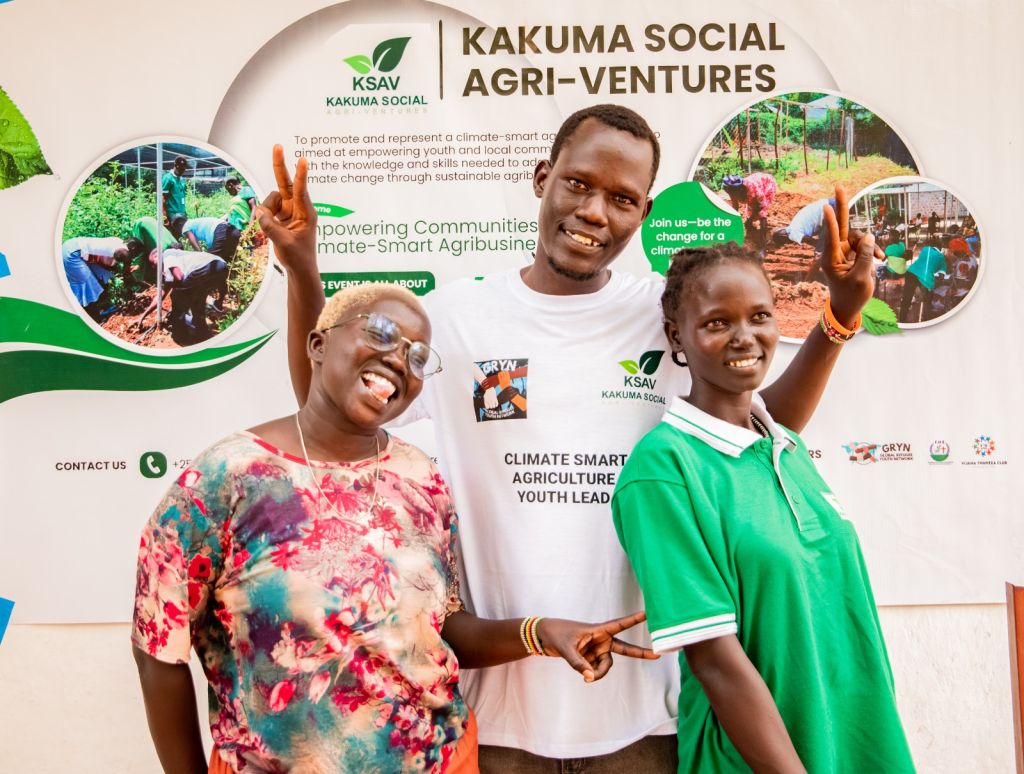
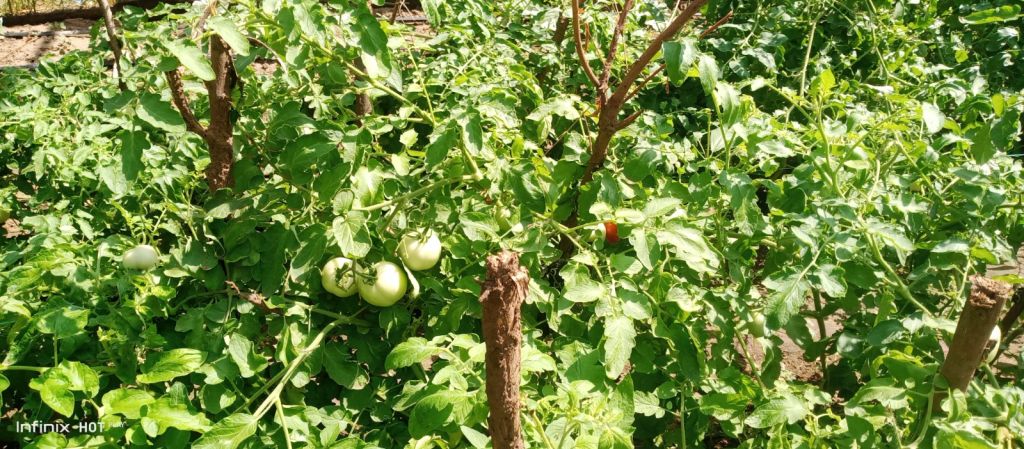
As the enterprise expanded, new crops including hibiscus, tomatoes, onions, cabbage, pumpkins, watermelons and sugarcane were introduced. The team invested in their own equipment, irrigation systems and a shade-net structure that reduced water loss while organically farming. They continued to improve infrastructure while continuing to experiment with climate-smart farming techniques suited to Kakuma’s harsh environment.
A severe drought dried the boreholes destroying an entire tomato crop expected to generate approximately KES 40,000 approximately $310. Group members gradually left the project. When the enterprise ran dry, Amanya funded it himself. First from his teaching salary, later from facilitation income.
Still, he continued planting.
Farming as Community Infrastructure
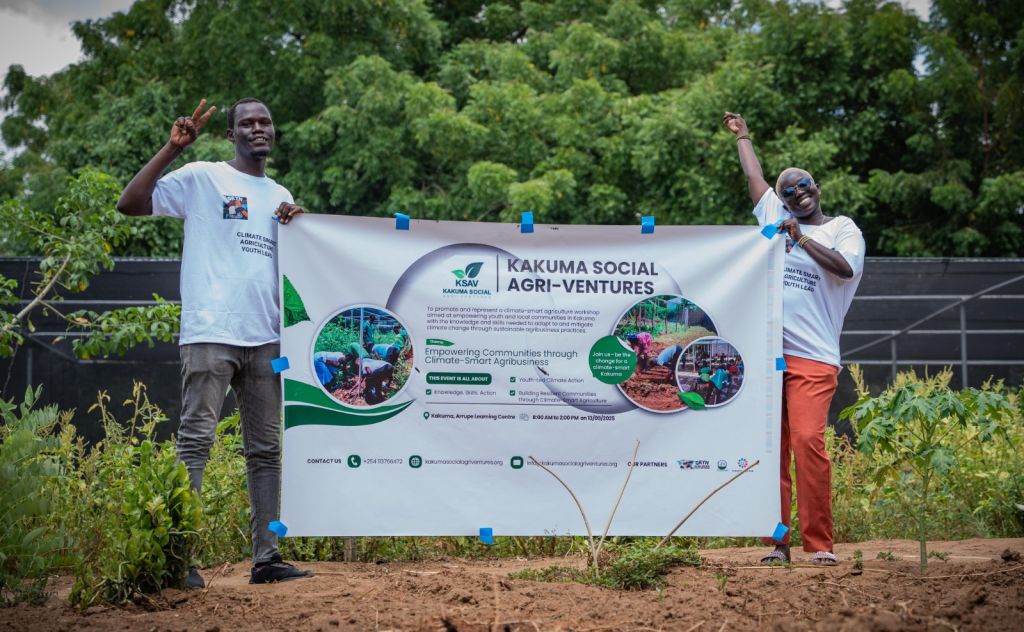
The farm became a learning space where young people, farmers, and community members exchange ideas on regenerative agriculture, climate adaptation, and sustainable farming. What began as a production site now functions equally as a demonstration farm and training centre.
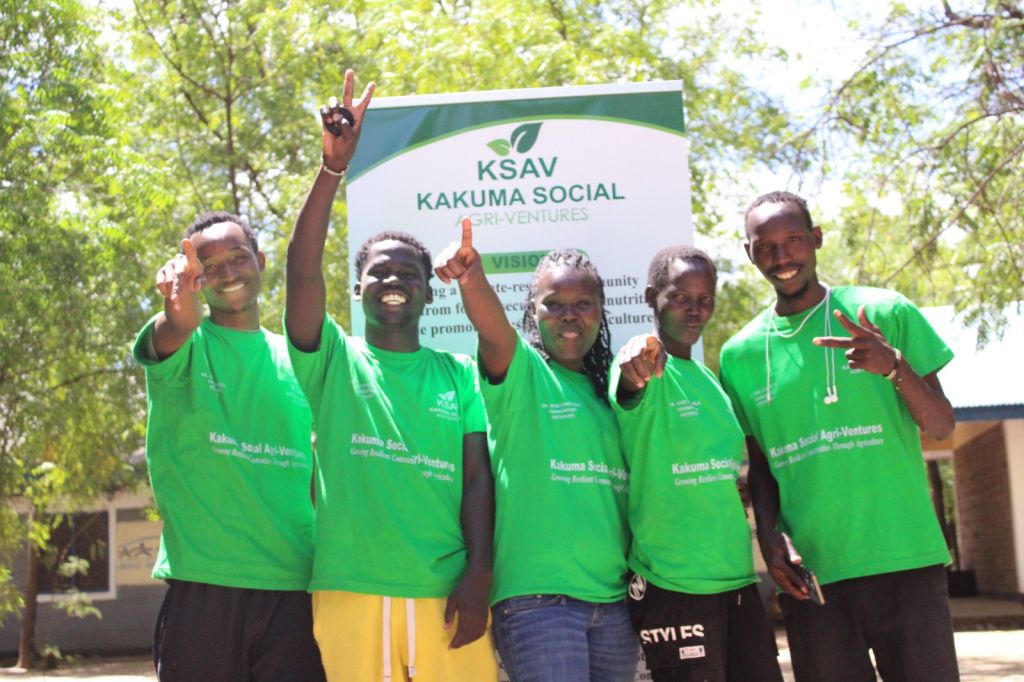
To date, Kakuma Social Ventures has trained more than 200 people in climate-smart agriculture, while piloting additional community training programmes that introduce regenerative farming practices across the camp. Kakuma Social Ventures has recently secured a second piece of land, one acre, and is developing plans to expand operations beyond Kakuma. What started on a 16 by 8 metre plot is now preparing its first move outside the camp.
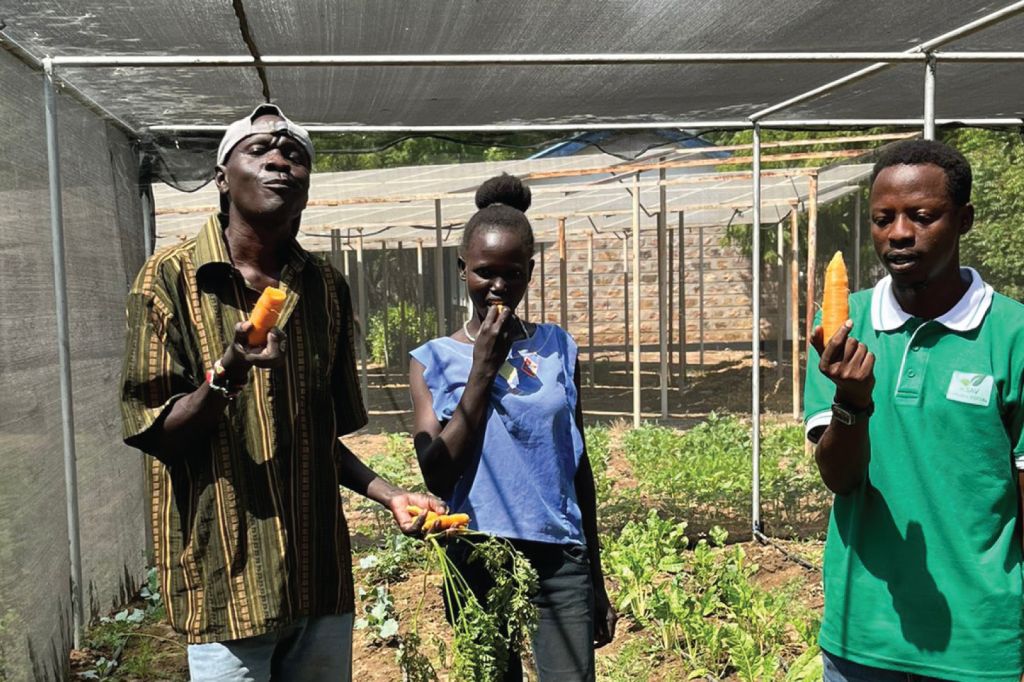
Climate-smart agriculture simultaneously increases productivity, strengthens resilience to climate shocks, and reduces environmental degradation. For regions facing both food insecurity and climate change, it is one of the most important investments available.
In Kakuma, where prolonged droughts, limited land access, and fragile livelihoods intersect, every successful harvest contributes to more than household income. It improves local food availability, transfers practical farming knowledge, and builds resilience within the community.
From Farmer to Systems Builder
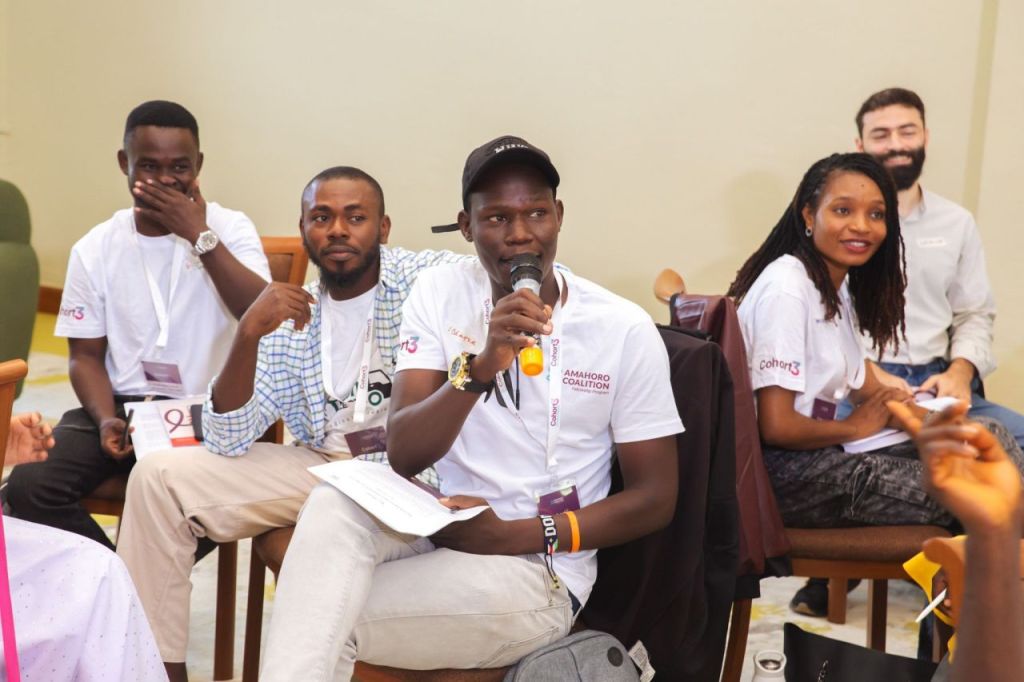
Joining the Amahoro Coalition Fellowship in 2025 expanded Amanya’s network and changed how he thinks about his venture. Through mentorship, peer learning, and practical assignments, he has strengthened governance systems, improved financial record-keeping, refined his business model, and gained greater confidence presenting his work to partners and funders.
Land tenure inside refugee settlements is precarious, farmers invest in soil they do not own and can lose access to with little notice.
Recognising that structural risk, Amanya is now pursuing a dual-track strategy: maintaining the Kakuma farm as a centre for community training, nutrition, and social impact while leasing land outside the settlement for commercial-scale production.
The approach allows the enterprise to continue serving the community while building a revenue base strong enough to sustain the social mission without depending on grants.
Future plans include expanding climate-smart agriculture training, establishing a borehole that will serve both the farm and the surrounding community, strengthening tree nursery production, and creating more livelihoods for young people through agriculture.
Kakuma Social Ventures is proving that climate-smart agriculture in displacement settings is a replicable model. For Dominic, the lesson that began in a preschool classroom still guides the business today.