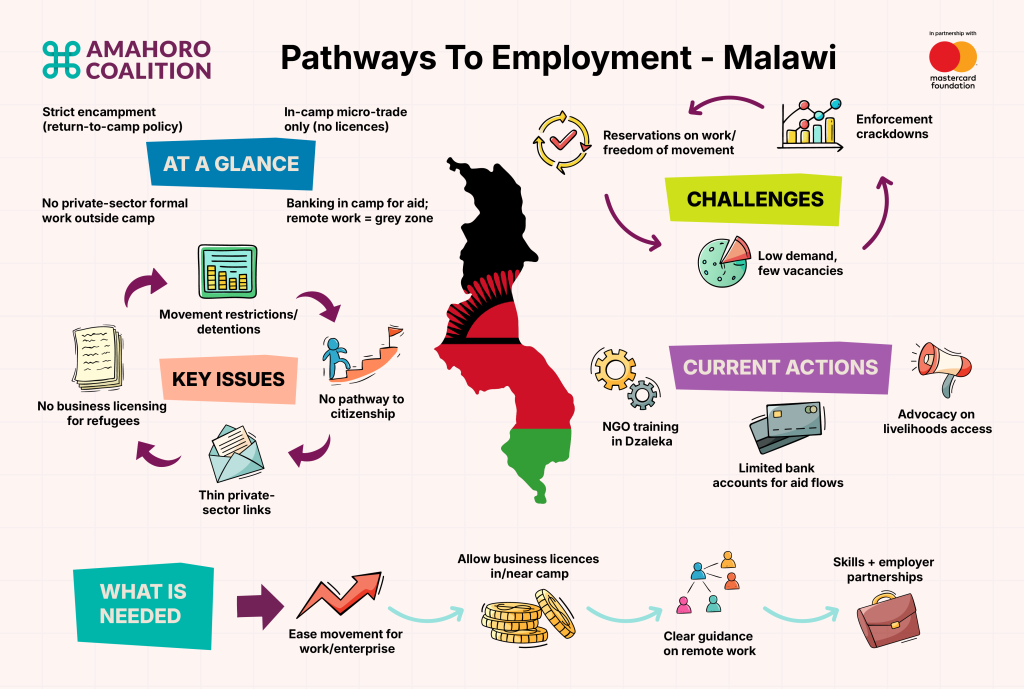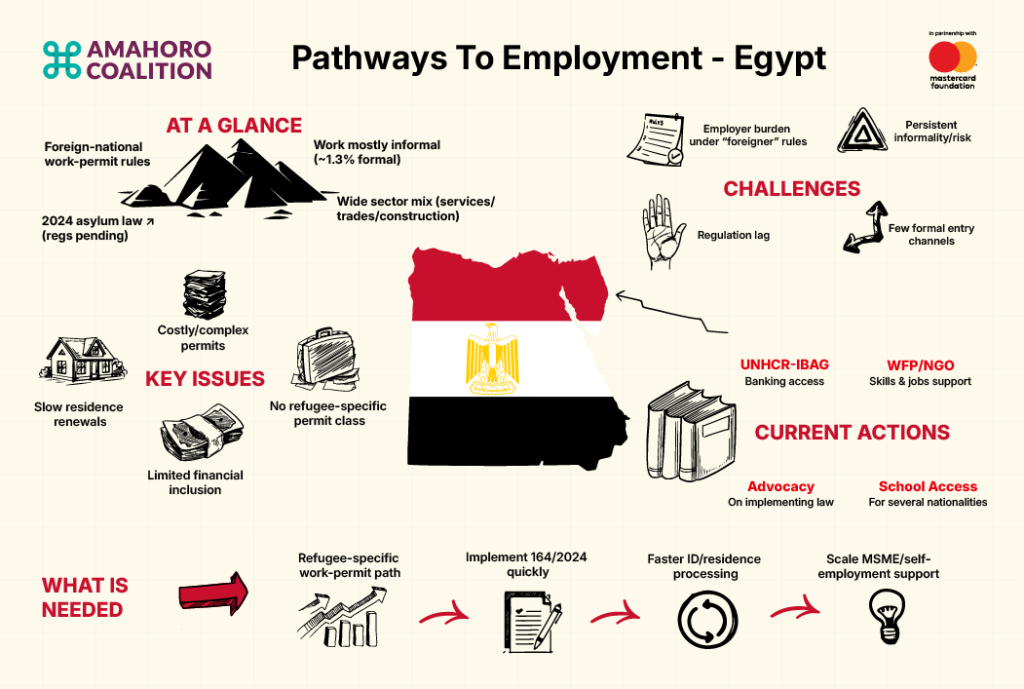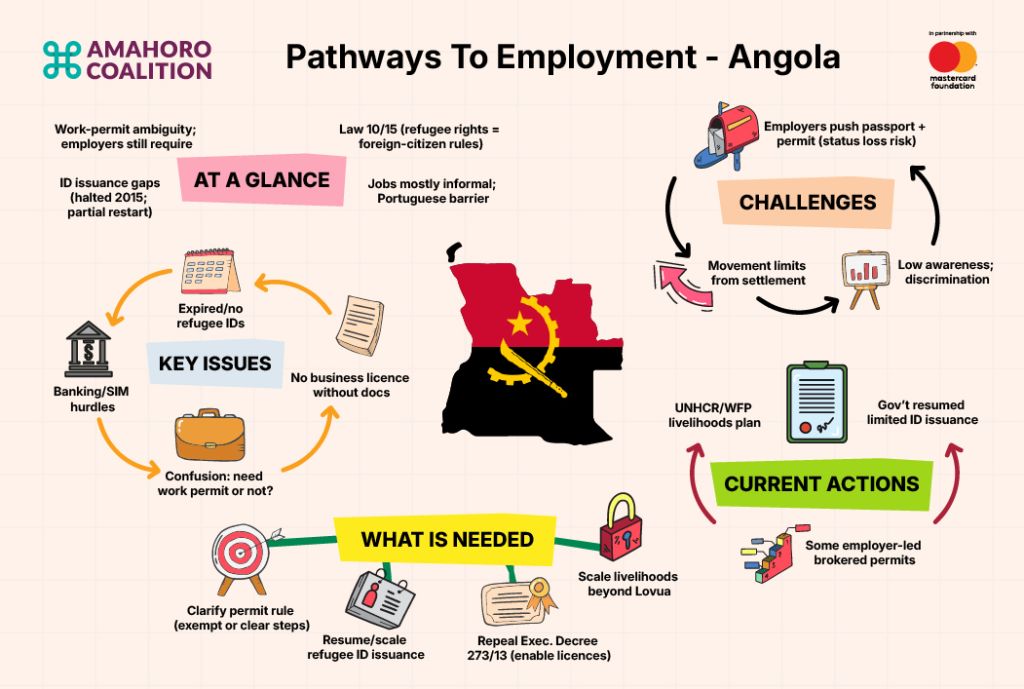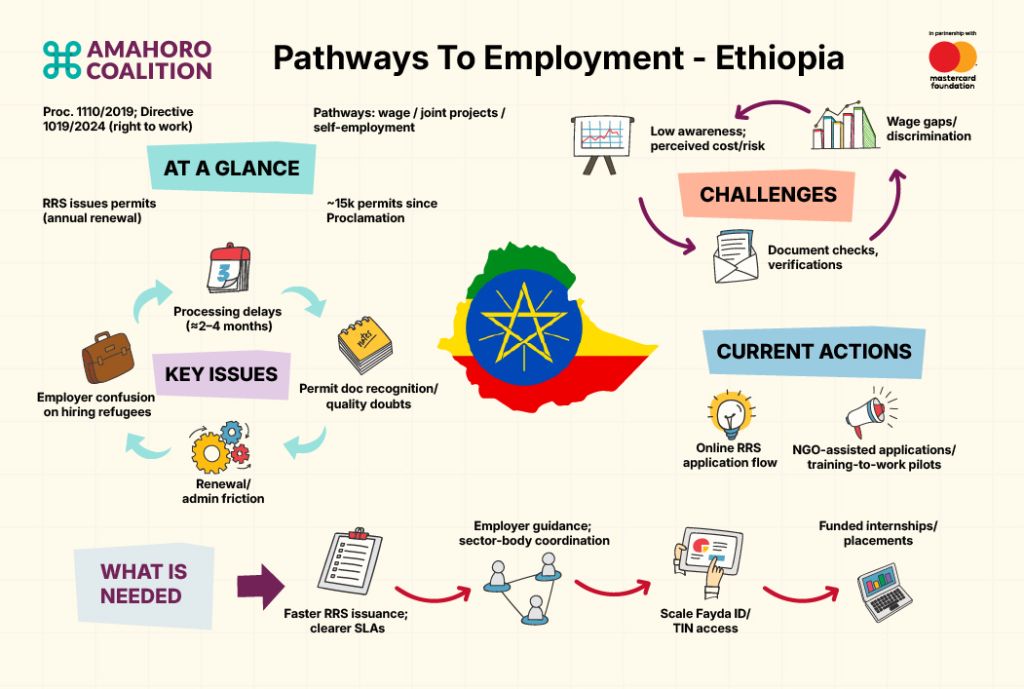

An estimated 20.7 million children across Africa are forcibly displaced, with schooling often interrupted in the process. For families fleeing conflict, school records come second to survival. Academic transcripts and certificates are left behind in the rush to safety, while those kept at school can end up hundreds of kilometres and a border away.
The bill comes due years later. A scholarship is useless without the transcript needed to claim it. University admission stalls without proof of previous schooling, while a qualification becomes difficult to sell to an employer without the certificate to prove it.
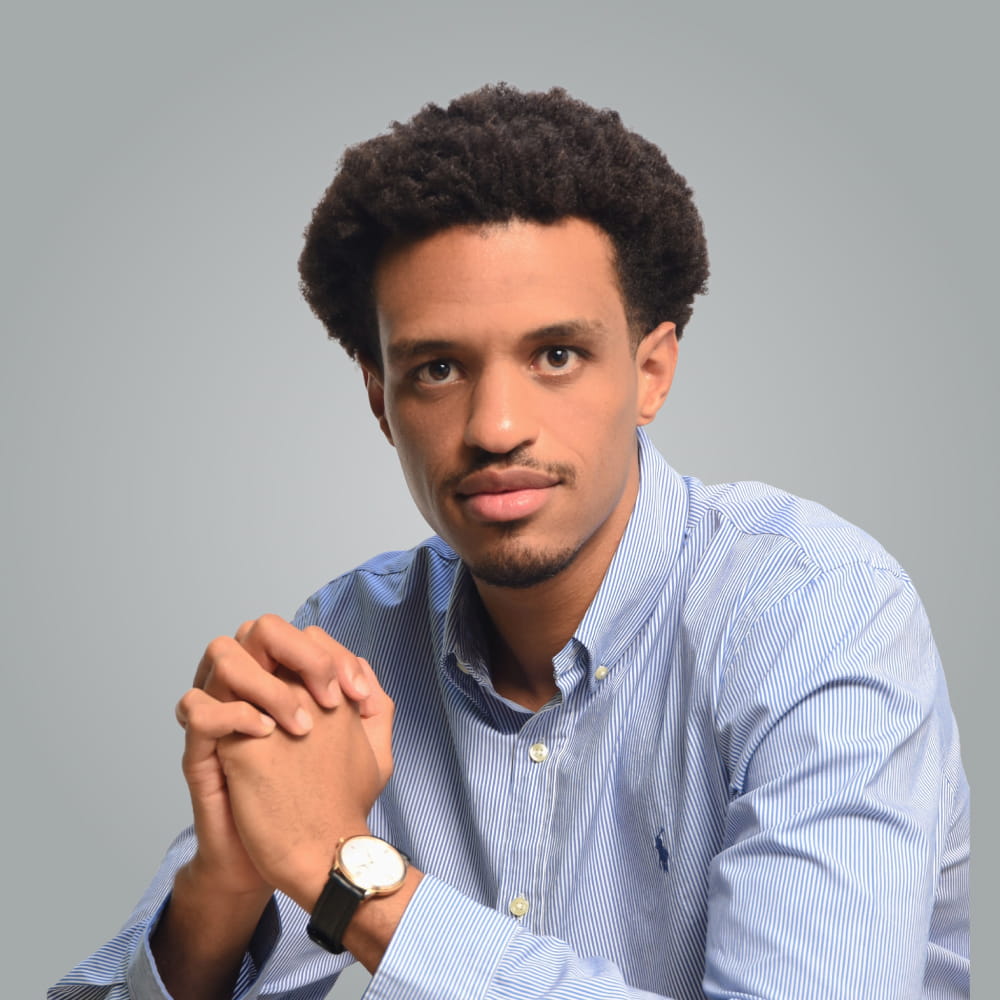
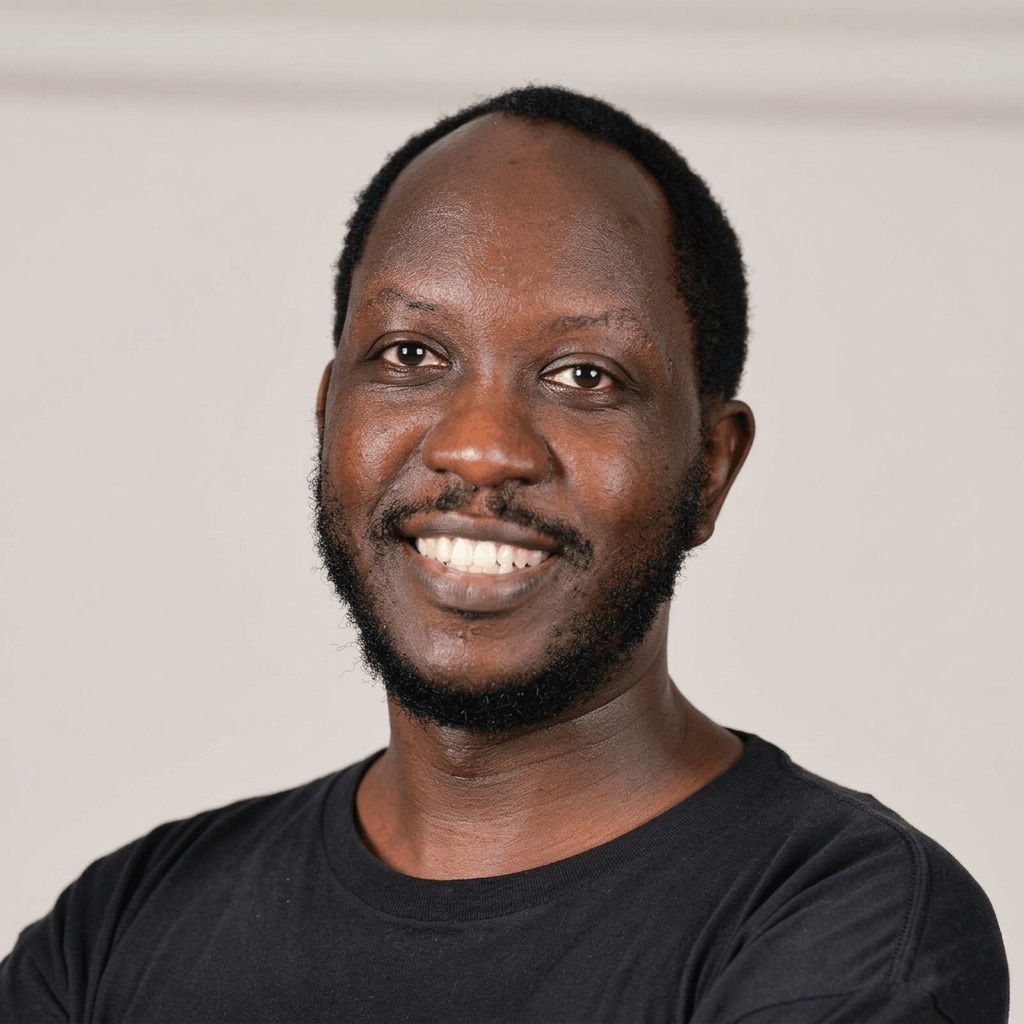
Tresor Buzangu has spent a good chunk of his life dealing with this problem.
An Education Across the DRC and Ghana
Buzangu grew up moving across provinces in the Democratic Republic of Congo as his military father changed postings. The family spent periods living in military camps, and every relocation meant another school. Because schools held academic records until students completed a stage of education, Buzangu occasionally left town without his documents. He would call later, only to discover that the school had lost them too. Once, a missing record cost him an entire year of school, and as he grew older, the stakes grew with him.
After securing a scholarship to study at Ashesi University in Ghana, Buzangu discovered that the passport he needed to travel was also missing. A contact eventually helped him recover it, and he made it to Ashesi to study Management Information Systems.
By then, he had watched friends wrestle with the same problem, with some abandoning school altogether. At Ashesi, the problem he knew intimately met the technical skills to do something about it, and Buzangu began building systems to spare others the indignity of having to prove an education they had already earned.
Before the software Came a WhatsApp Group
While studying at Ashesi, Buzangu interned at CIYOTA, a refugee-led organisation in Uganda that helps conflict-affected young people access education. There, he met displaced Congolese students struggling with missing academic records. It was a familiar problem in a new setting.
So in 2022, Buzangu opened a WhatsApp group and put his network across the DRC to work. “I have a lot of networks in Congo,” he says. “So I started by manually reaching out to schools.”
It was painstakingly manual work for what would eventually become a technology company. Buzangu contacted former schools in search of duplicate transcripts, arranged translations and helped students use recovered records for scholarship applications. Around 12 eventually secured study opportunities in the United States, South Africa and Ghana.

Back at Ashesi, he began turning the WhatsApp operation into software. He called the platform Tshijuka, and the original idea was simple enough. Students would request missing records directly from the schools that held them.
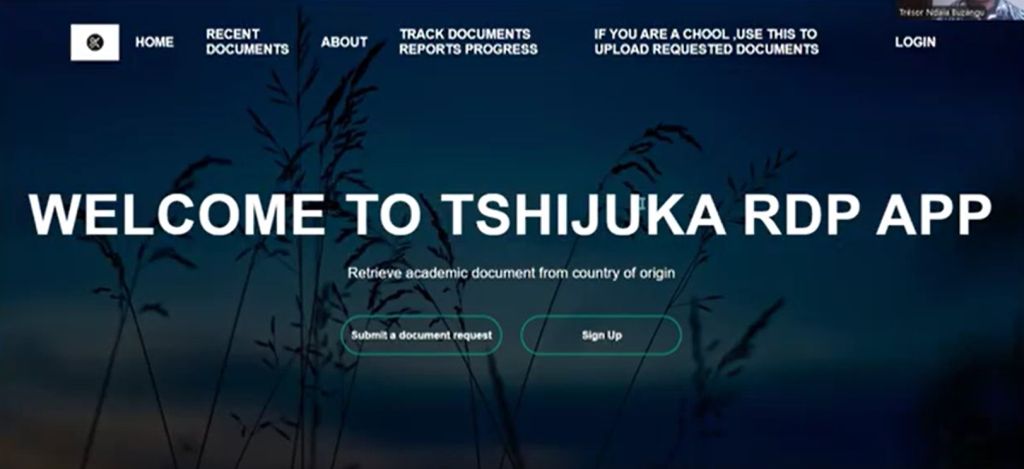
But then came the more fundamental problem.
“If someone has already lost a document, it becomes almost impossible to find it,” he says.
That realization flipped the premise of Tshijuka. Recovering lost documents would always depend on someone, somewhere, still having a copy. Prevention offered a cleaner proposition.
If you have a document, don’t lose it. That’s our vision for now. Zero document loss.
Tresor Buzangu
Then the institutions started paying
That idea now sits behind DocManage Technologies, the document management company Buzangu has registered in Kinshasa. Individuals can store records digitally and request help tracing documents they have already lost, while a planned premium tier will use AI for tasks such as translation.
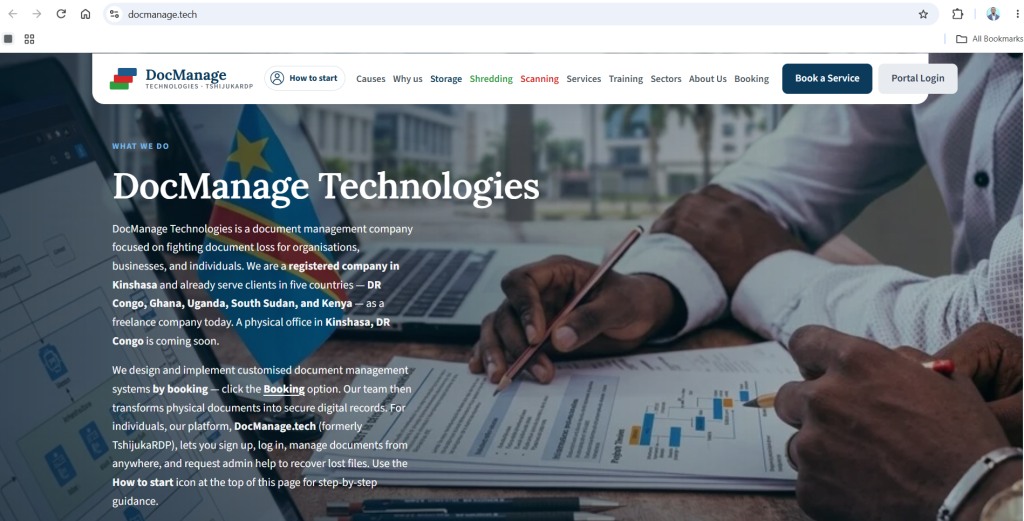
The technology has evolved with the business. Tshijuka initially used facial recognition for verification, but the feature proved cumbersome and demanded more capable phones than some users had. Buzangu dropped it and redirected the AI work towards automating document management.
But the more consequential discovery came from the organisations he was approaching. Schools might have resisted putting their records on someone else’s platform, but they still had records to manage.
A Ghanaian pineapple exporter made the commercial opportunity explicit. The company had around 50 employees and managed their records entirely on paper when it met Buzangu through Ashesi. It hired him to digitise the process, giving him an answer to the question lurking behind every promising product. Who actually pays?
For DocManage, the answer is increasingly institutions. Buzangu says he has built systems for 15 organisations and businesses, including schools in the DRC and Uganda, largely through referrals. “People know your skills, they call you,” he says.
Individuals remain important to the platform, and Buzangu expects premium subscriptions to eventually generate revenue from them too. But custom systems for organisations are emerging as the larger commercial engine.
How The Amahoro Fellowship Revealed the Company Hiding Inside the Product
By the time Buzangu joined the Amahoro Fellowship, a $5,000 FAST grant had helped him develop the early technology, but his pitch still centred on individuals recovering lost documents.
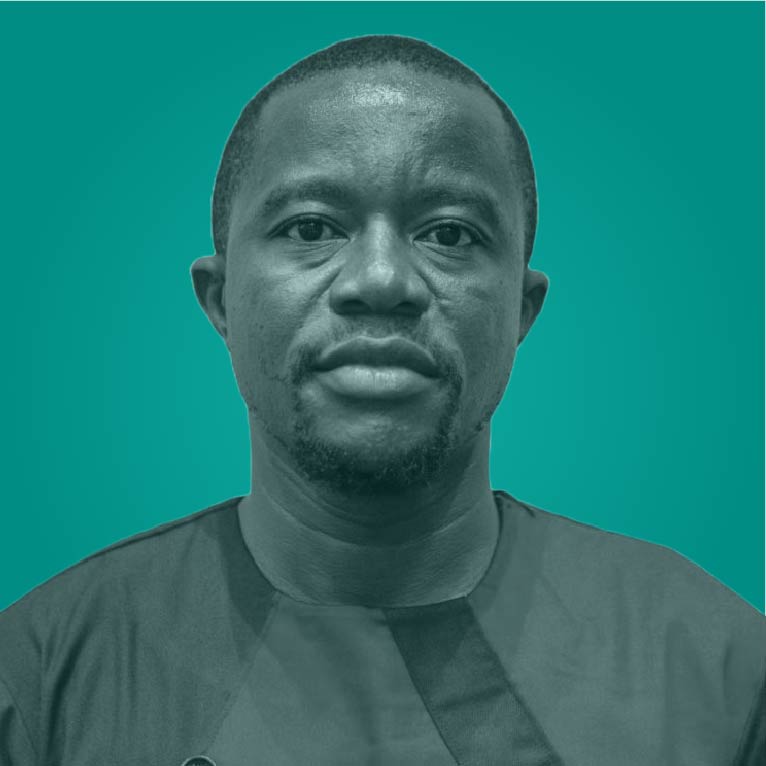
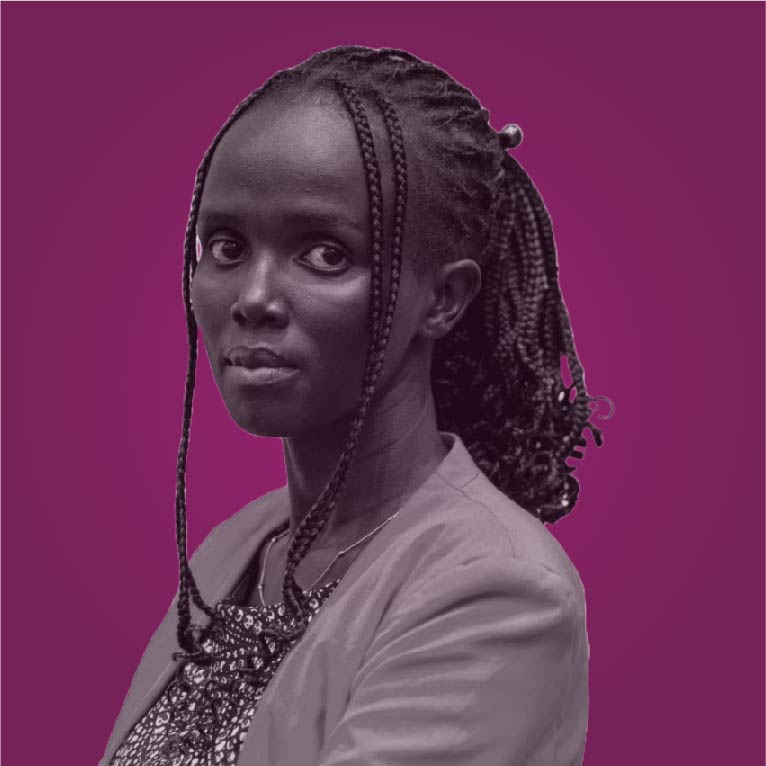
Kris Senanu, who sits on the Amahoro Fellowship’s Investment Selection Committee, pushed him to think beyond retrieval and towards preventing document loss, while also interrogating how the idea would sustain itself financially. Isaac Fokuo, Amahoro’s curator, pushed him further towards organisations.
At that time, I was pitching only to individuals. Isaac was one of the people who told me I needed to look at organisations if I wanted to make it sustainable. Amahoro Coalition helped me with the mindset of how to go about it and gave me more focus.
Tresor Buzangu
The useful thing about that advice was that the market had already supplied the evidence. Schools wanted control of their data, while businesses were paying Buzangu to build systems they could own. The Fellowship helped him recognise that what looked like a collection of side projects could form the spine of a company.
“The most important thing for me has been the mindset and the focus,” he says. “If I was on my own, I’m not sure I would have gone in that direction.”
Four years after a WhatsApp group started the experiment, DocManage has travelled from recovering lost school records to building the infrastructure that keeps records from getting lost at all.
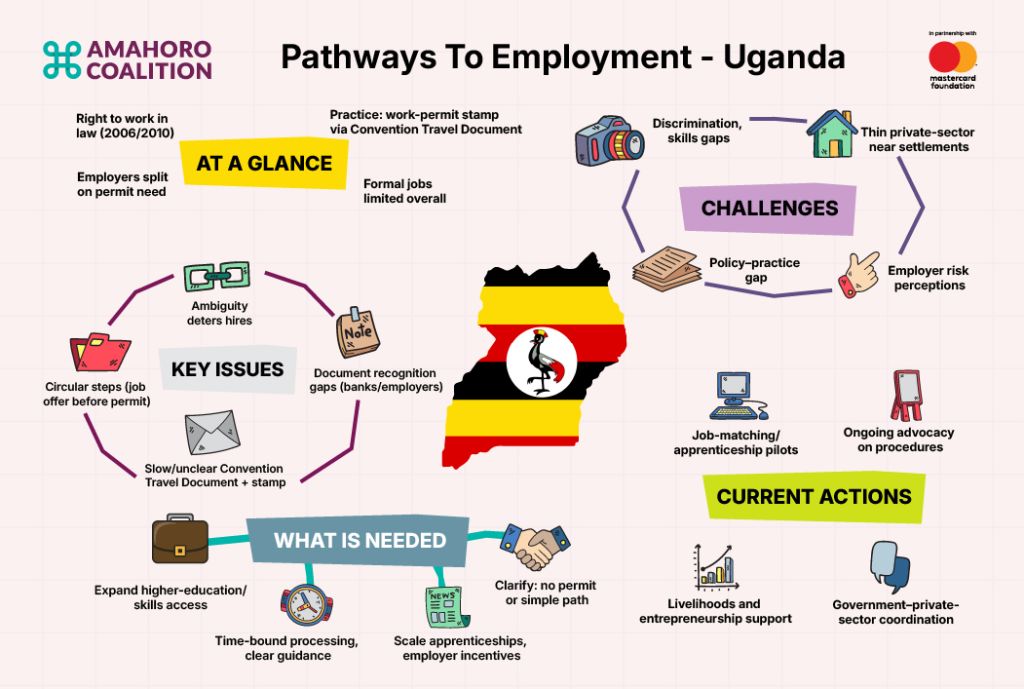
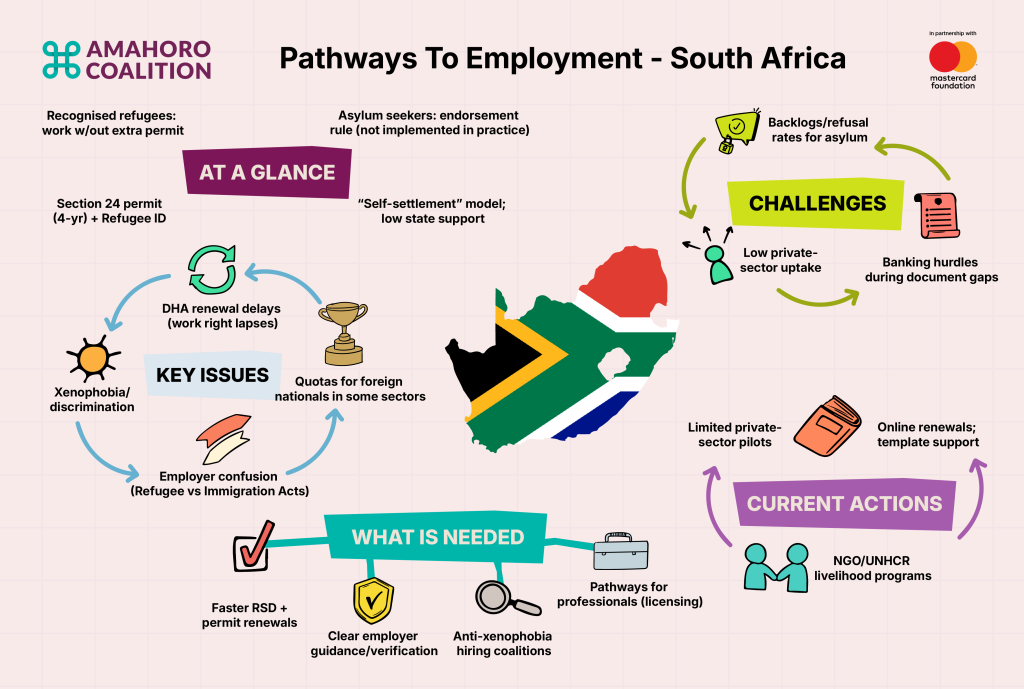
And Tresor is staring at a massive opportunity. An estimated 55% of refugees live in countries where access to formal employment remains restricted, with recognition of skills and qualifications among the barriers. Preserving the documents that prove those qualifications removes one obstacle between displaced people and the labour market.
For businesses operating in places where conflict and displacement are recurring risks, digitised records offer continuity. Employees can move, offices can close and borders can intervene without taking a company’s institutional memory with them.
Tresor Buzangu is betting that there is serious economic value in making sure Africa’s paper trail displacement or calamity.