Companies across Africa are paying closer attention to forcibly displaced talent. World Bank research shows employers often hire refugees for commercial reasons, from filling critical vacancies to gaining language skills, local knowledge and community networks.
But a job offer comes after harder questions. Can a refugee legally work in this market? What documentation is required? Where do you find a sales agent in Kakuma or an Arabic-speaking customer service representative in Nairobi?
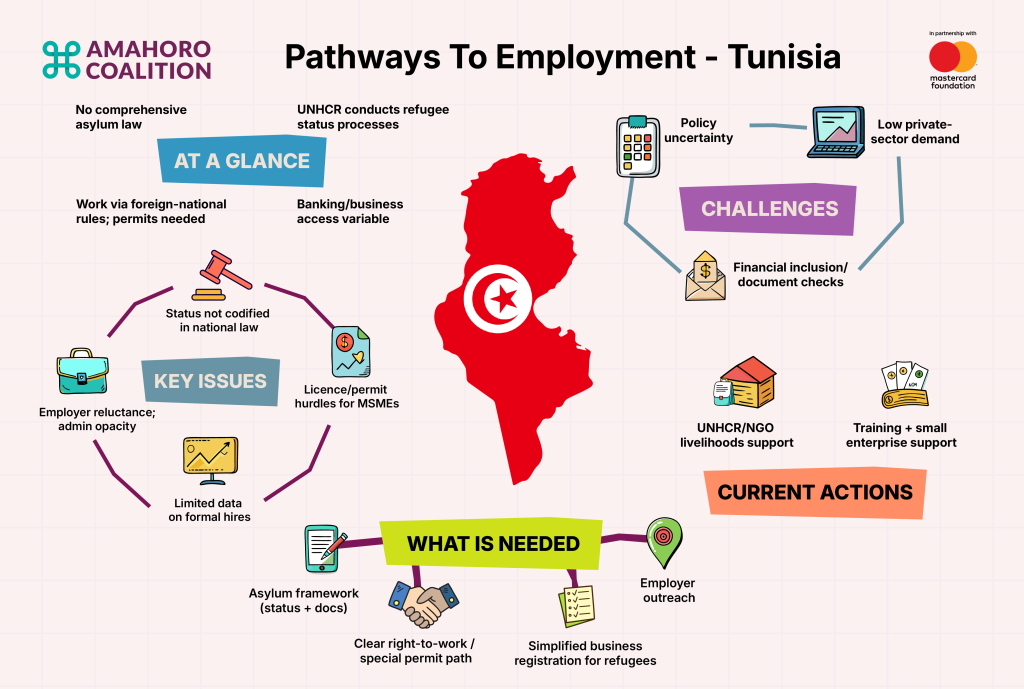
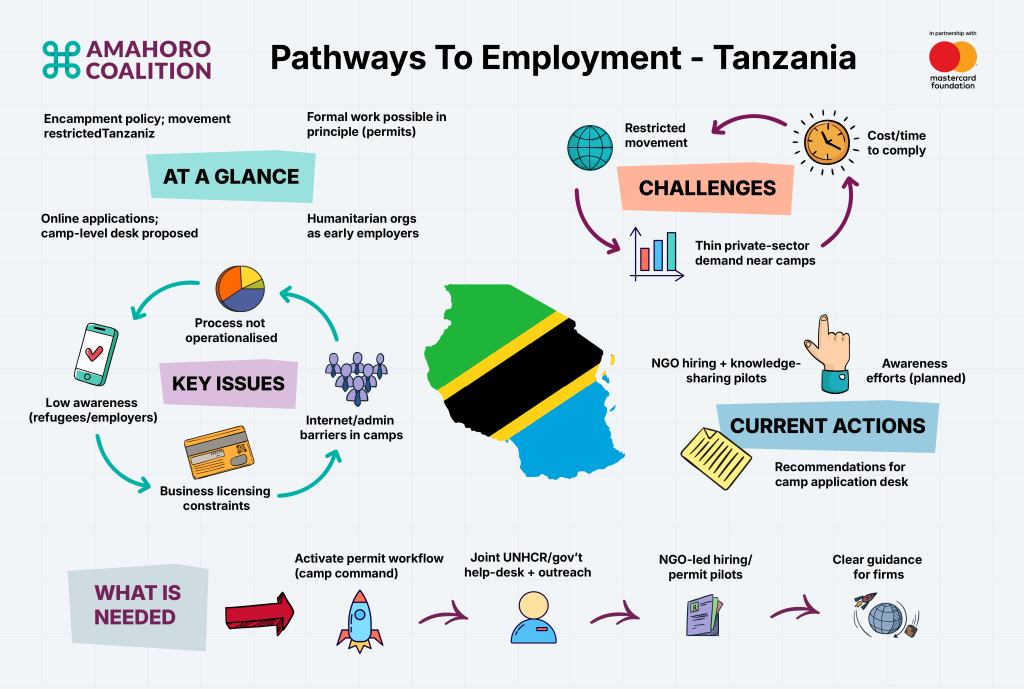
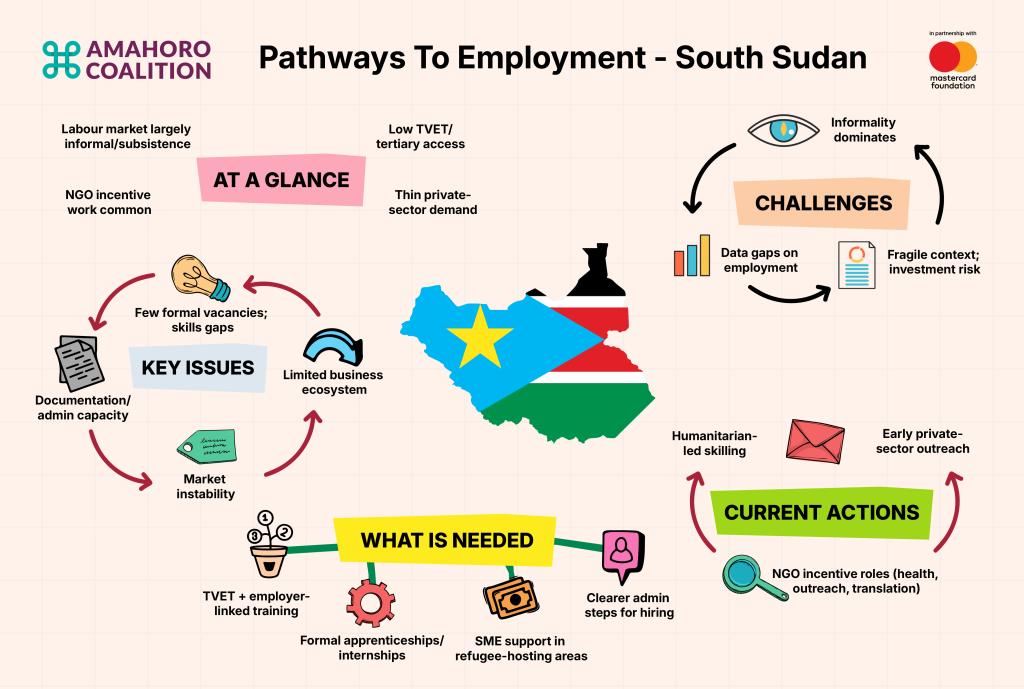
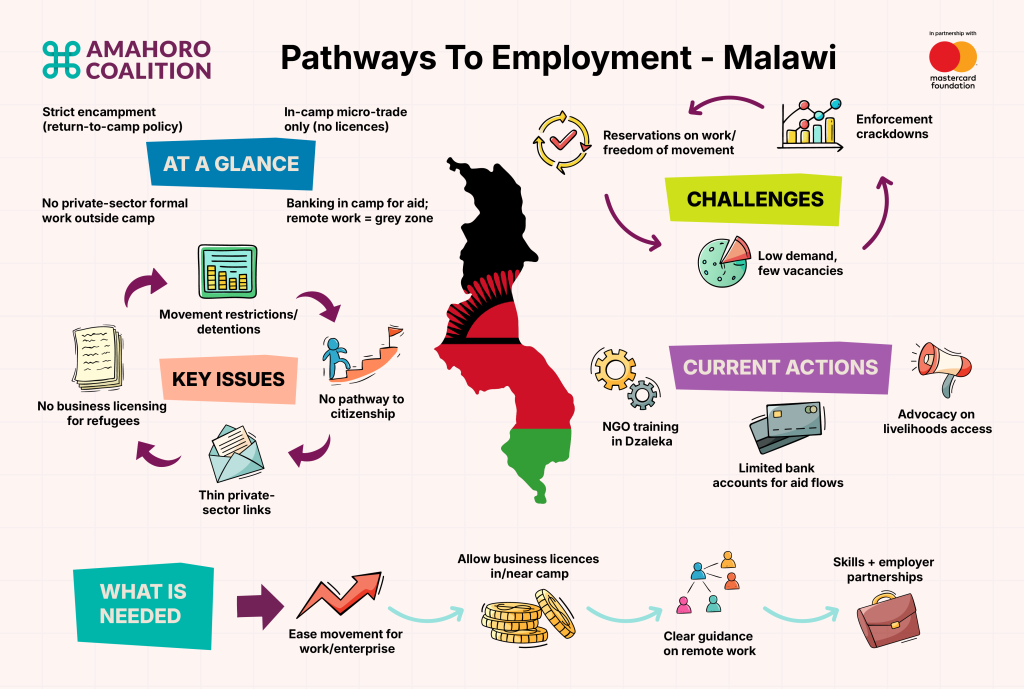
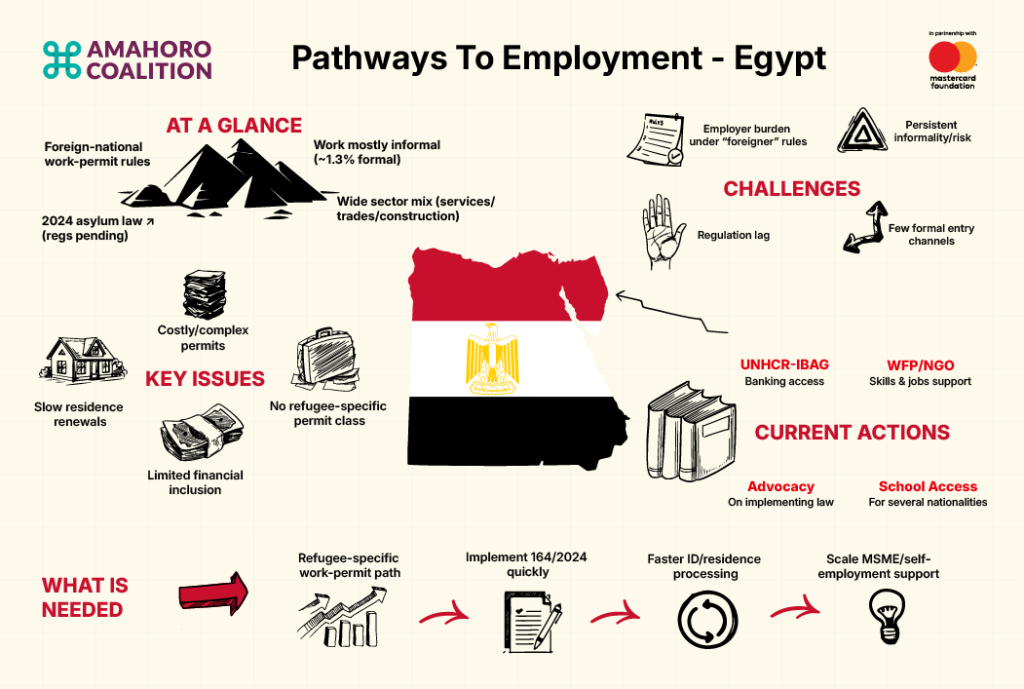
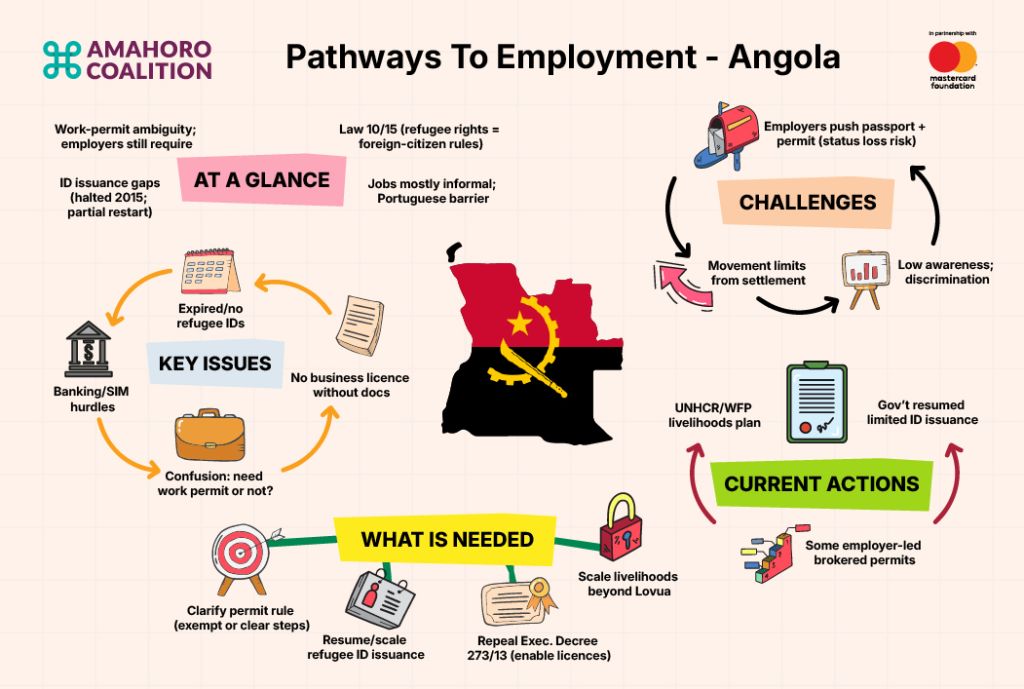
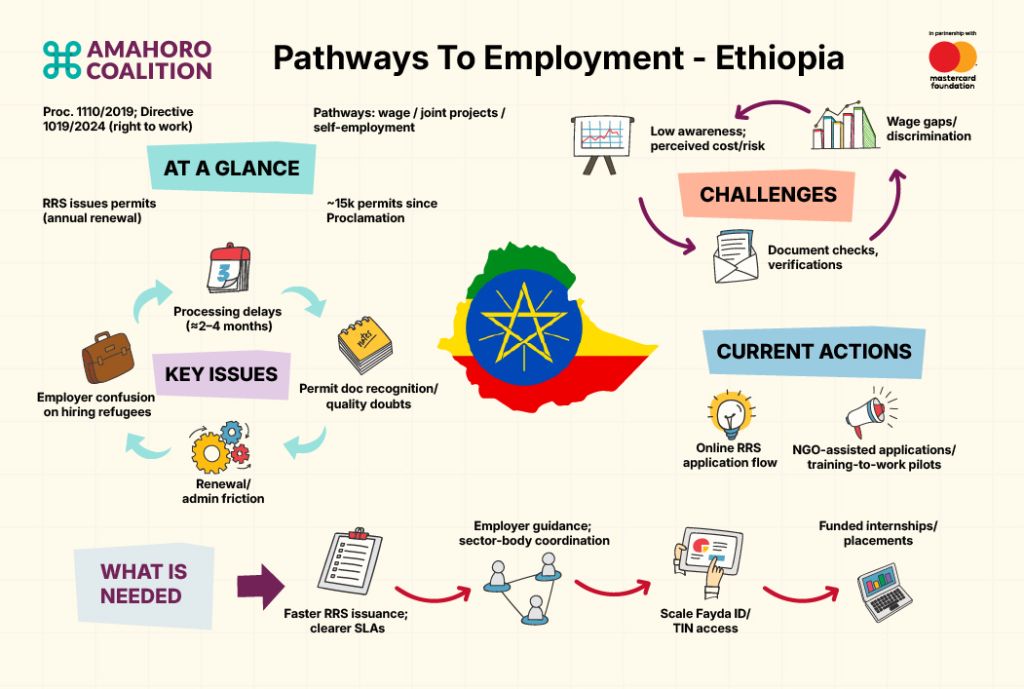
The Amahoro Coalition is helping employers answer them. Pathways to Employment maps refugee employment laws across fifteen African countries and translates them for businesses. Roundtables, career fairs and the Africa Forum on Displacement connect companies with policymakers, investors, educators and refugee professionals. And the Amahoro Skills Hub puts more than 8,000 refugee professionals within employers’ reach, giving companies a direct route from interest to hire.
1. Helping employers navigate fifteen different employment systems
The rules governing refugee employment vary considerably across the continent.
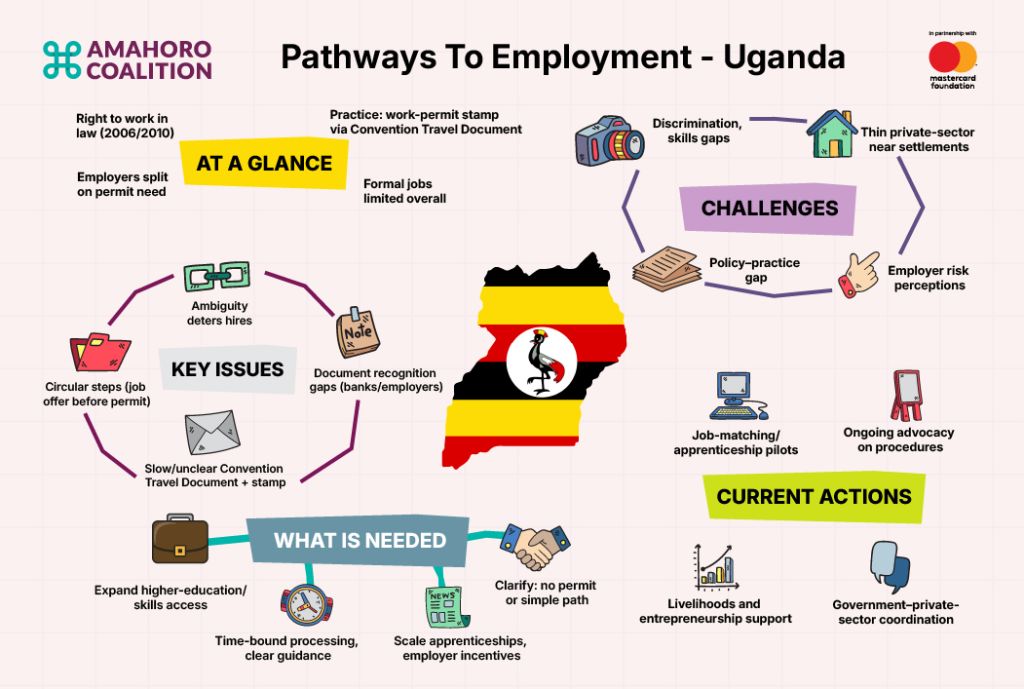
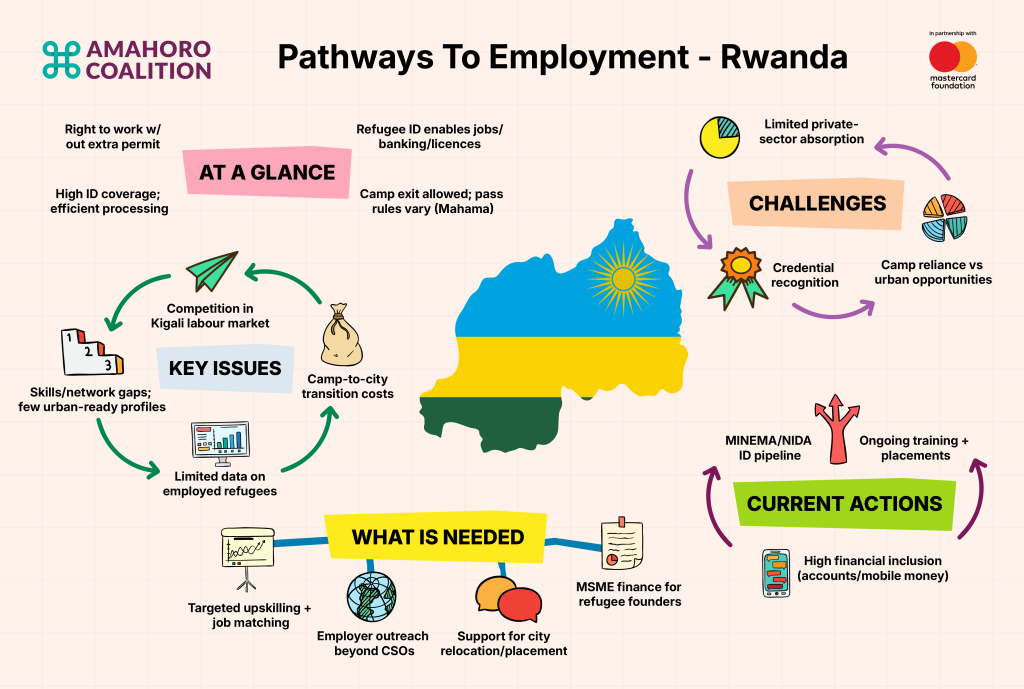
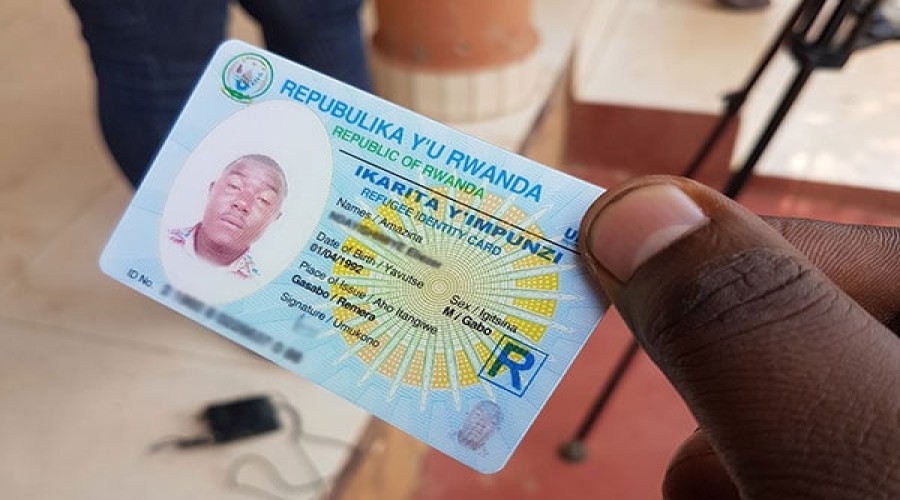
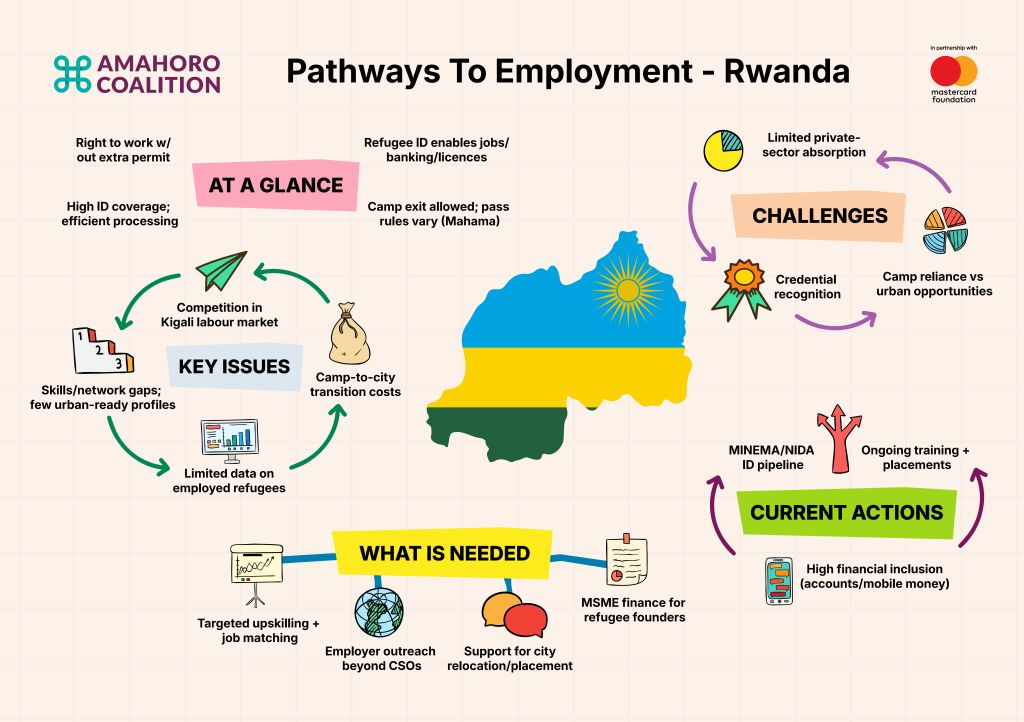
In Uganda, refugees have the right to work, move freely, own property, and establish businesses. Rwanda goes further still. Refugees can work without applying for a permit, and a refugee ID card is enough to open a bank account or register a business.
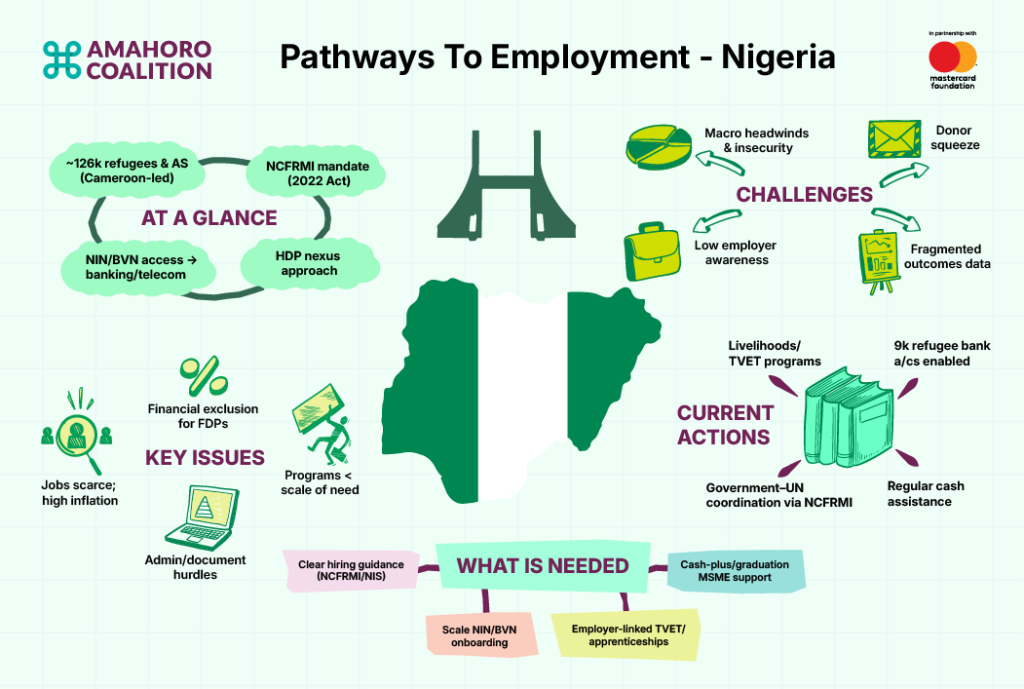
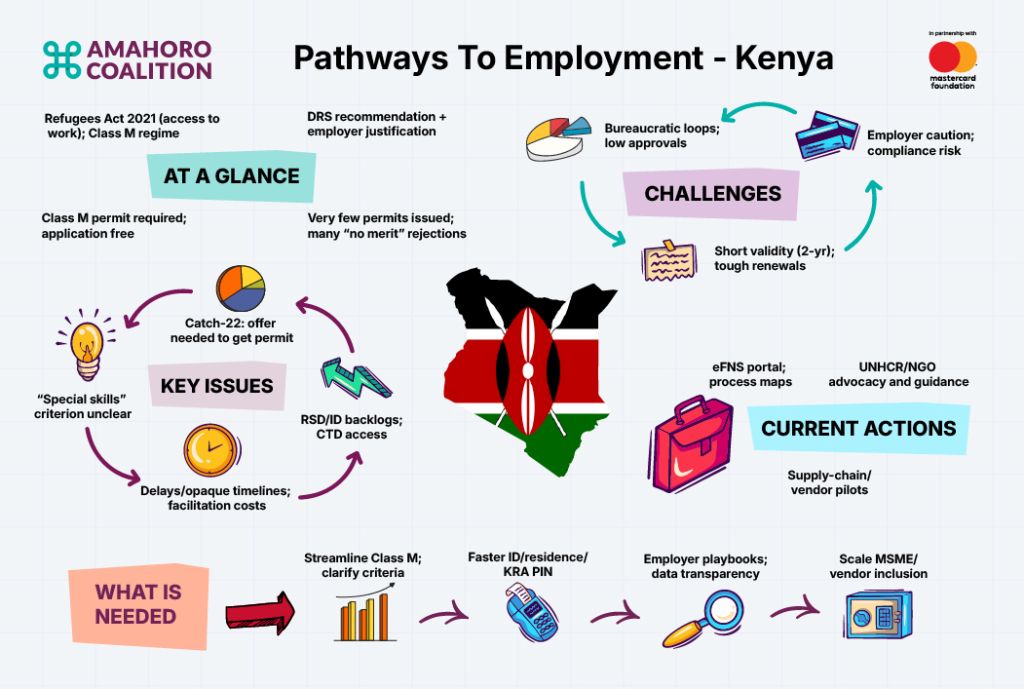
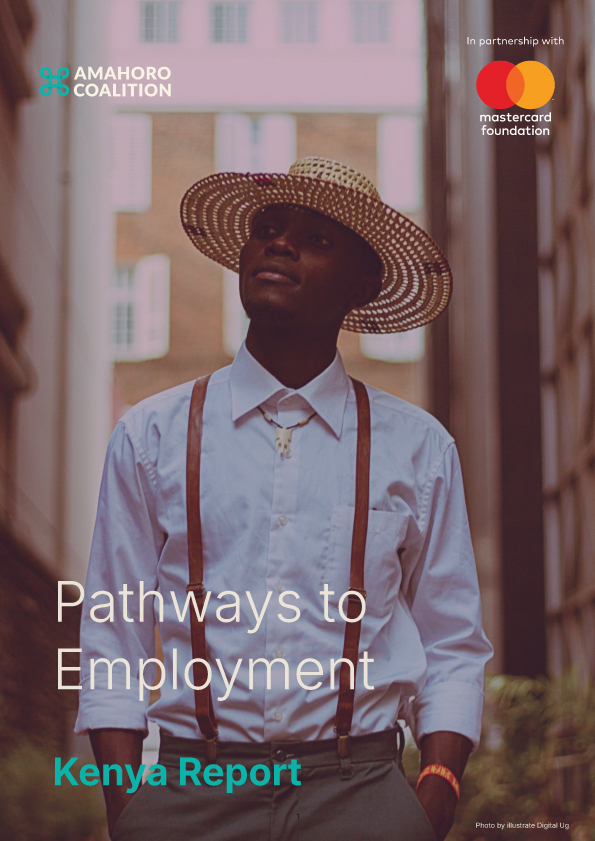
Kenya presents a different picture. The same refugee may need a refugee ID, an employer support letter, and a tax compliance certificate before a job offer becomes employment. In Nigeria, refugees can access the labour market, but only those from ECOWAS member states have a clear pathway to local integration.
For companies operating across multiple countries, these differences shape every stage of recruitment. A hiring process that works in Kigali may collapse entirely in Nairobi, yet much of this information remains buried in legislation written for lawyers, policymakers, and government officials rather than employers.
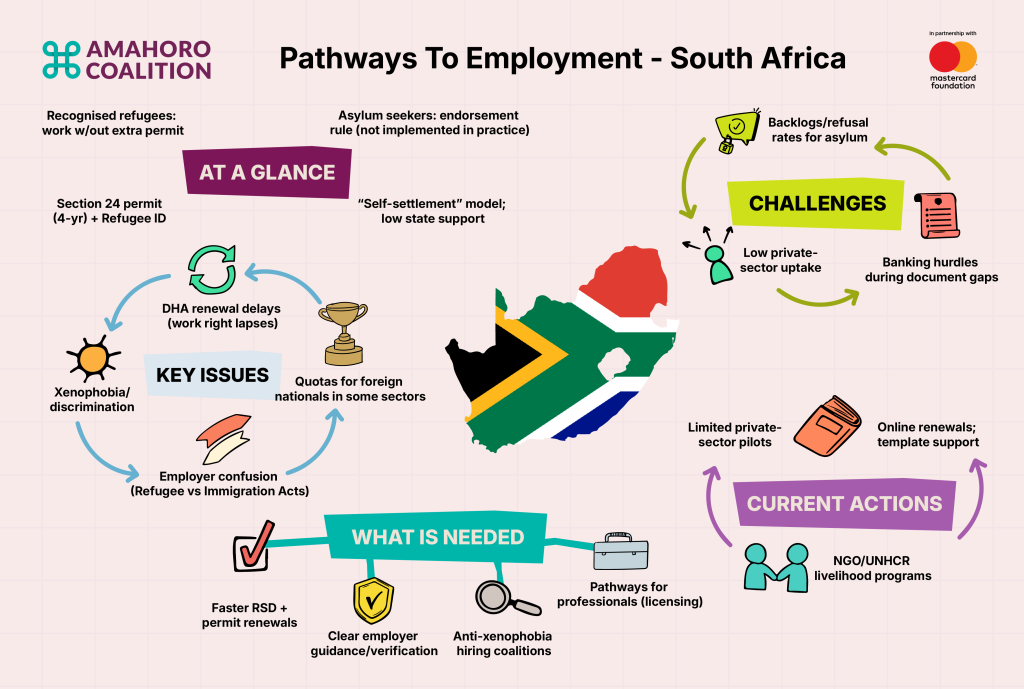
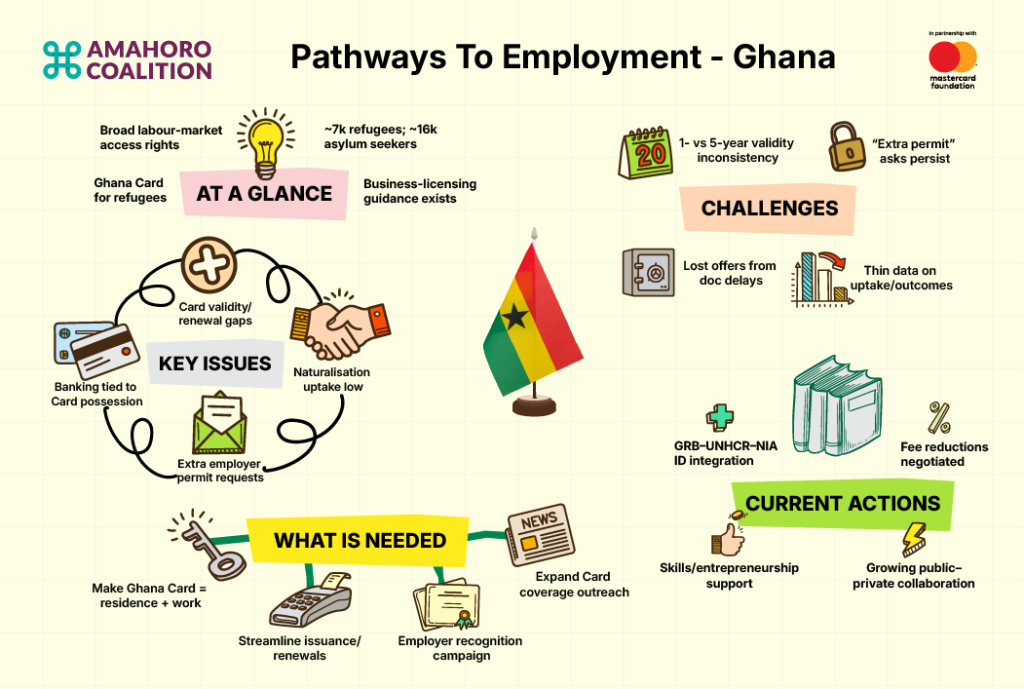
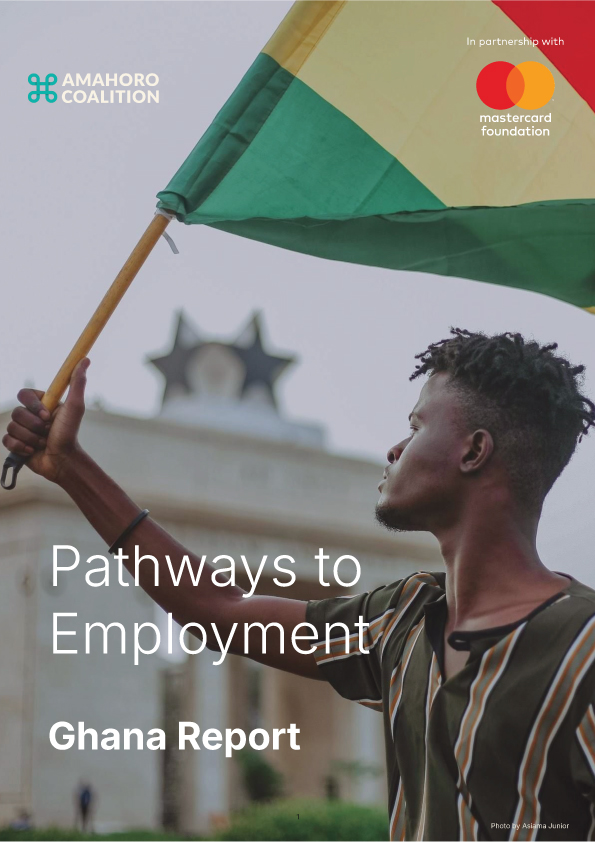
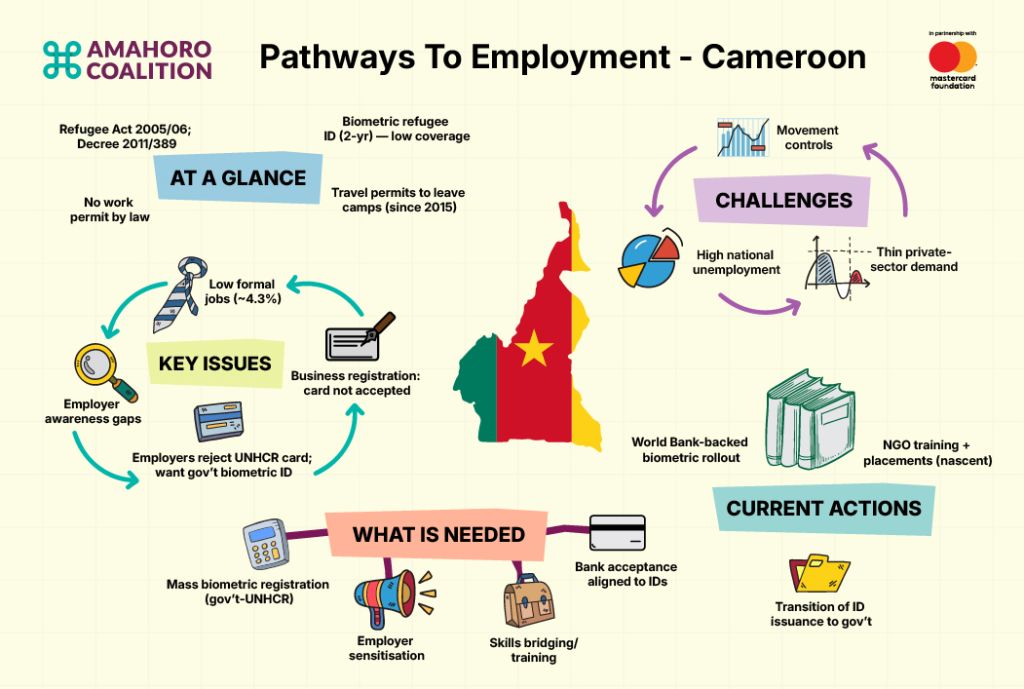
To bridge that gap, Amahoro Coalition in partnership with Mastercard Foundation commissioned the Pathways to Employment, a series of reports examining refugee employment frameworks across fifteen African countries. The reports translate complex policy environments into practical guidance, helping employers understand what regulations apply, where opportunities exist, and how others have approached refugee hiring.
2. Convening the people who shape labour markets
Information creates awareness, but hiring happens through people.
That is why convening has become a central part of Amahoro Coalition’s work. Throughout the year, we bring together business leaders, investors, policymakers, educators, and refugee professionals through roundtables, networking events, career fairs, and industry discussions.
In Cairo earlier this year, senior decision-makers from government, the banking sector, investment firms, and international development institutions gathered to discuss the future of Egypt’s startup ecosystem. The roundtable was chaired by Basel Rahmi, CEO of Egypt’s Development Organization of Small, Medium and Micro Enterprises, while Amahoro Coalition Fellows Dr. Nahla Omer Zayed, founder of Sukar Cosmetics, and Abo Obaida Alazem, co-founder of Duma Toys, shared perspectives on building businesses within the ecosystem.
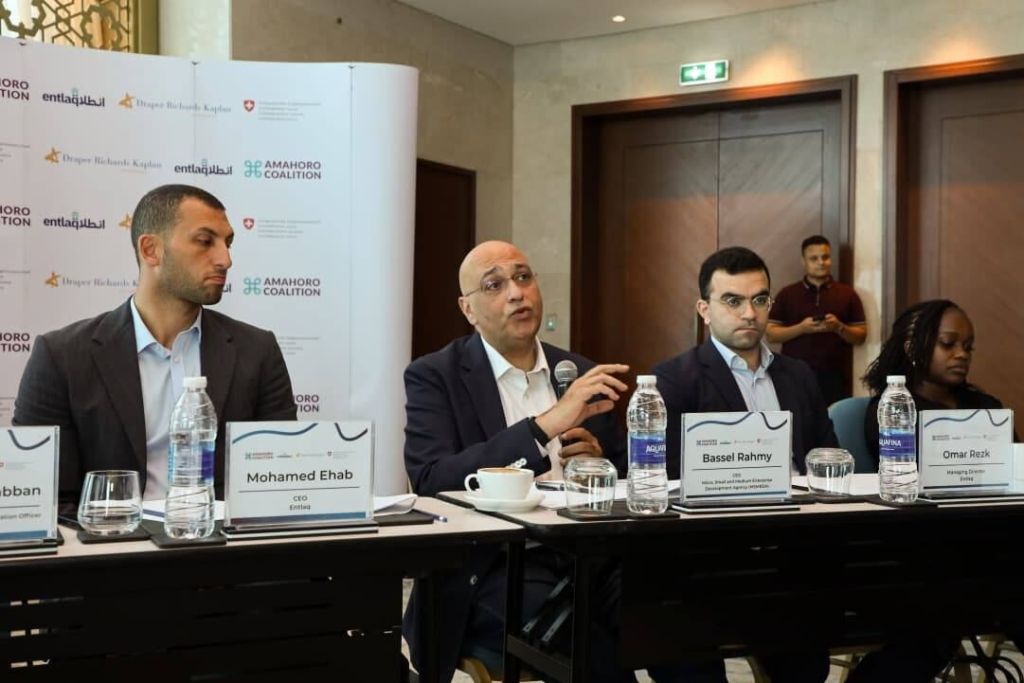
These conversations shorten the distance between sectors that rarely engage directly. A banker hears from a refugee entrepreneur. A university leader learns which skills employers cannot find. While a business executive gains insight into the realities of refugee hiring from companies already doing it.
At a continental level, the Africa Private Sector Forum on Displacement brings those conversations together at scale. Co-convened by Amahoro Coalition, UNHCR, and Inkomoko, the 2025 Forum brought together more than 149 companies from over 30 countries. Participants committed more than 30,000 jobs and 5,000 training opportunities for displaced people across Africa.
3. Bringing refugee talent onto the hiring radar
Understanding the policy landscape is important and building relationships matters too, but eventually employers need a practical way to find talent.
That need led to the creation of the Amahoro Skills Hub, a digital platform connecting employers directly with refugee professionals.
The platform reflects a broader shift taking place across refugee communities. Research by GSMA and UNHCR has found that mobile phones have become a critical gateway to employment, education, and financial services for displaced populations. As connectivity improves, more refugees are earning certifications online, building portfolios, and participating in digital labour markets that stretch far beyond the communities where they live.
Kiza Mauridi has watched that transformation unfold from the Kakuma refugee camp. An Amahoro Fellow and founder of Action for Refugee Learning (AReL), he launched the initiative after noticing how rapidly companies were embracing remote work. And what began with a single laptop now trains refugees in software development, cybersecurity, digital marketing, and data analysis. Graduates have gone on to secure work with companies in Uganda, Australia, Canada, and the Netherlands.
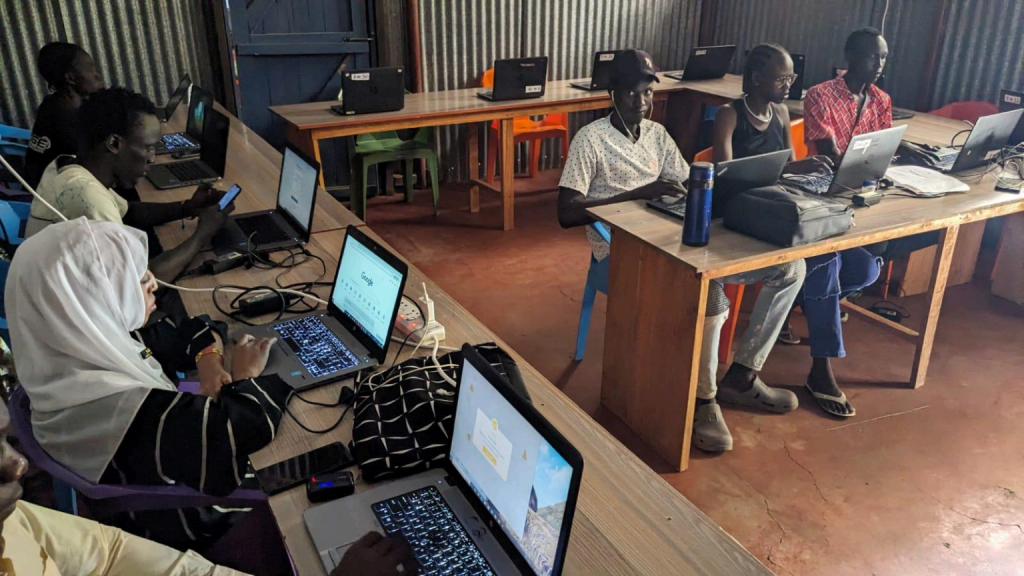
As organisations like AReL expand the talent pipeline, the challenge increasingly becomes visibility.
When Abigail, an Ethiopian refugee living in Nairobi, was looking for work, her sister sent her a link to the Amahoro Skills Hub. A trained tailor and designer, she had spent months moving from business to business in search of opportunities. Within weeks of creating a profile, she was hired by Amina, a fashion business specialising in traditional Ethiopian wear, to design and produce toddler clothing.
Less than a month separated discovering the platform from receiving an offer.
For Abigail, the value lies in trust as much as access. “Online job searches have become increasingly important, but reputable platforms help jobseekers distinguish genuine opportunities from scams.”
“They also create a direct line to employers. On the Skills Hub, I received a response from a potential employer almost immediately, and that gives you hope,” she says.
The Amahoro Skills Hub was built to create those connections at scale. Since its launch, more than 8,000 refugee professionals have joined the platform. Employers have posted 311 vacancies, generating more than 2,070 job applications.
The talent is there. The opportunity now is ensuring more employers know where to find it.